

Fifth Boston Marathon. Twentieth marathon. And somehow, this one felt like my strongest yet.
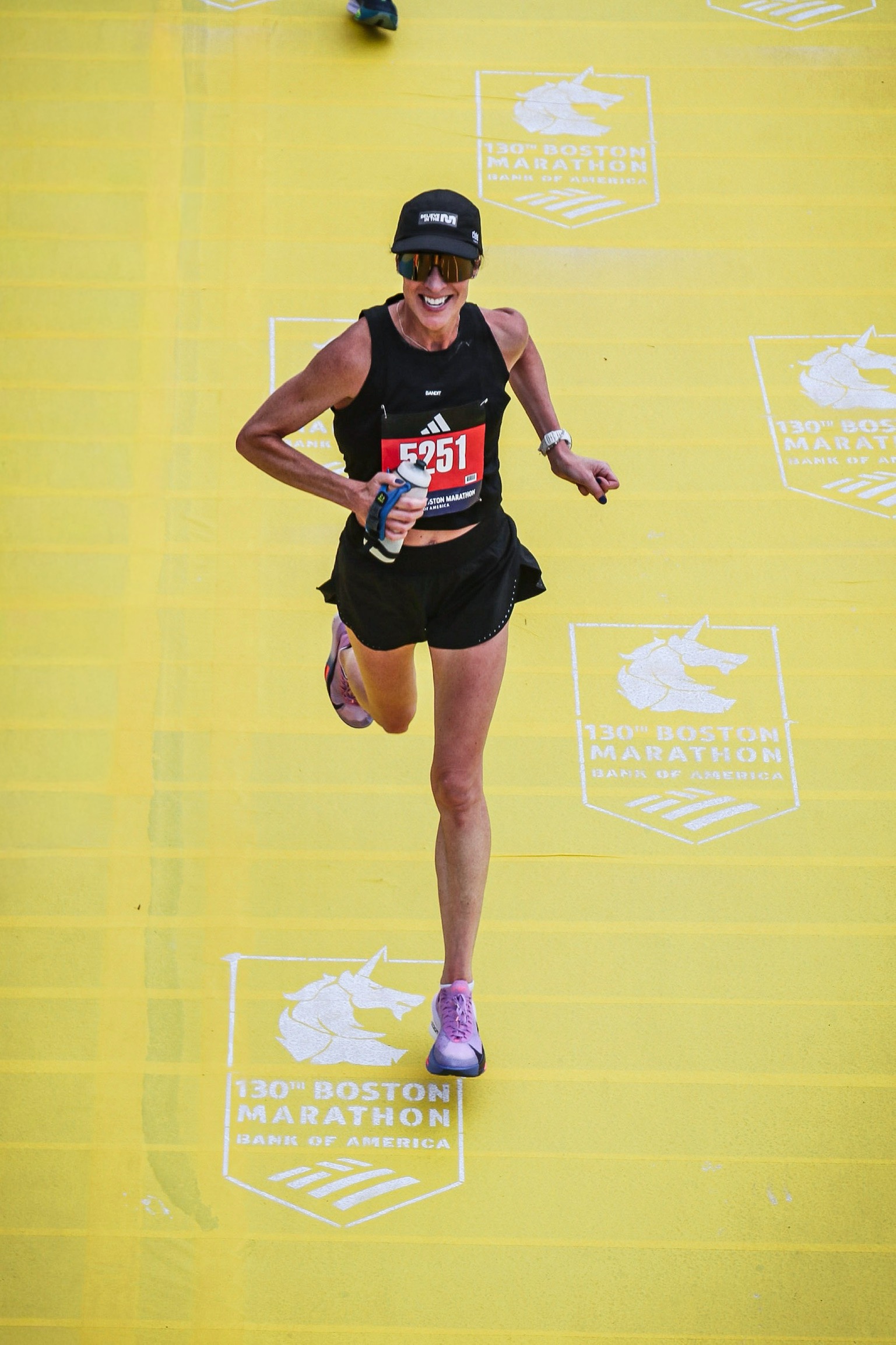
I crossed the finish line in 2:54:27, and for the first time on this course, I didn’t feel like I was just surviving the unrelenting course; I felt like I was in control. I felt like I was racing it.
After coming back from a big injury over the past 18 months, my goal for the day was to run at the top of my fitness level. To be fair, I wasn’t sure what said fitness level was or what ‘marathon pace’ on paper truly was. So, I set out to run a pace that felt sustainable but tough. I wanted to leave it all out there on the course, no regrets. But I also wanted to run with a smile on my face for the entire race. What pace would this be? In my mind, that pace had a wide range – a 20 – 30 second range of what might ‘feel’ sustainable on the day.
But let’s back up and talk about the entire race weekend before we dive headfirst into the race.
The Carb Load
I arrived in Boston on Friday afternoon, aka day one of my three-day carb load. We talk a lot about the importance of fully stocking our glycogen stores to help our bodies fuel our muscles with adequate carbohydrates throughout the high-intensity grind of the marathon. I firmly believe in the benefits of a carb load and have felt the magic of fully locked and loaded glycogen stores in so many races. (If you need help with your carb load, check out this carb load calculator and tips.) Research suggests a 2-3% performance improvement in the marathon with a carb load. For my goal time, this is around a 5-minute improvement. The fact that we are able to hold marathon pace beyond what we could ever practice in training boils down to solid nutrition. This is why I am so passionate about helping you all fuel your potential. Never in my wildest dreams did I think I was ready to hold the paces I did in Boston, but thanks to a wicked carb load and race-day fueling, it happened.
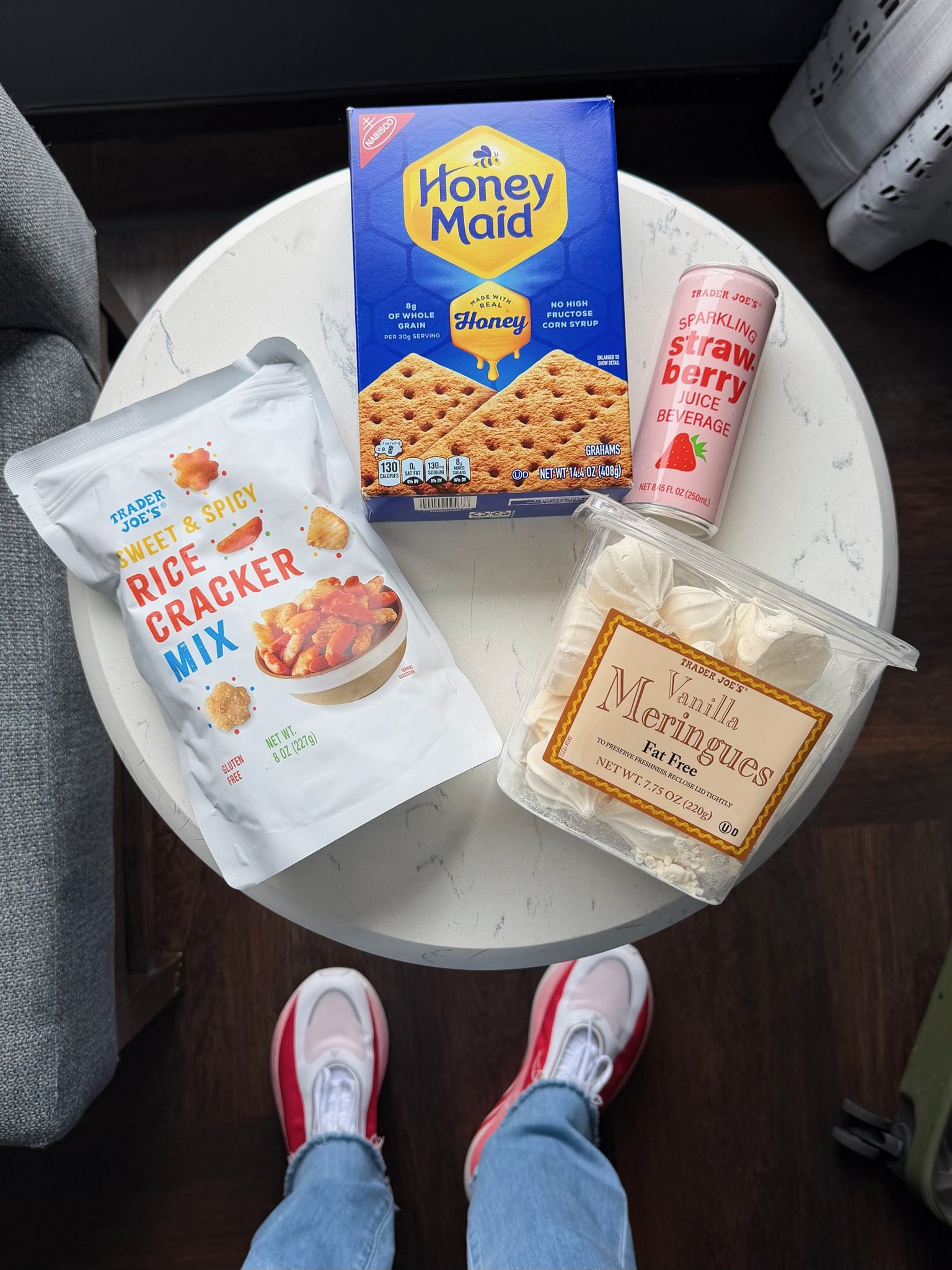
Day One Carb Load – graham crackers, bagels, gummies, airplane cookies, rice krispies treats, Maurten solid bars, a massive turkey sandwich, and another Maurten solid bar for a grand total of 480 g of carbs.
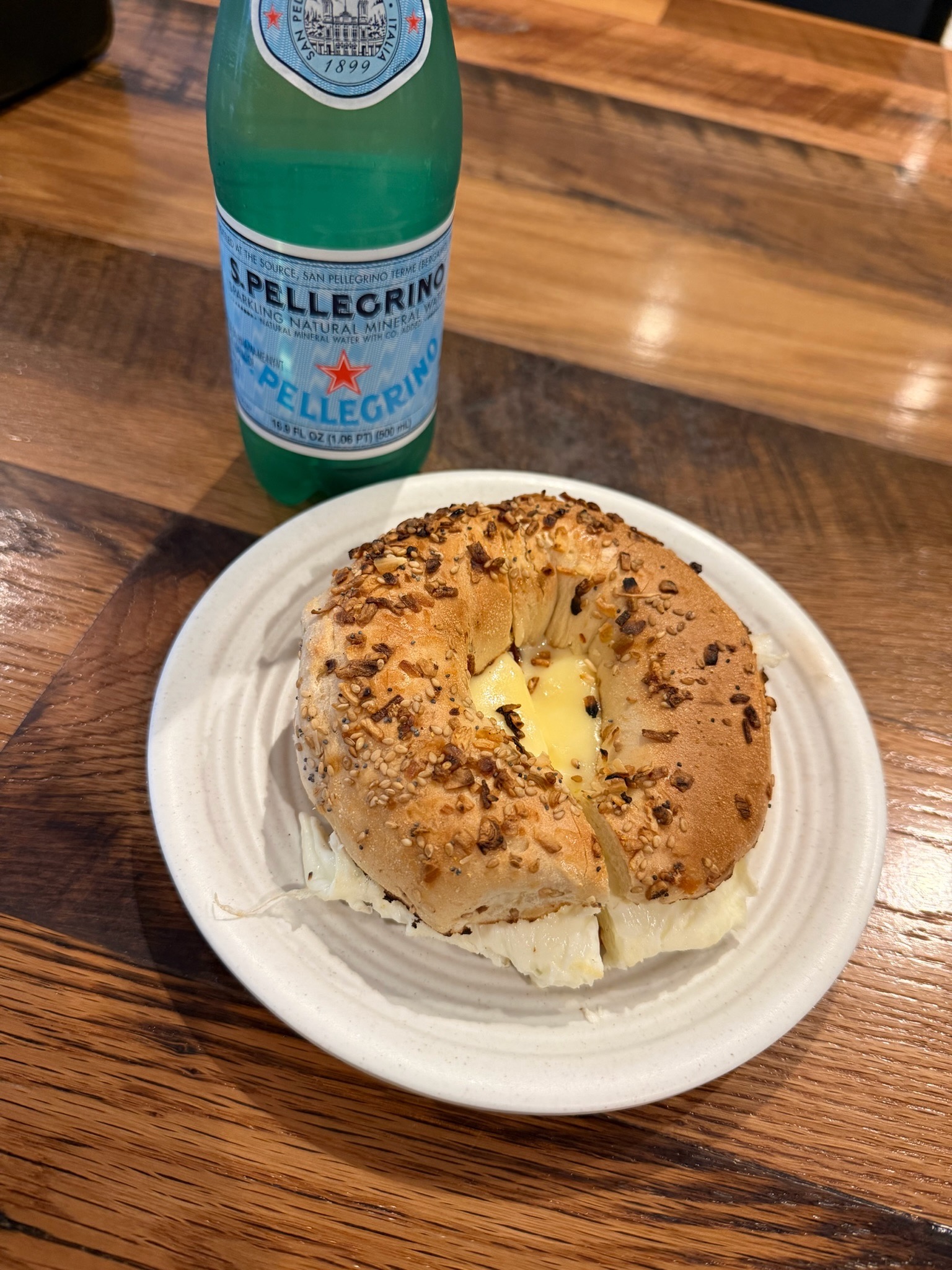
Day Two Carb Load – bagel, rice krispie treat, a bagel egg and cheese sandwich, Trader Joe’s meringues, Maurten solid bar, crackers, pretzels, pizza, and more rice krispie treats for a grand total of 530 g of carbs.
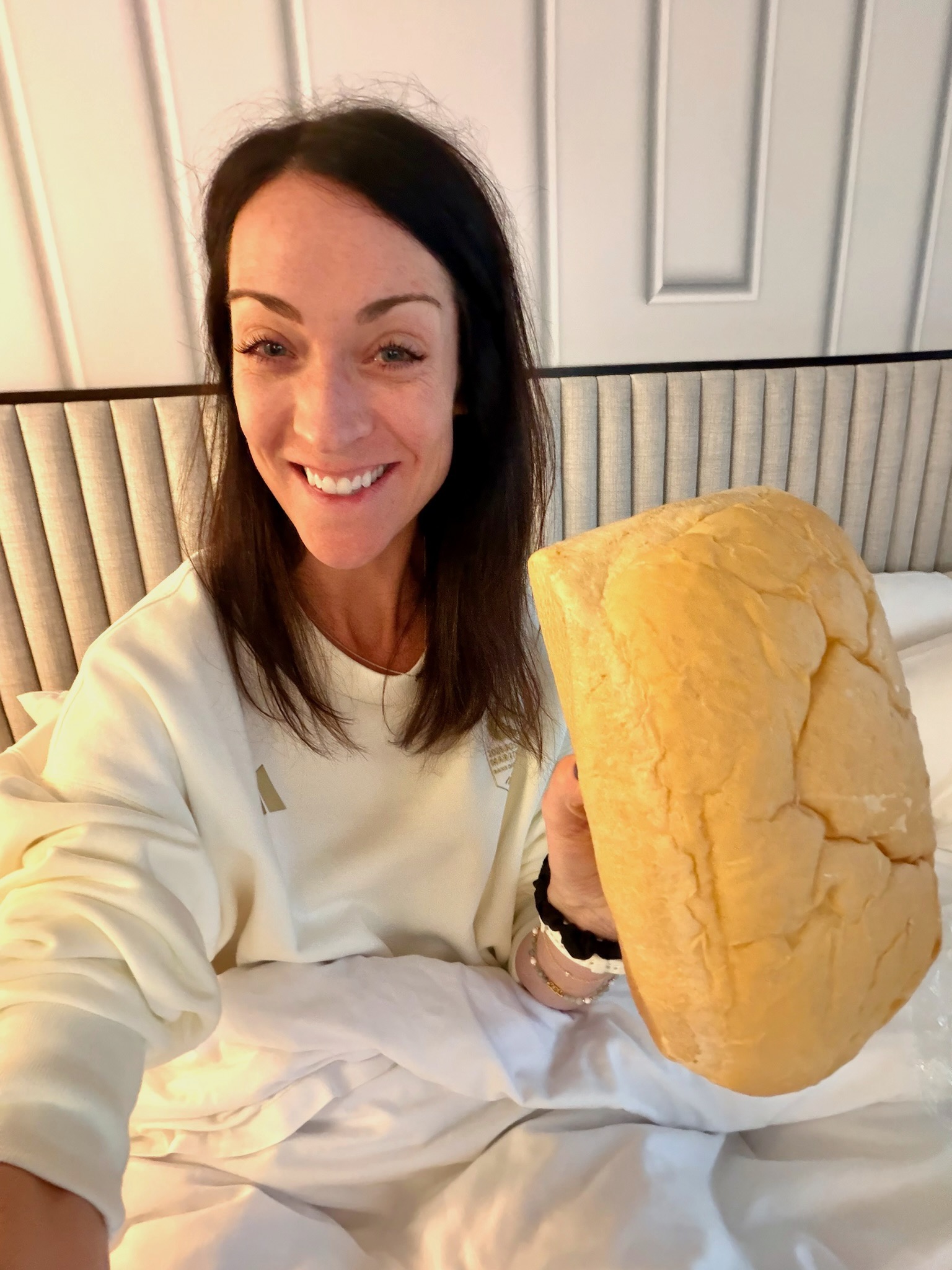
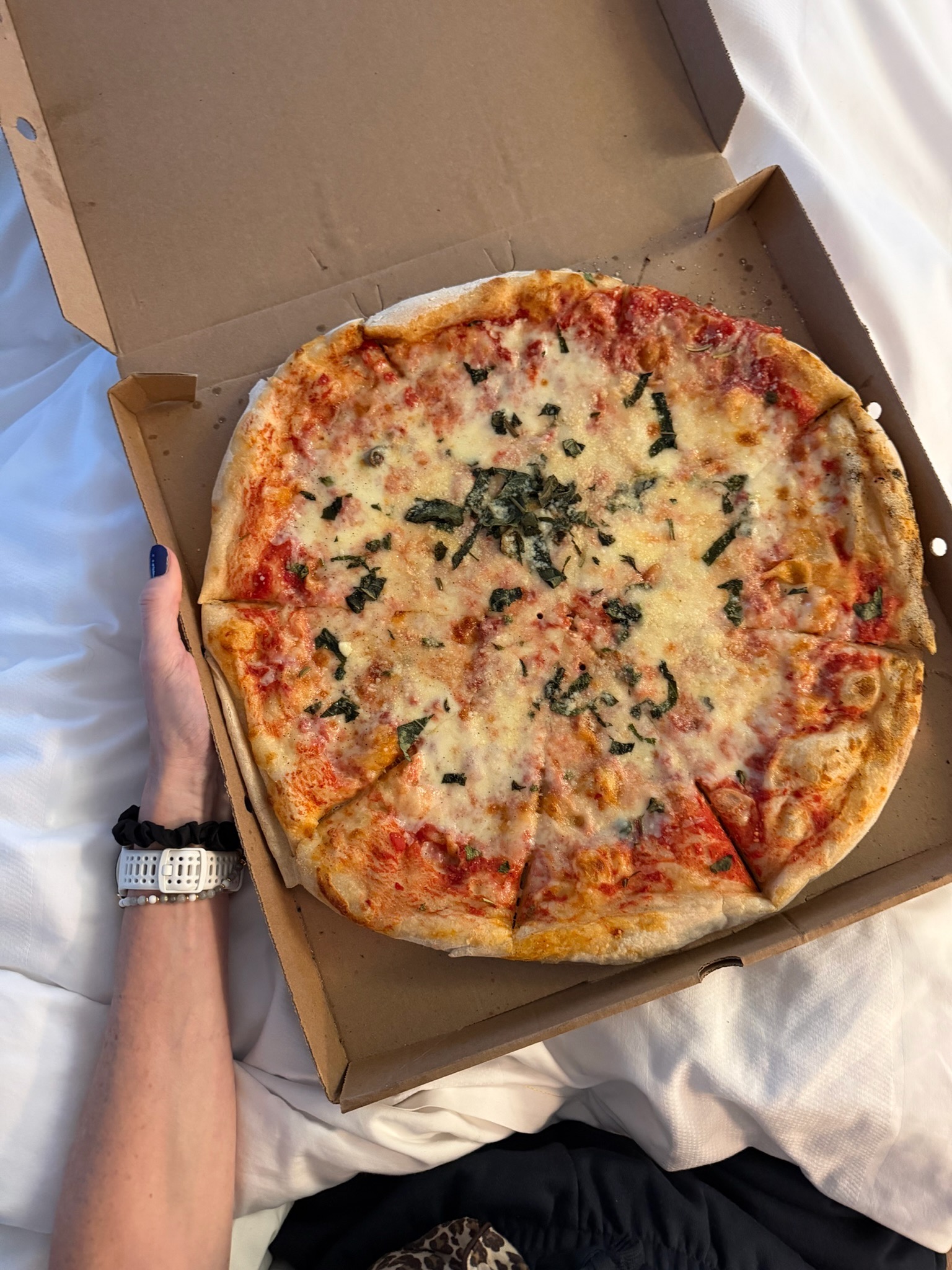
Day Three Carb Load – rice krispie treats, bagels, more Trader Joe’s meringues, Peeps, a Clif bar, bed bread, and a massive pizza for a grand total of 520 g of carbs.
This was hands down the easiest carb load yet. I actually felt like I could have eaten more! Reminder: it’s imperative to increase fluid intake by 30 oz per day during the carb load. Glycogen is carbs + water, so be sure to stay on top of hydration too.
Pre-Race Events
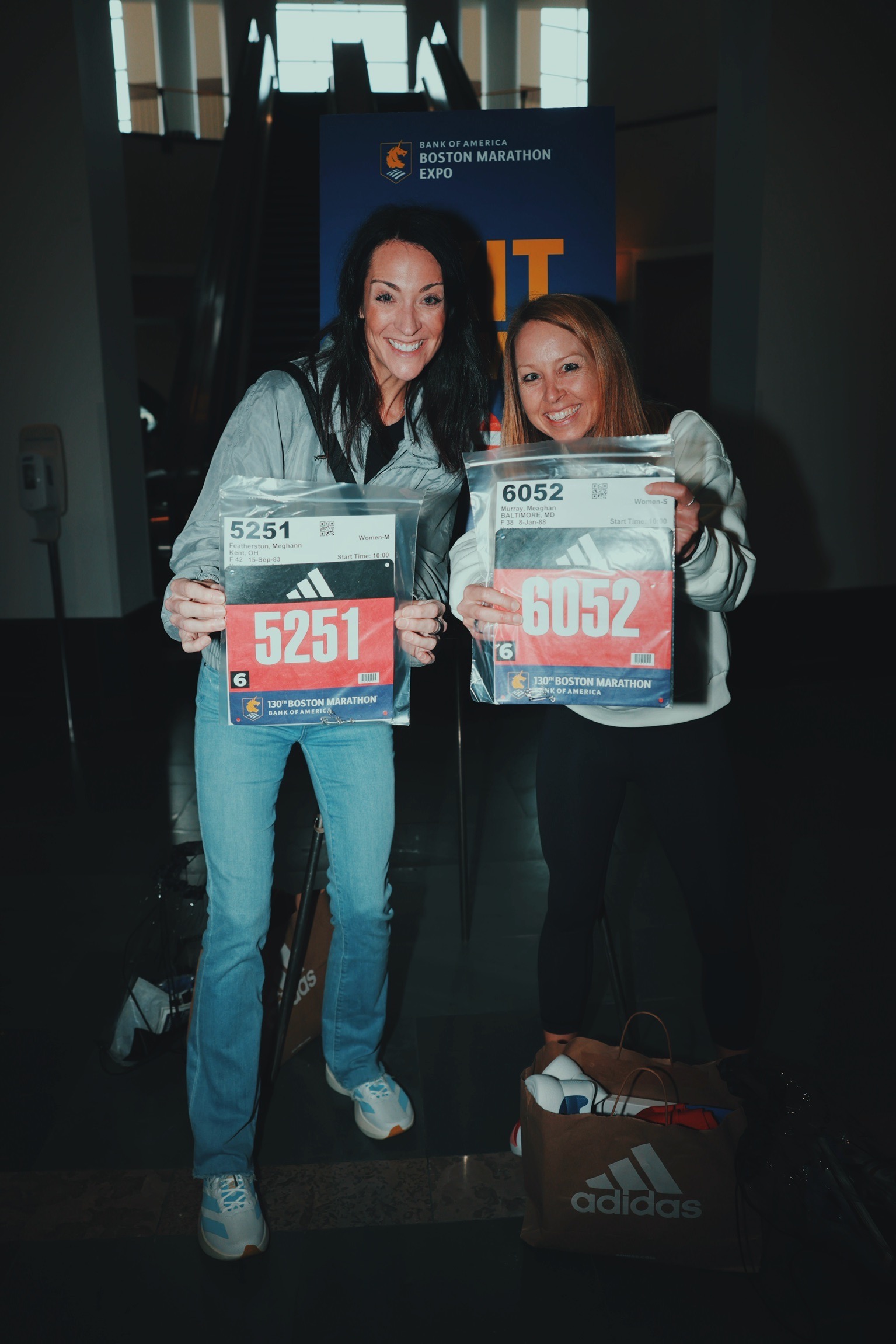
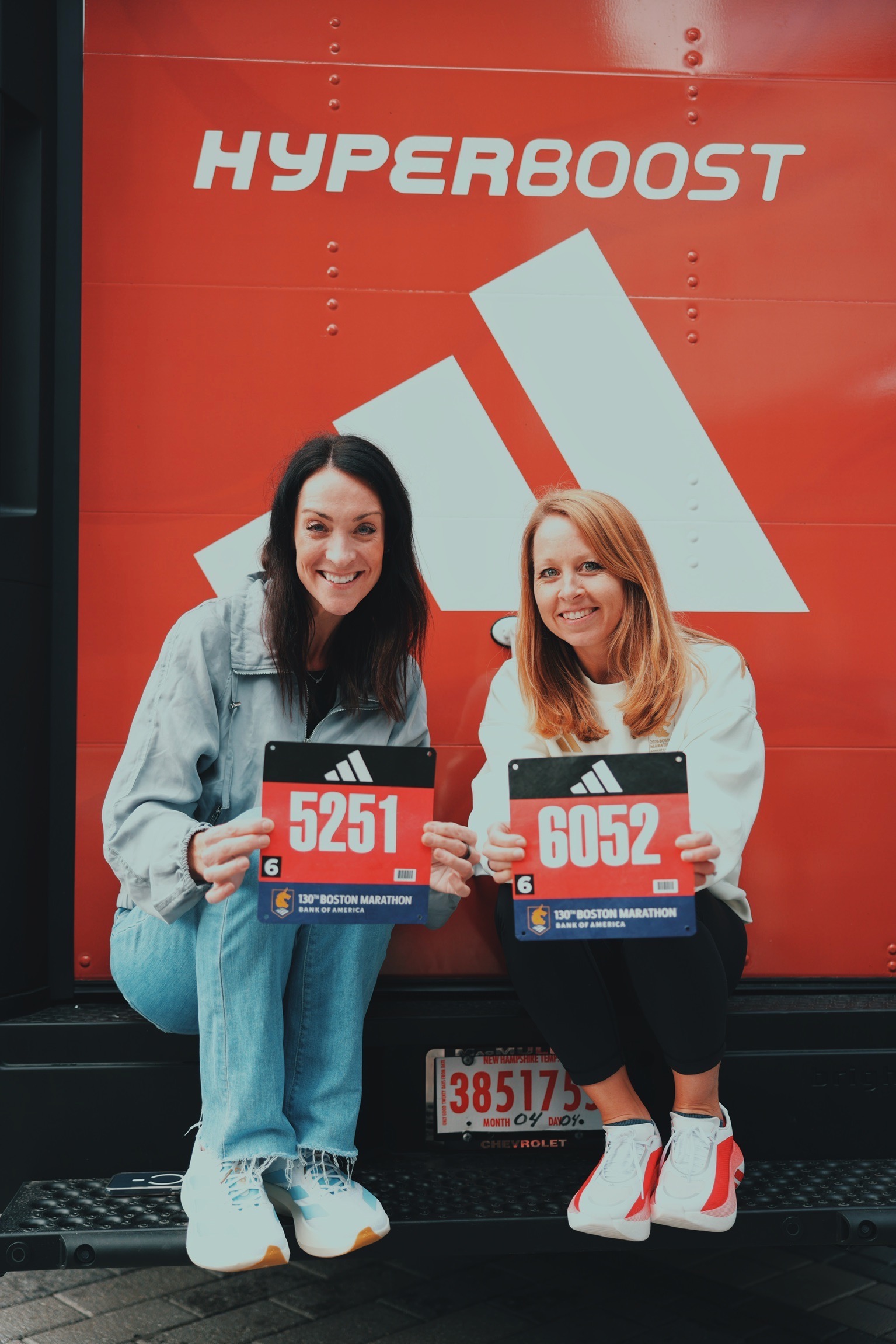
After arriving on Friday, I met up with the Believe in the Run crew, who were shooting some content with adidas, and then we headed over to pick up our bibs at the expo. It is wild to me that just three years ago, my same qualifying time (2:50) was bib number 2594, and this year I was 5251. Boston gives out bibs based on your time. So, the lower your bib number, the faster your marathon qualifying time. Friday evening I attended the Ali on the Run live show with Emily Saul and Laura Green. It was fun to catch up with them before laughing for an hour straight with Ali and her guest, Claire Holt.
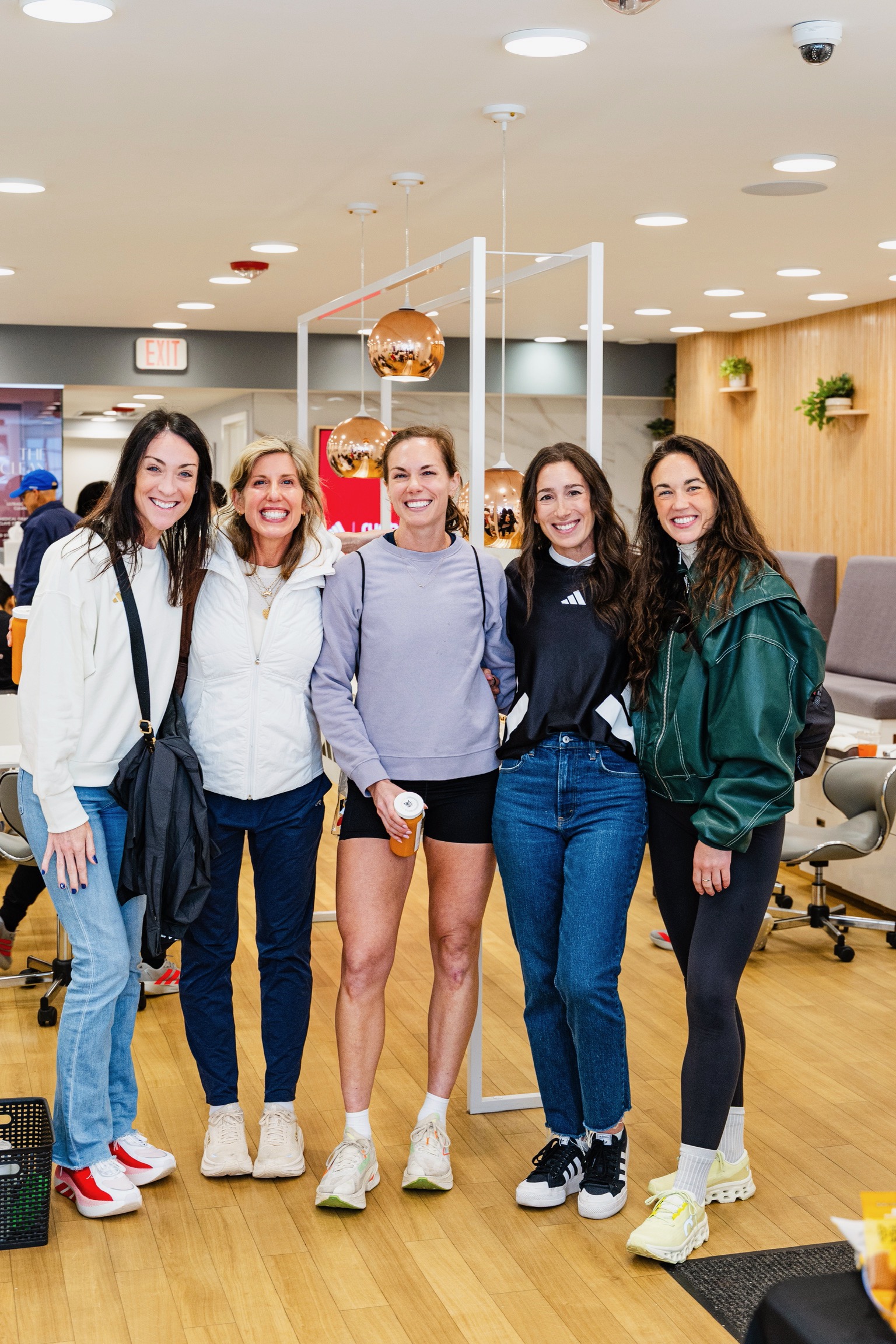
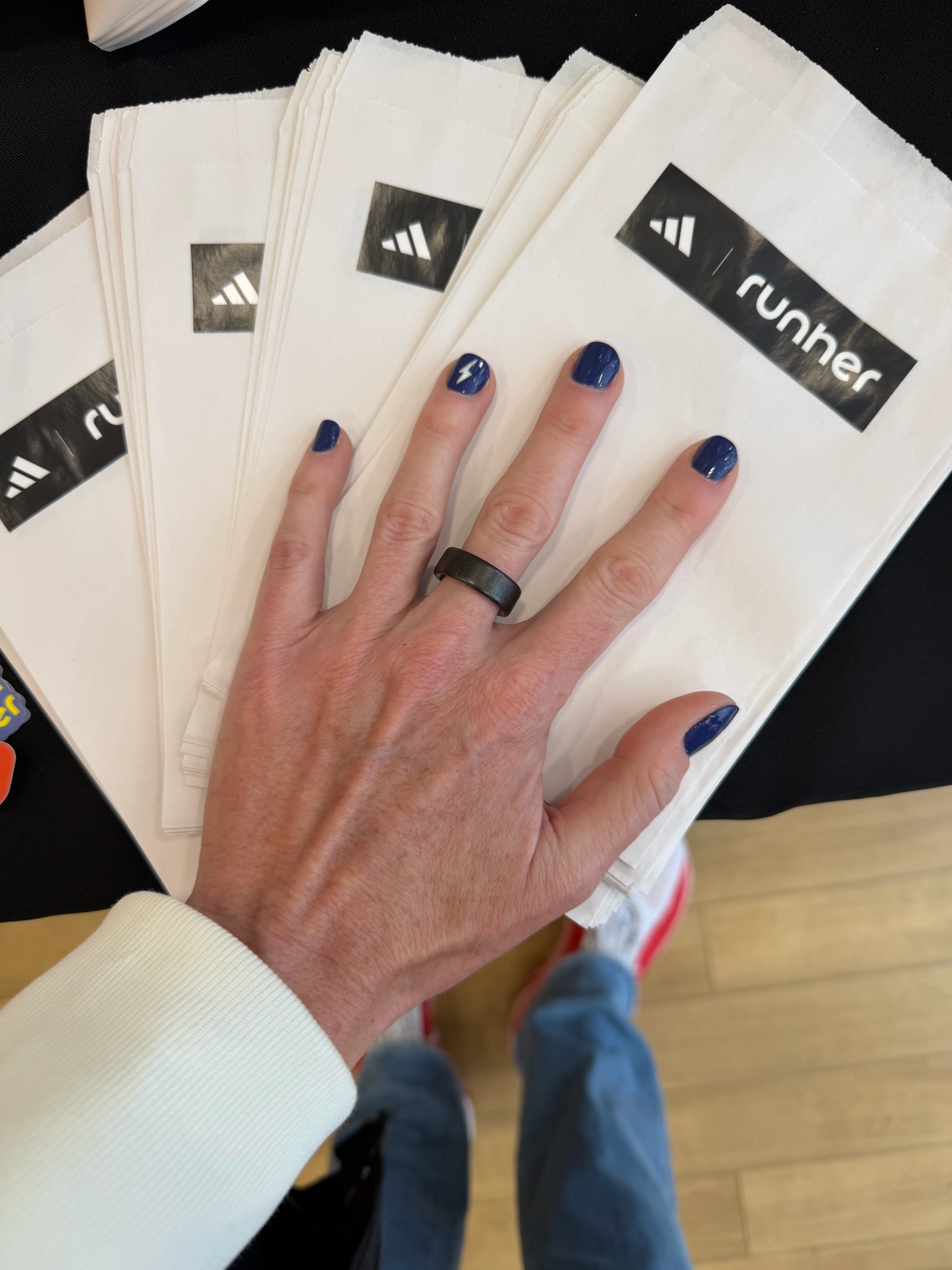
On Saturday, Meg and I spectated the 5k while all the guys from Believe in the Run were running. Fun fact: the grandstands are wide open to anyone during the 5k, so we were able to get front-line viewing at the finish line. This was hands down the moment that lit the fire for me, leading into Marathon Monday. I was so ready to cross that finish line, too. From here, I went to the runher x adidas nail salon event and got my nails painted Boston blue. I am not a nail girl, so this was a fun little event.
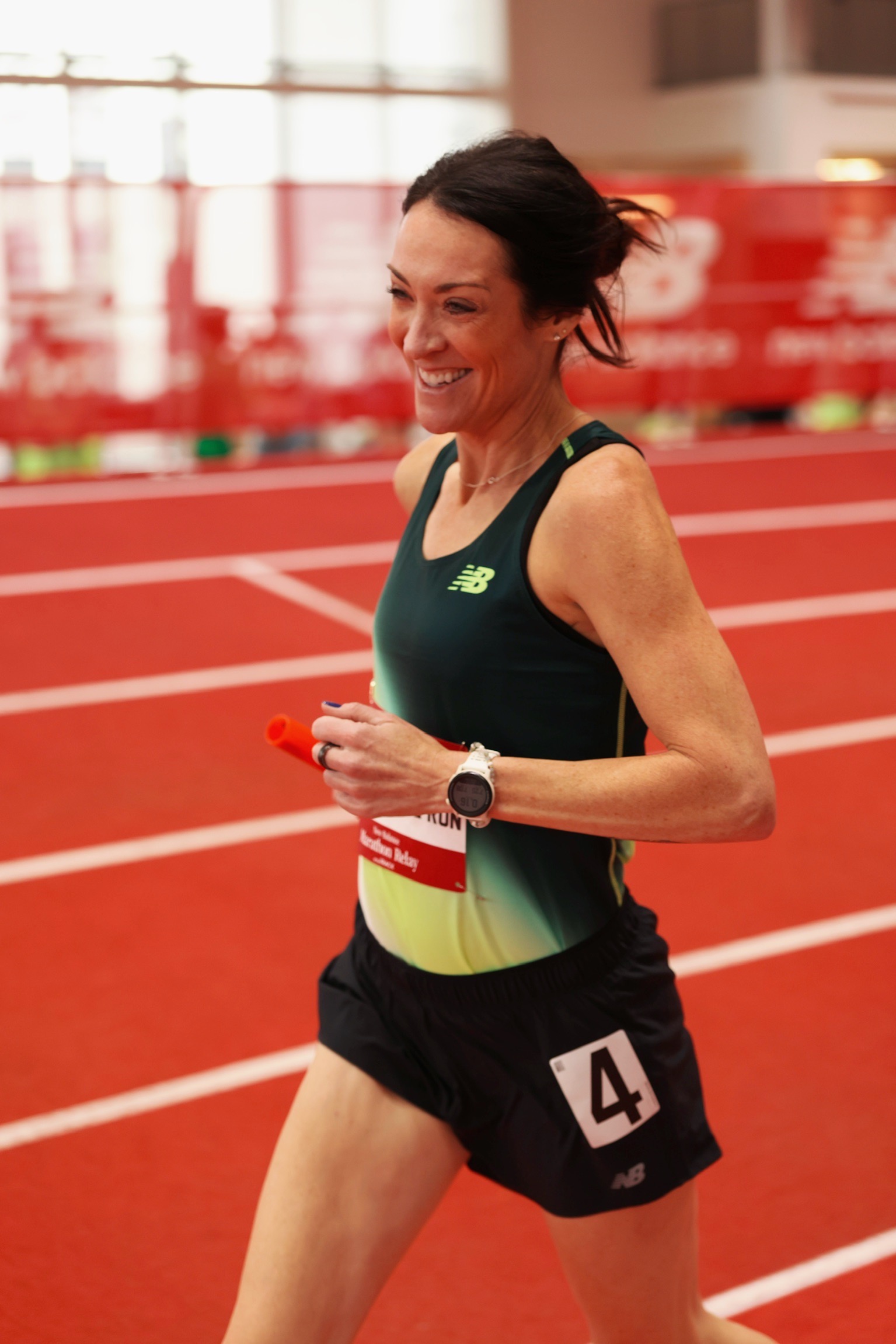
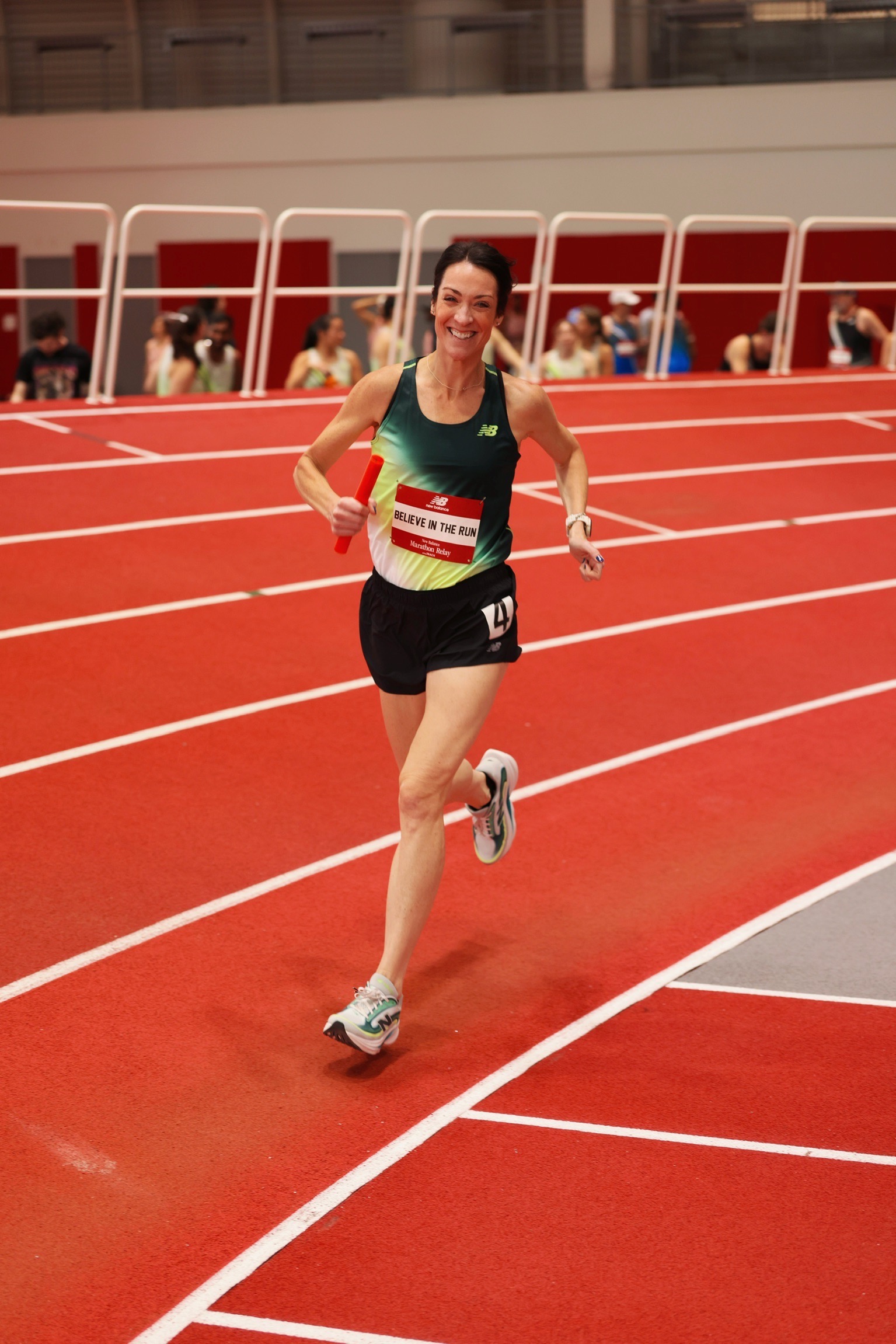
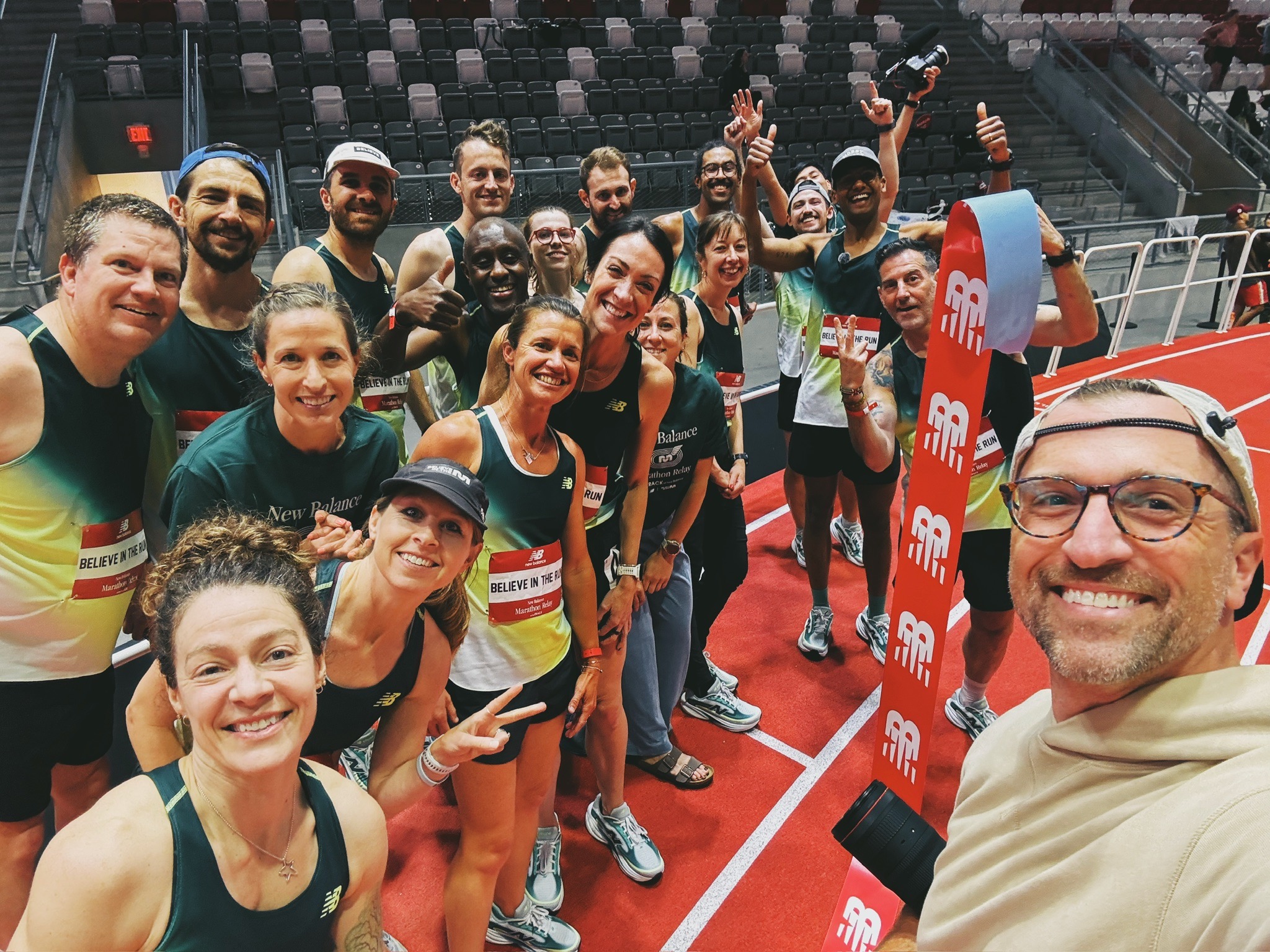
Quick change with my fresh nails, and we were off to the New Balance Marathon Relay at the Track. This was my favorite event from last year’s marathon weekend, so I was stoked to head back. My plan was to fun run my mile out there, but once your feet hit that bouncing track and the crowd is roaring, it’s impossible to have any chill out there. I ended up running a 5:45 mile. Whoops! Our team, Believe in the Run, ran a 2:47 marathon as a team. The highlight of the event was Kim Conley kicking us off with a 4:48 mile. This met her goal of running a sub-5-minute mile for 25 consecutive years. What. A. Run.
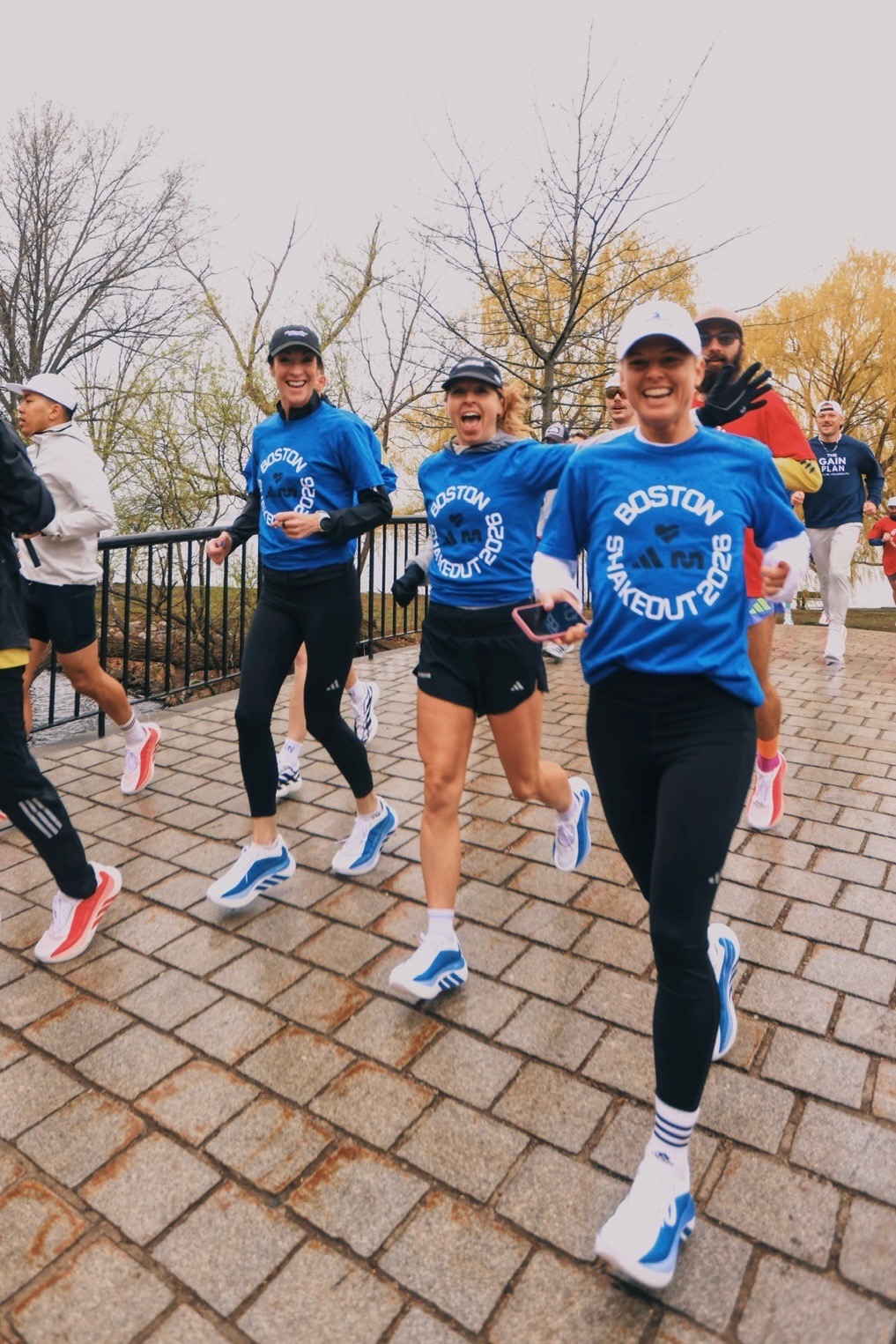
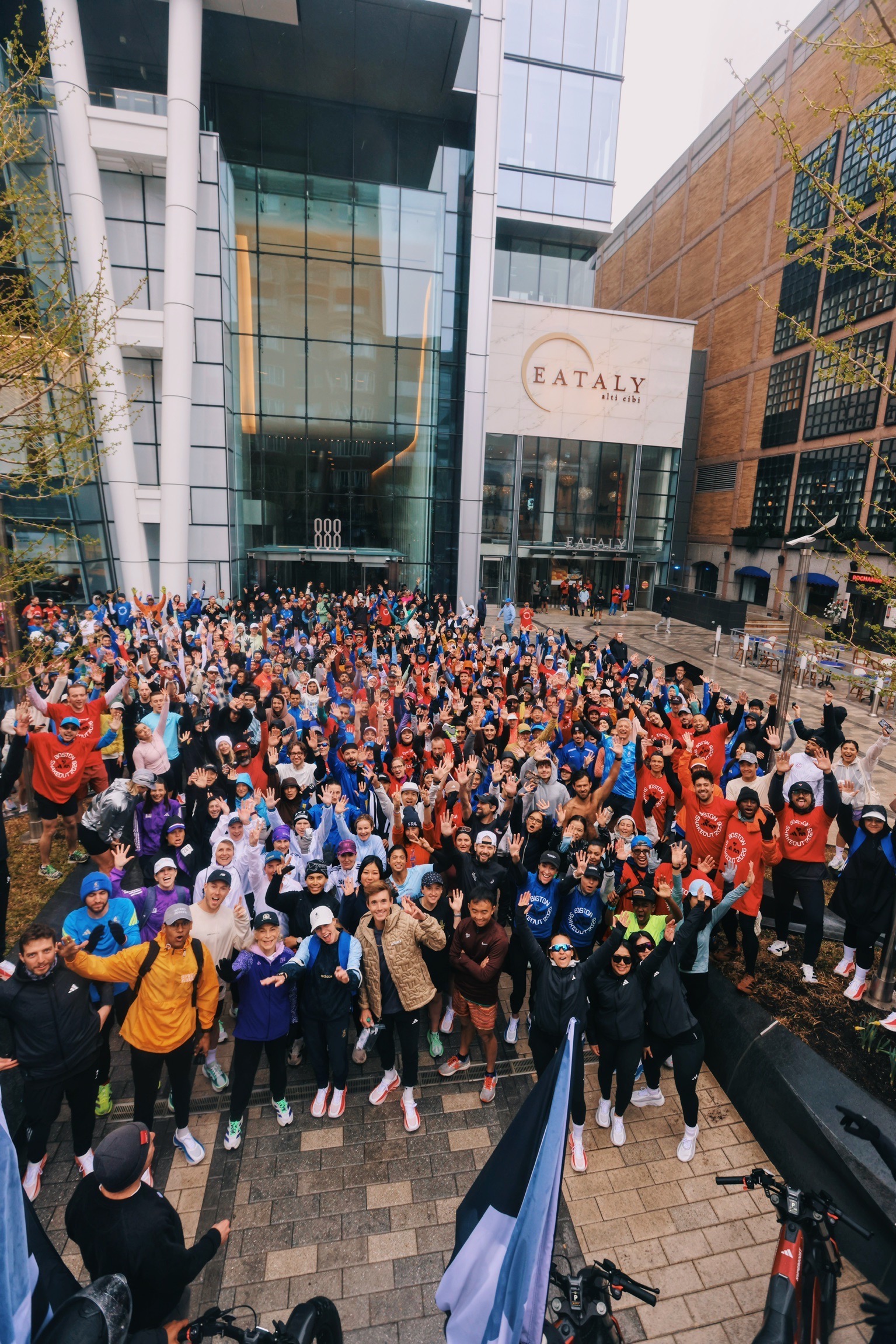
Sunday, we woke up ready to lead the adidas x heartbreak x believe in the run shakeout. With rain in the forecast, we weren’t sure how many people would show up, but you all showed up! Over 1000 runners came out for a 2-mile shakeout from Newbury St to Heartbreak Running. We jogged. We laughed. We ate bagels. And, we all got rained on. Spirits were high, and excitement was building for the next day.
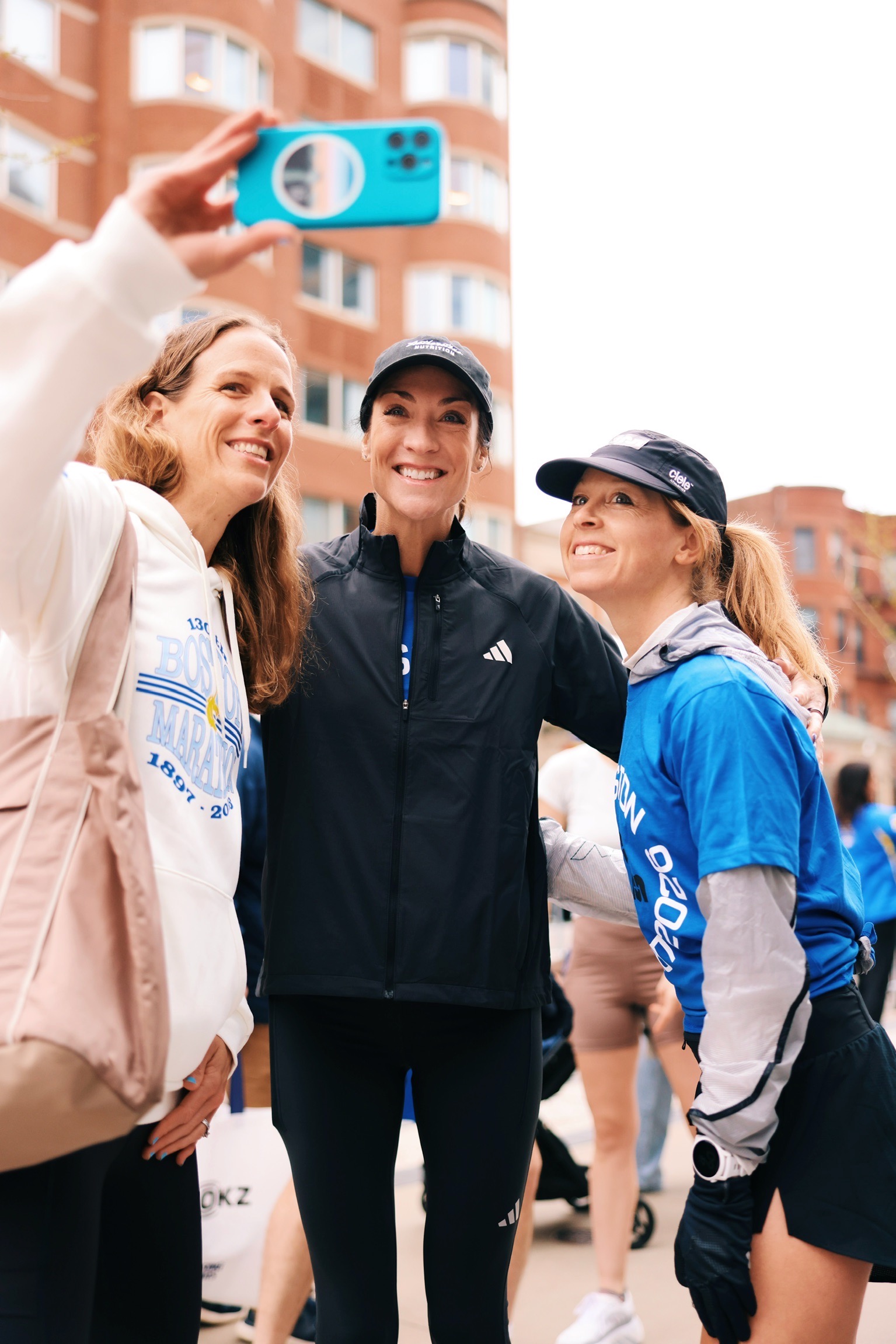
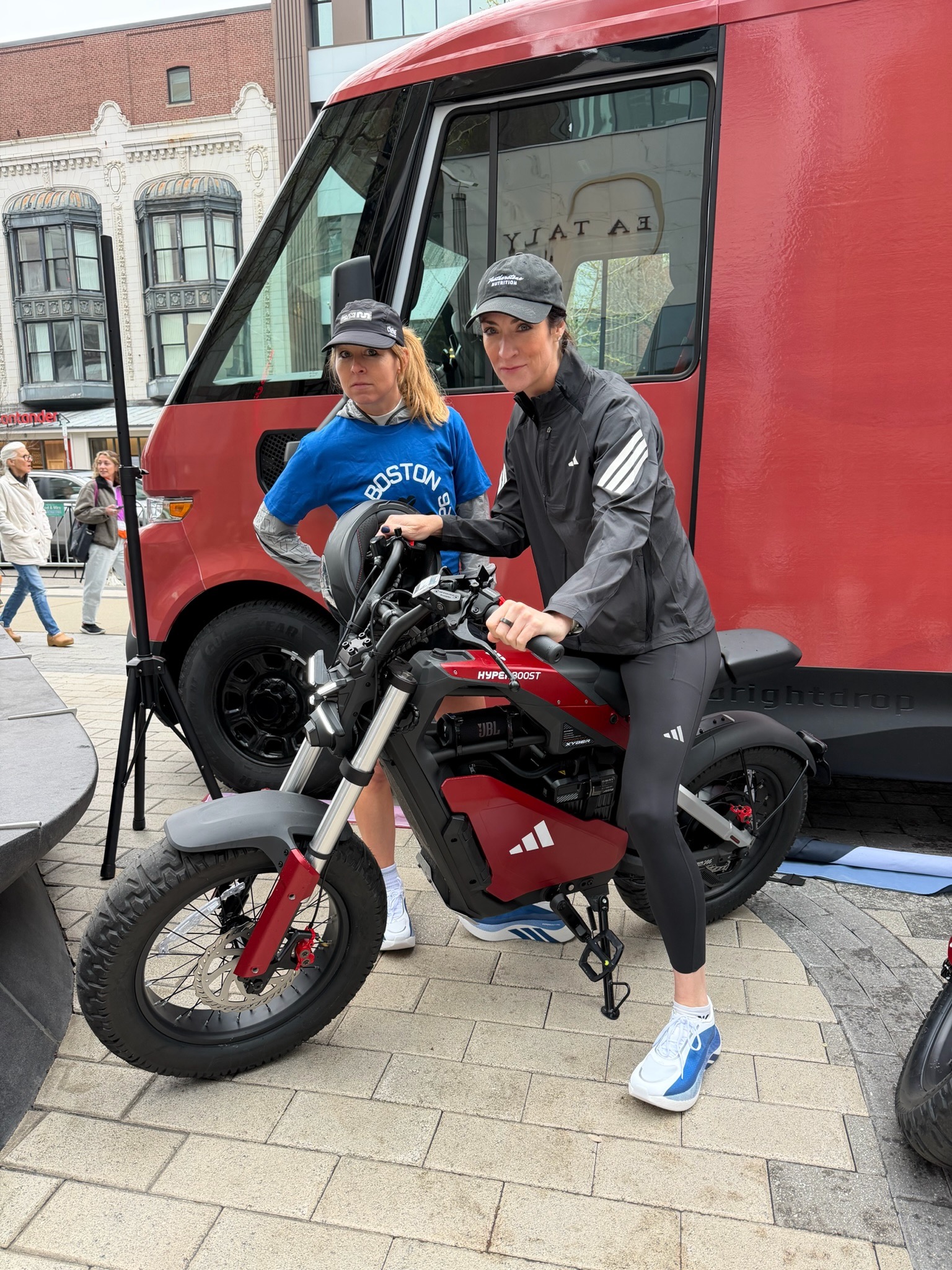
For the rest of the day, I laid in bed watching Big Mistakes and catching up on The Pitt. A client gave me a massive loaf of her favorite bread at the shakeout, so I now encourage ‘Bed Bread’, aka taking a loaf of bread to the face, while lying in bed, carb loading, pre-marathon. I chased my bed bread with a pizza, drank some electrolytes, and hit the hay.
Race Morning
Are you even a marathon runner if you haven’t stalked the weather 18 million times pre-race? I woke up to double-check the forecast, and we still had 40s for the entire race and a tailwind. What. A. Dream.
At 5 am, I ate a Maurten solid bar, 2 graham crackers, and drank a massive cup of coffee. My stomach felt great. I felt calm. I was still deciding on my top for the race. My daughter, Sloane, told me to wear the one that fully covered my stomach, so I obliged and made it easy on myself.
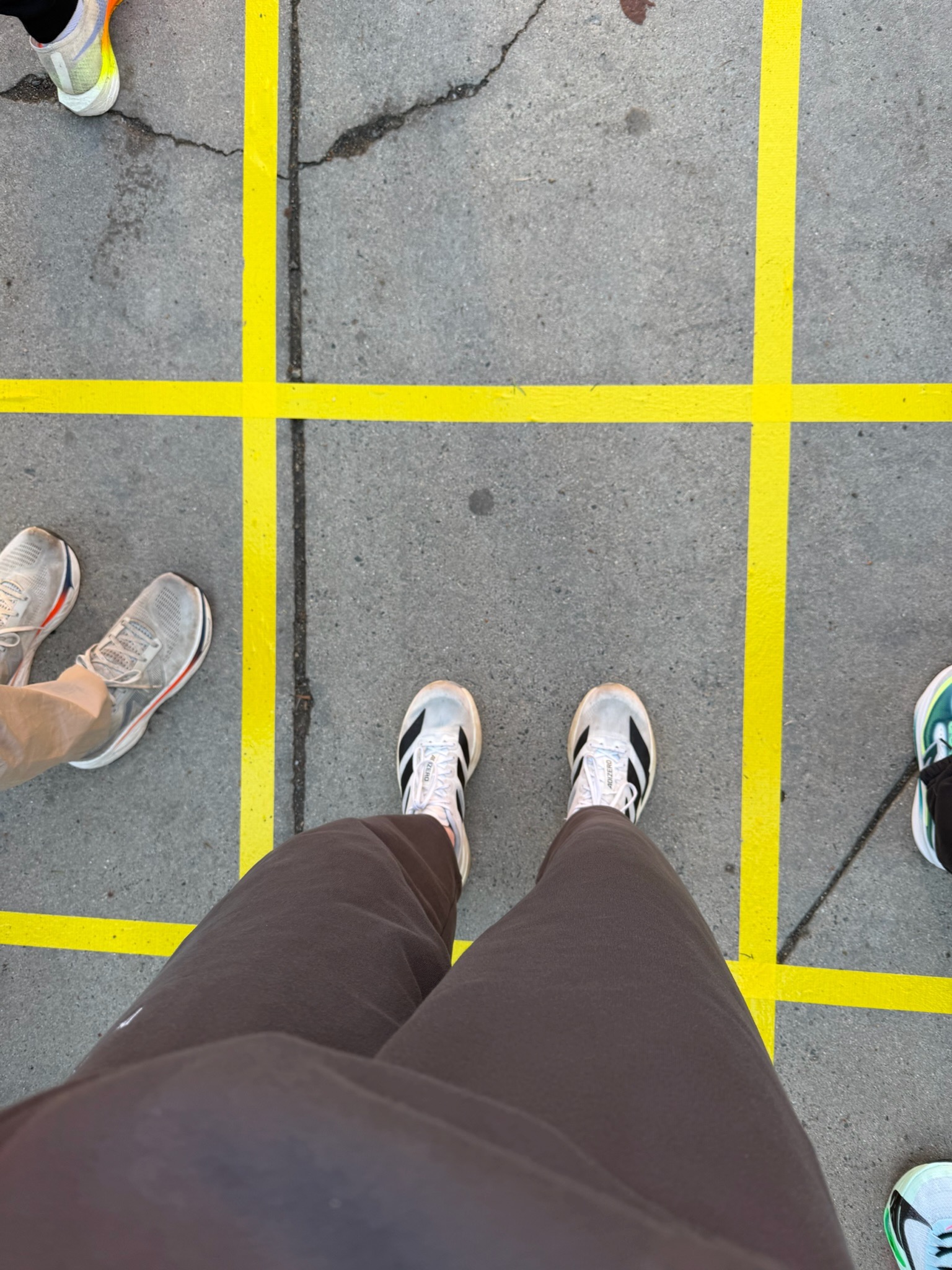
At 6:15 am, I met Meg Murray in the lobby to walk to the buses. We picked up Ben Johnson and headed over to the gardens to load a school bus. They changed up the loading technique since I last ran this race in 2023. There was a grid on the ground and they herded us all into said grid. Each box represented a seat on the bus. Once the grid was filled, we were assigned a bus to load. The logistics that go into this process are wild, and it went super smooth.
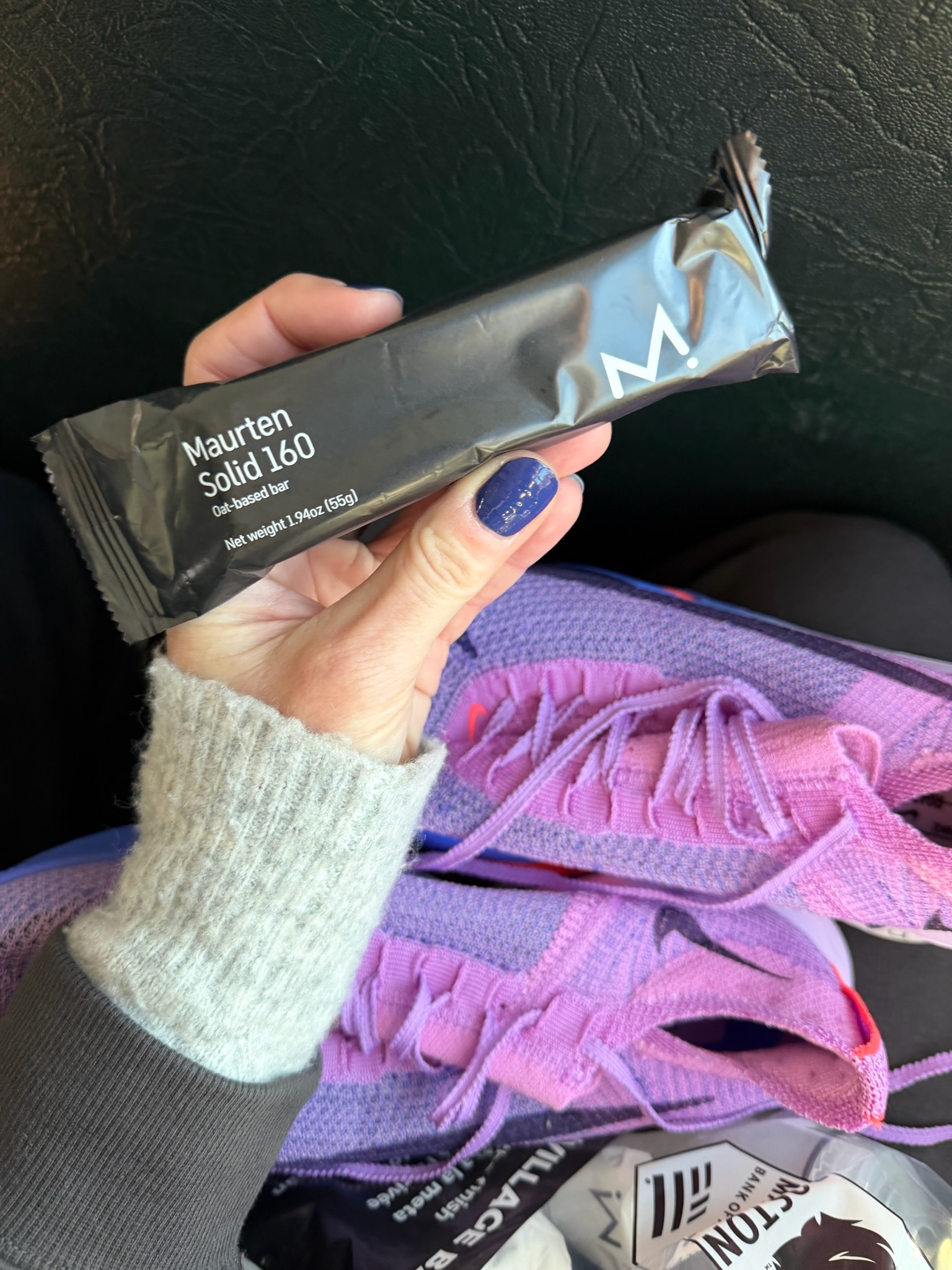
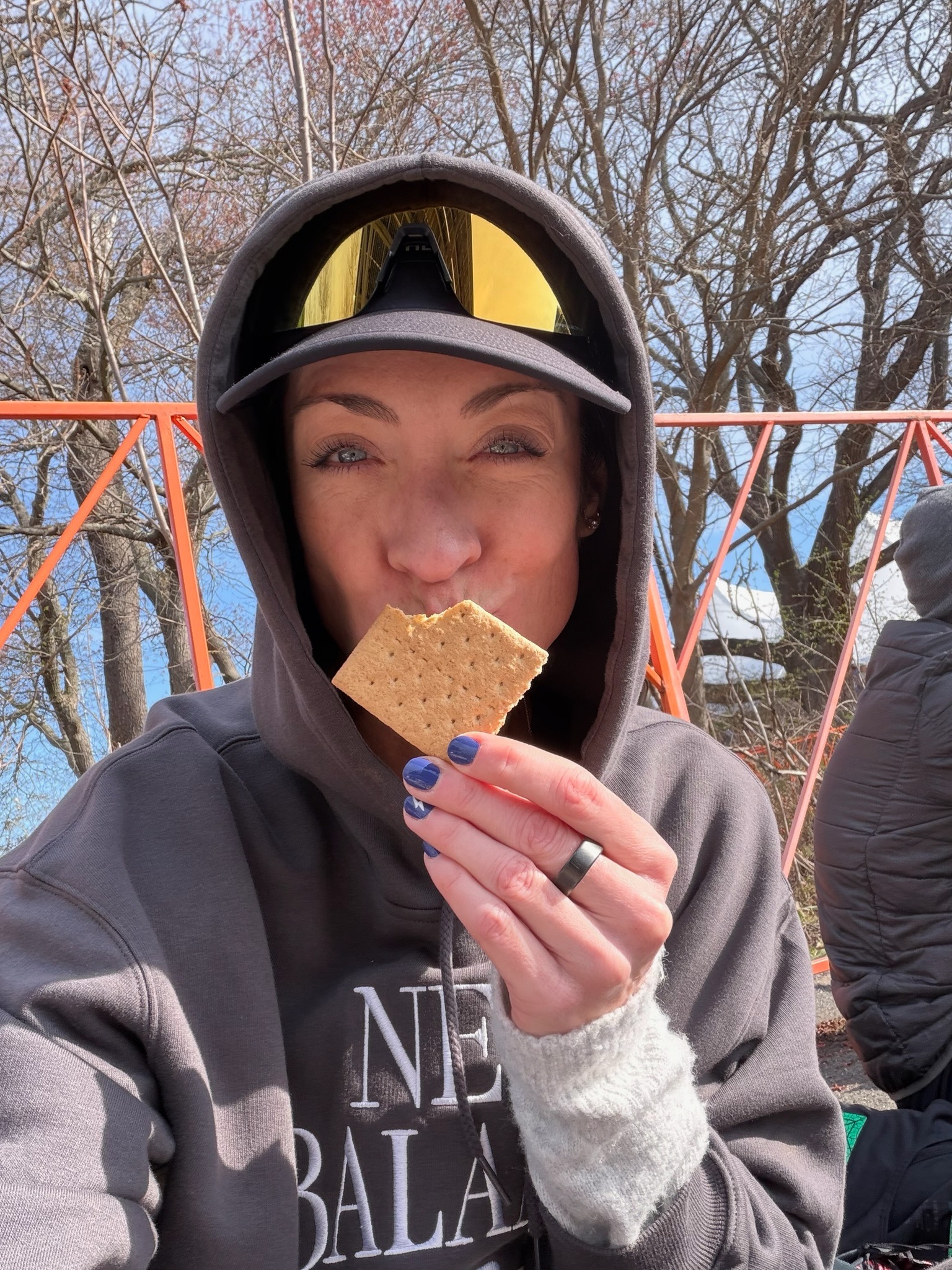
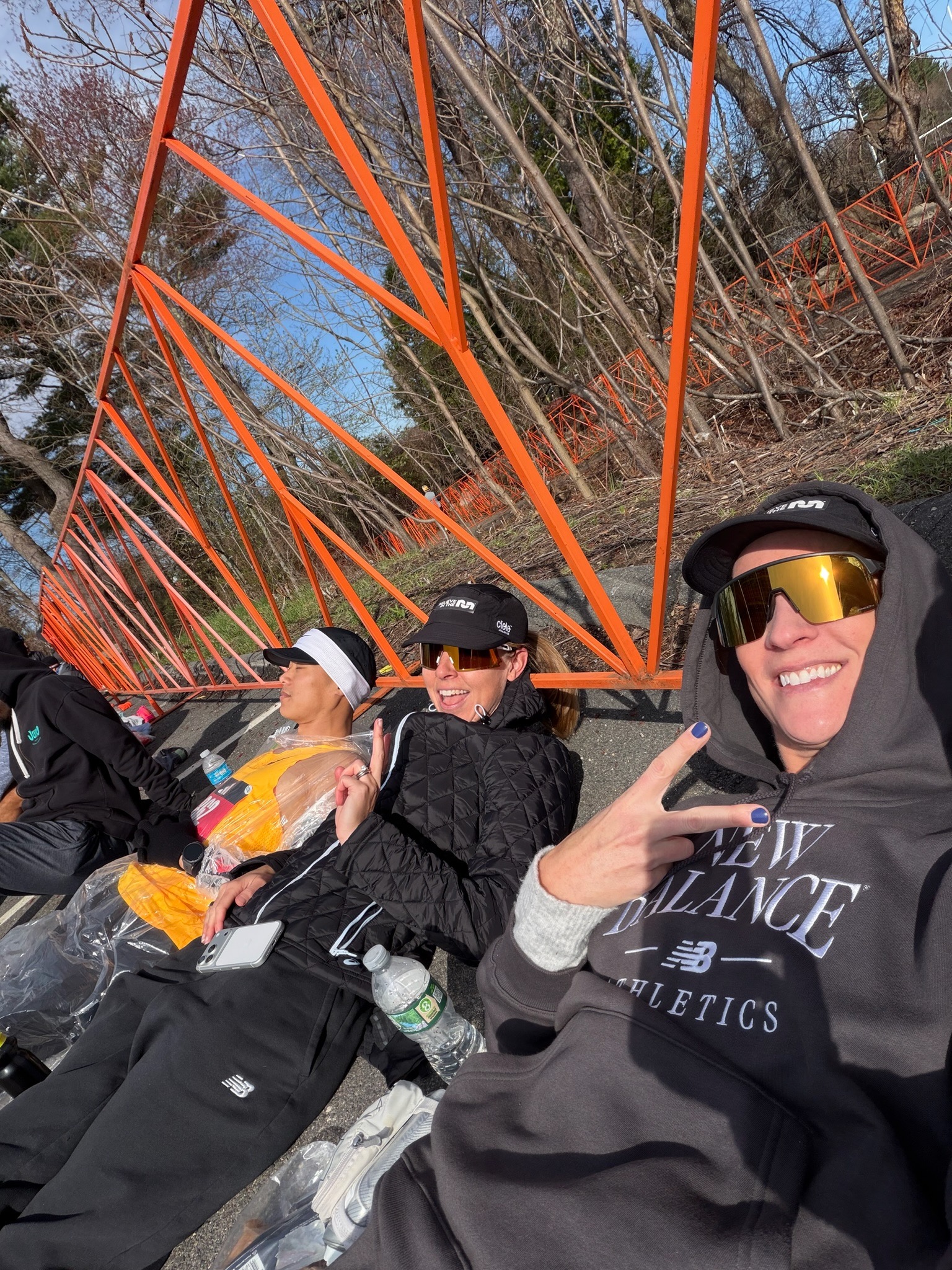
We got to the Athlete’s Village around 7:40 am, so we have about 90 minutes to lounge. We found a smaller area to wait (thanks for the intel, Ben) that had no lines at the bathrooms and plenty of dry places to sit and lie down. We laughed a lot. I observed all the different pre-race nutrition options runners were consuming. And I ate my second breakfast at 8 am: another Maurten solid bar + 4 graham crackers.
Pre-Race Nutrition Total: 154 g carbs + 20 oz water with electrolytes
The Race
Historically, once I get into the corral, the nervous energy hits me. But Meg Murray and I were in the same wave, same corral, and having one of your best friends by your side just makes everything feel calmer. (Thanks, Meg!) We took our pre-race gel at 9:45 am, Maurten caffeine, and hopped into the corral.
The sun was shining. The flags were blowing in the tailwind. I put my sunglasses on immediately in the corral. The national anthem was sung. The plane flew by, missed its timing a little, but it was still epic to watch. The gun went off, and we were on our way from Hopkinton to Boston.
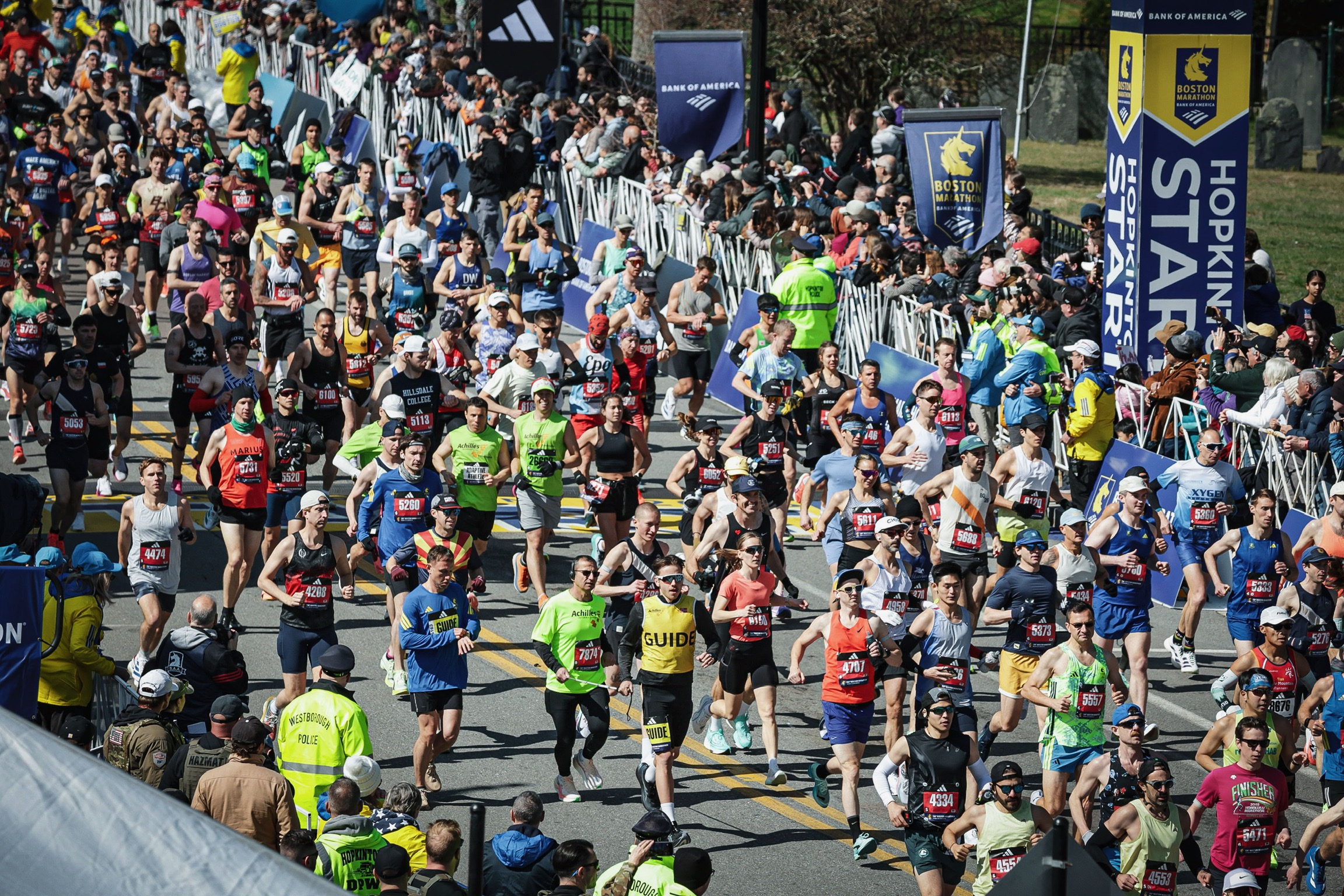
Boston has a massive downhill stretch for the first 6-7 miles. This was my 5th Boston, and yet I have only once paced it well. (Ironically, it was my first Boston in 2011.) Knowing that marathon pace has felt comfortable anywhere from 6:30 to 6:50, I wasn’t quite sure what pace I should aim for in the early miles.
Mile 1: 6:42
Mile 2: 6:34
Mile 3: 6:33
Mile 4: 6:33
‘Shoot. Am I going out too hot?’ I checked in with my body, my mind, and my breathing. Things felt really, really good. ‘But that’s what everyone says about the first 6 miles of Boston.’ I reminded myself that I came out here to race to the top of my fitness, but also to finish stronger than ever. I continually checked in with myself to make sure this pace felt sustainable. At mile 8, I had a vivid memory pop into my head of me telling a fellow runner in the 2022 race that I wasn’t feeling great already. But today, I felt incredible.
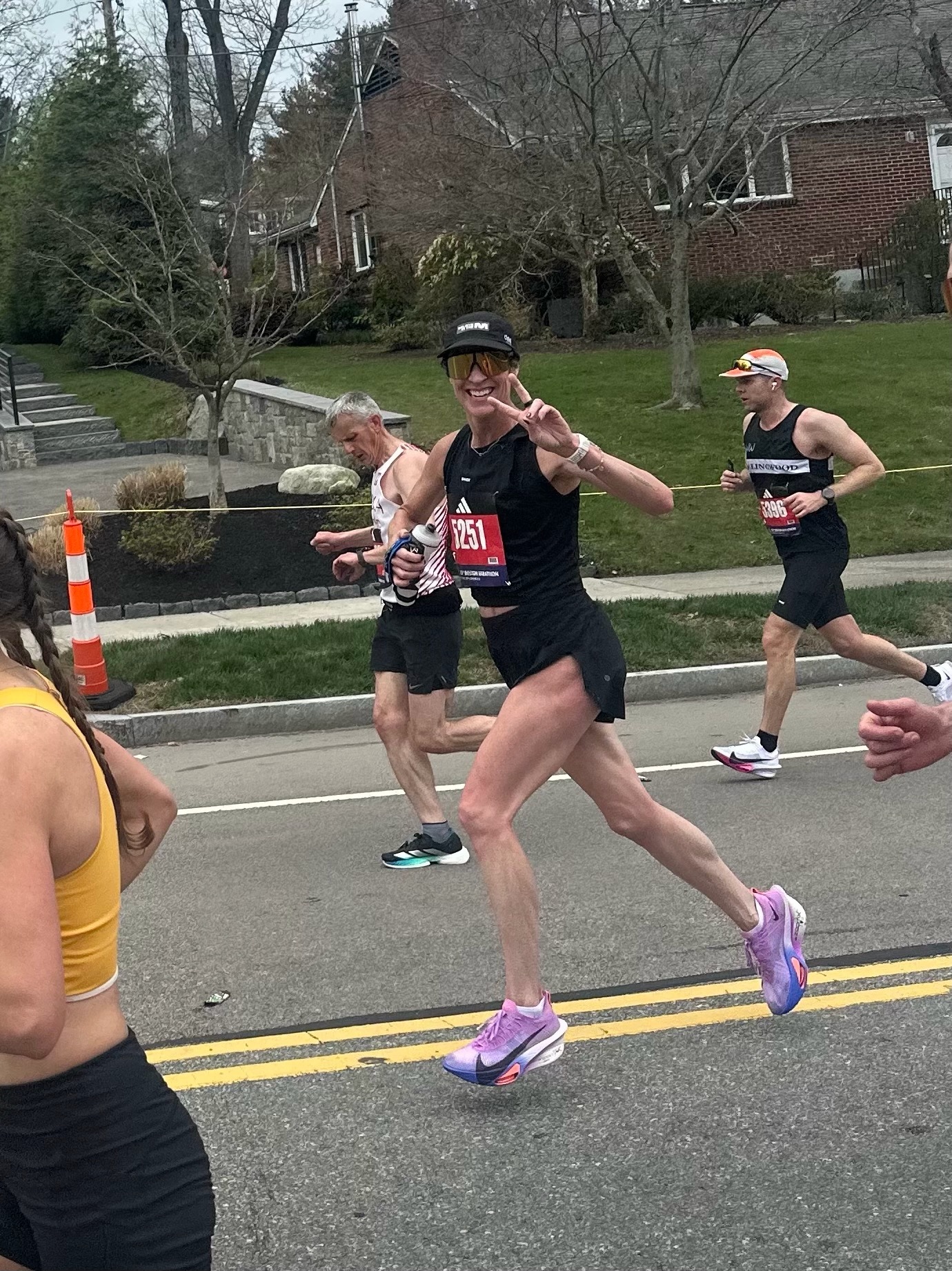
Miles 5 – 16 were all within the 6:30s
The Wellesley scream tunnel, yet again, did not disappoint. I again had a flashback to running in 2013, where my legs were dead by this point. I checked in with my body and mind. Everything still felt incredible.
You’re probably here for the fueling recap, so let’s back track to that. I started with a 20 oz Amphipod handheld with 1 serving of Skratch Hydration (passion fruit, orange, guava flavor) + 2 servings of Skratch Unsweetened Hydration (salted margarita). This totaled 1200 mg of sodium for my salty sweater self. I lose 1200 mg of sodium per liter of sweat. And I know from years of sweat rate testing that I lose around 20 oz of sweat per hour in 40°F weather.
To totally nerd out for a moment, if we know our sweat rate and sweat composition, we can play around with race-day hydration numbers and attempt to minimize the extent of our dehydration. The goal is never to replace everything we lose, fluid- and sodium-wise, on race day. The goal is to minimize those losses to a place that will not negatively impact performance. Some studies suggest that 2% or more dehydration negatively impacts performance. Other studies suggest it is more individualized. But I know that I am very sensitive to dehydration and its effects on my performance. So I knew that if I drank this handheld and grabbed 4 oz of water on the course, that I would end the race 1.5% dehydrated with no negative performance effects. So that is what I did!
For gels, I used Maurten 100, as I have in most of my races. I find them non-offensive, easy to get down, and they never upset my stomach. I took one gel every 25 minutes for a total of 6 gels on the course. I cannot stress enough the importance of fueling on the downhills at Boston. Fueling does increase our perceived effort and heart rate slightly, so let’s never combine it with climbing a hill. I kept an eye on the time to make sure I took fuel in time and on the downhills.
Gels
Pre-race: Maurten caff
25 min: Maurten
50 min: Maurten caff
1 hr 13 min: Maurten
1 hr 35 min: Maurten
2 hr: Maurten
2 hr 25 min: Maurten
After a massive downhill at mile 16 (we’re talking 108 feet loss over a mile), the Newton Hills began. I decided to have zero pace goals up the hills. Instead on focused on managing my effort and breathing and not pushing too hard for a specific pace. This allowed me to immediately bomb the downhills that follow and keep my legs feeling fresh, my heart rate controlled, and my breathing steady.
Miles 17 – 21 through the Newton hills were: 6:45, 6:48, 6:36, 6:45, and 6:57 for Heartbreak Hill
Despite the paces slowing, the smile never left my face. I felt so strong on the uphills (shout out to the reformer pilates work over the last year) and had great leg turnover on the downhills. This was exactly how I had hoped to feel through these hills. In the past, these hills sucked the life out of me. Not this year.
I wasn’t sure how I’d feel coming off the hills, but I kept hearing everyone say ‘it’s all downhill to Boston’ after Heartbreak.
Mile 22: 6:29
‘Holy shit. I’ve still got legs!’ I was ready to roll. I took my final gel and looked around at the crowd, hyping the BC college kids with all my might.
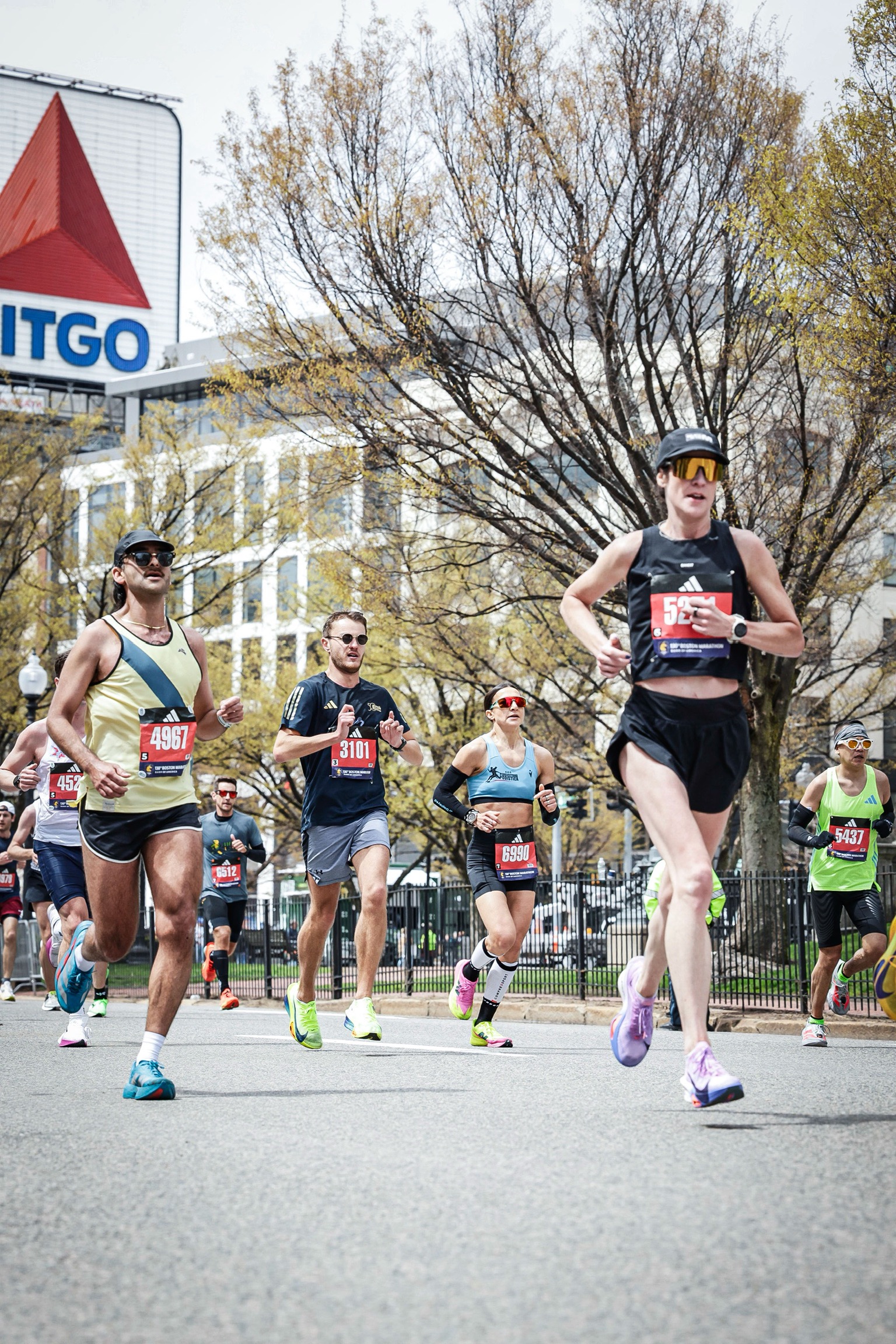
Mile 23: 6:33
Mile 24: 6:36
Mile 25: 6:34
‘I cannot believe I am still holding a 6:30 pace and feeling this strong!’ I was in complete disbelief. I did not think my fitness was back to this point yet, and I had a massive smile on my face from here to the finish.
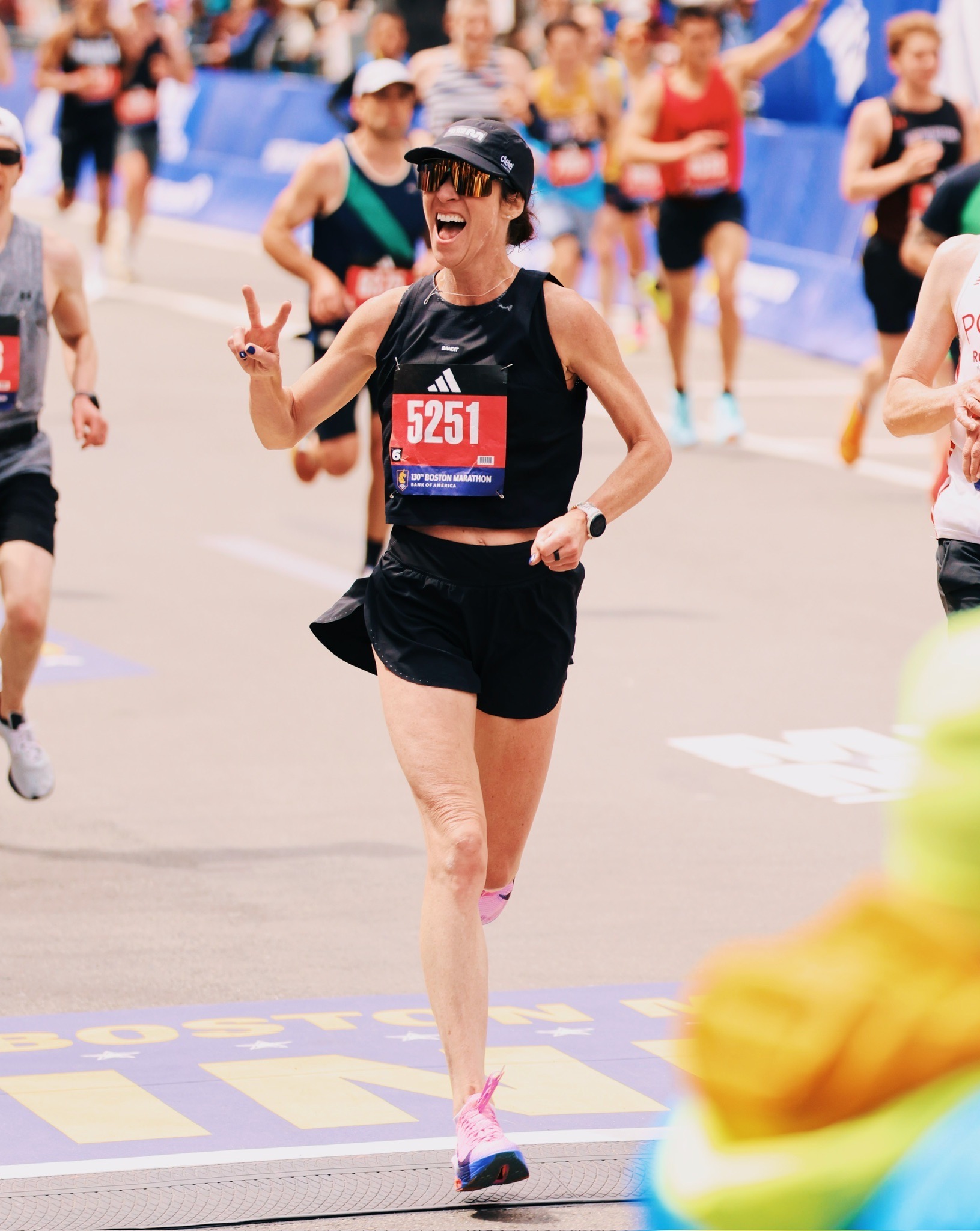
Mile 26: 6:34
That right on Hereford, left on Boylston, went way too fast. I threw my arms up, hyping the crowd, and thought to myself, ‘I don’t want this to be over yet.’ That was a first. Again, I quickly thought back to every previous year at Boston, where Boylston felt way too long. I charged up Hereford and took off down Boylston. I glanced down at my watch and was running a 5:45 pace, smiling, and feeling amazing. I laughed to myself thinking about how 5:45 mile pace was my all out pace two days early at the New Balance track marathon relay. ‘I guess it takes me 25.5 miles to warm up!’
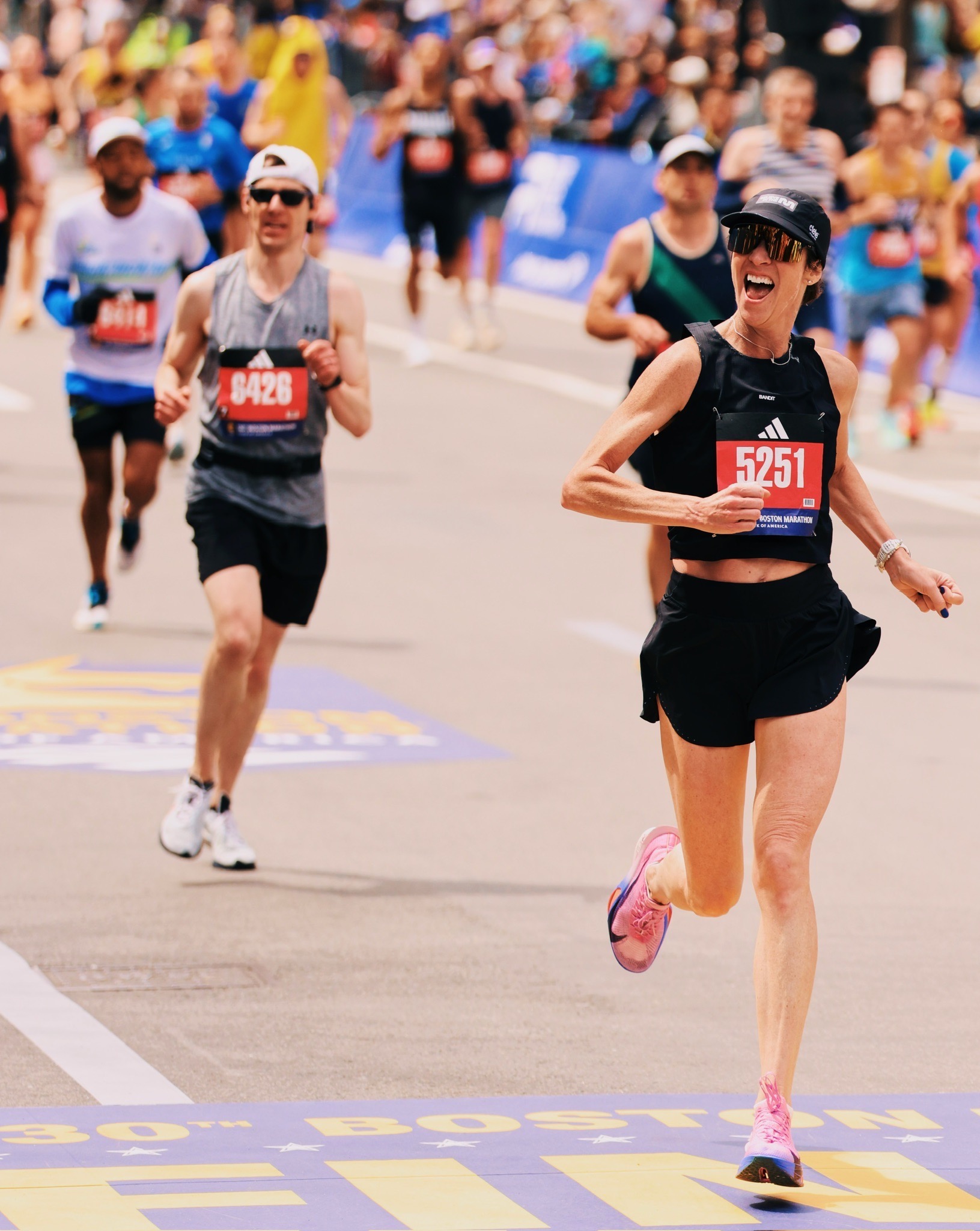
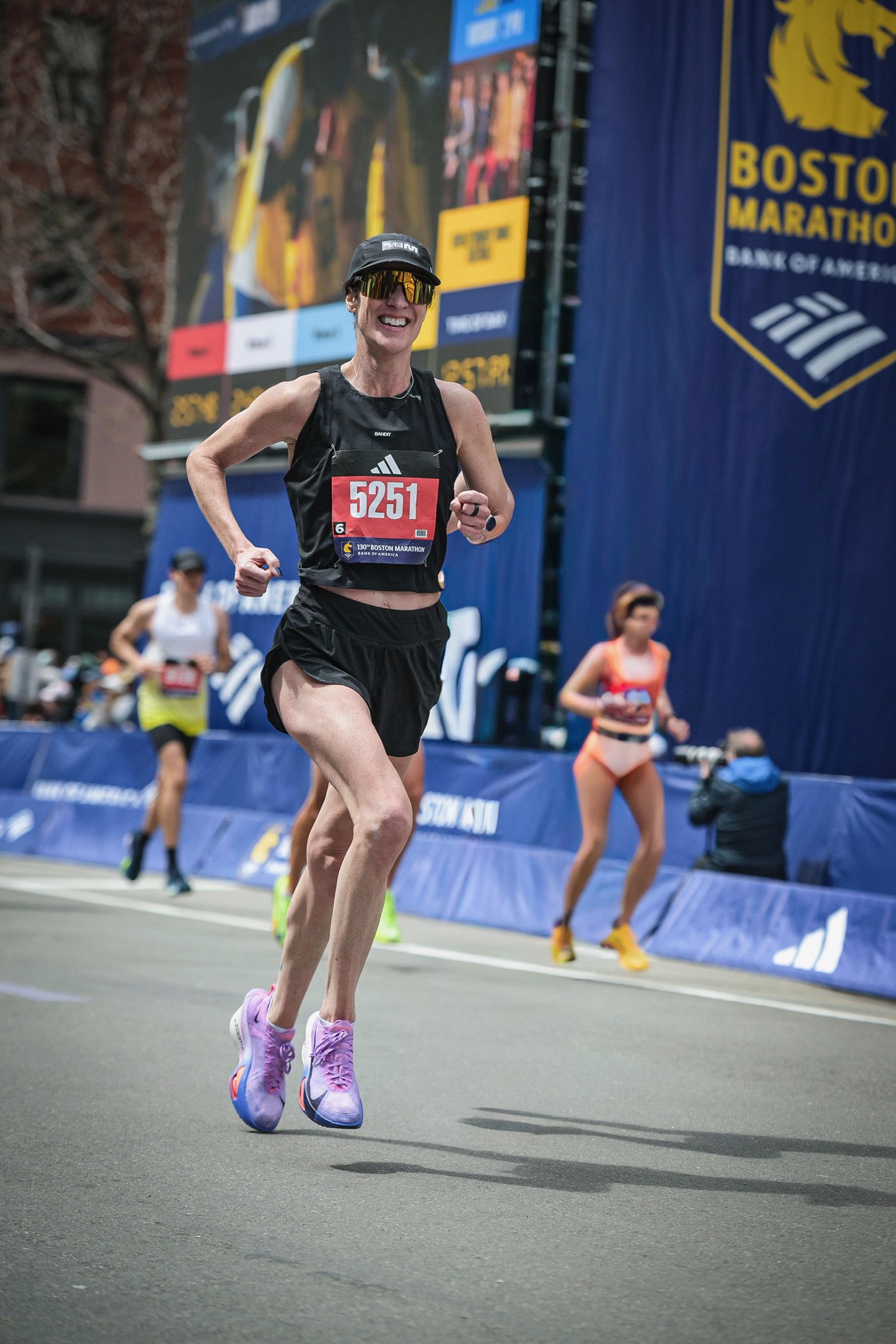
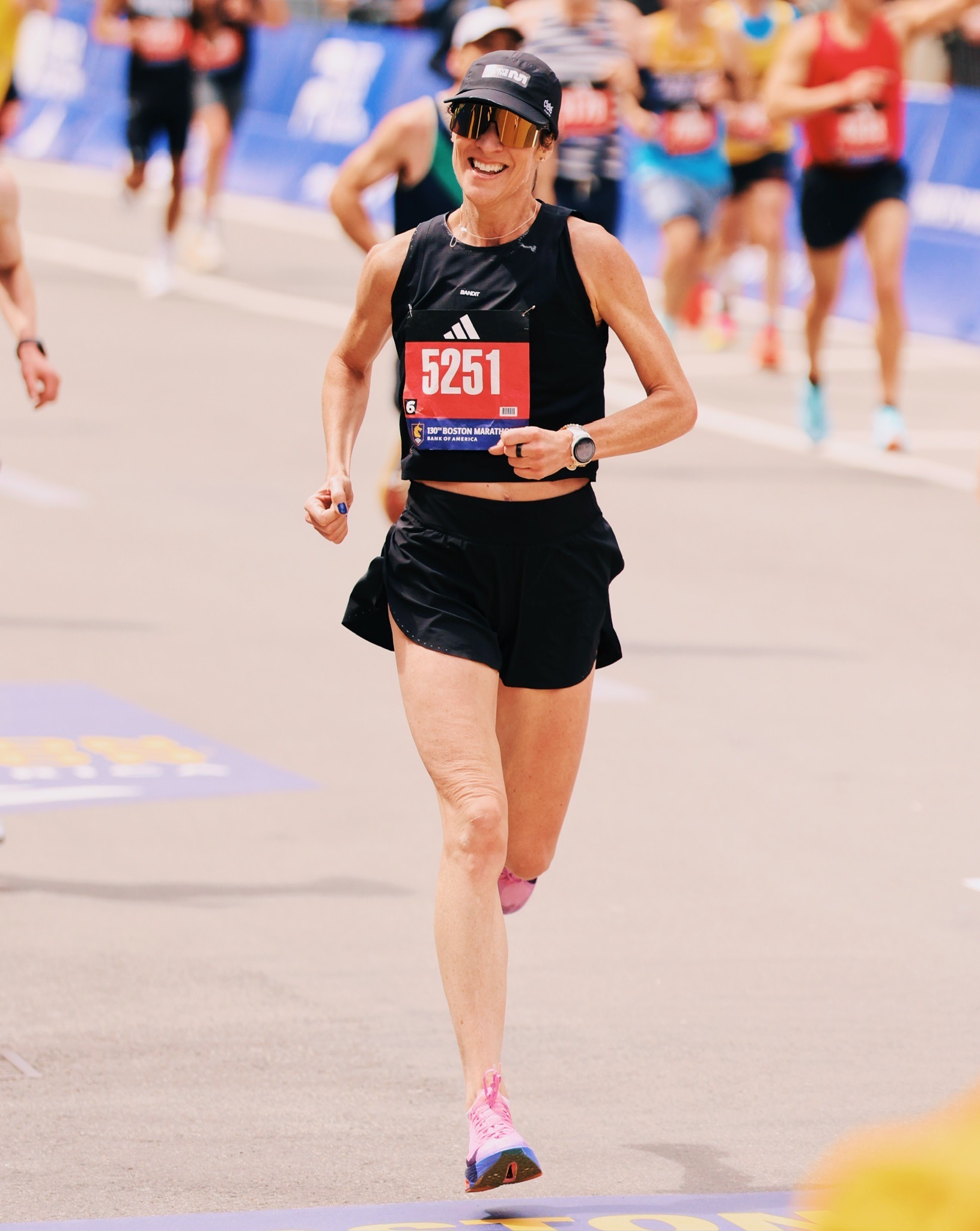
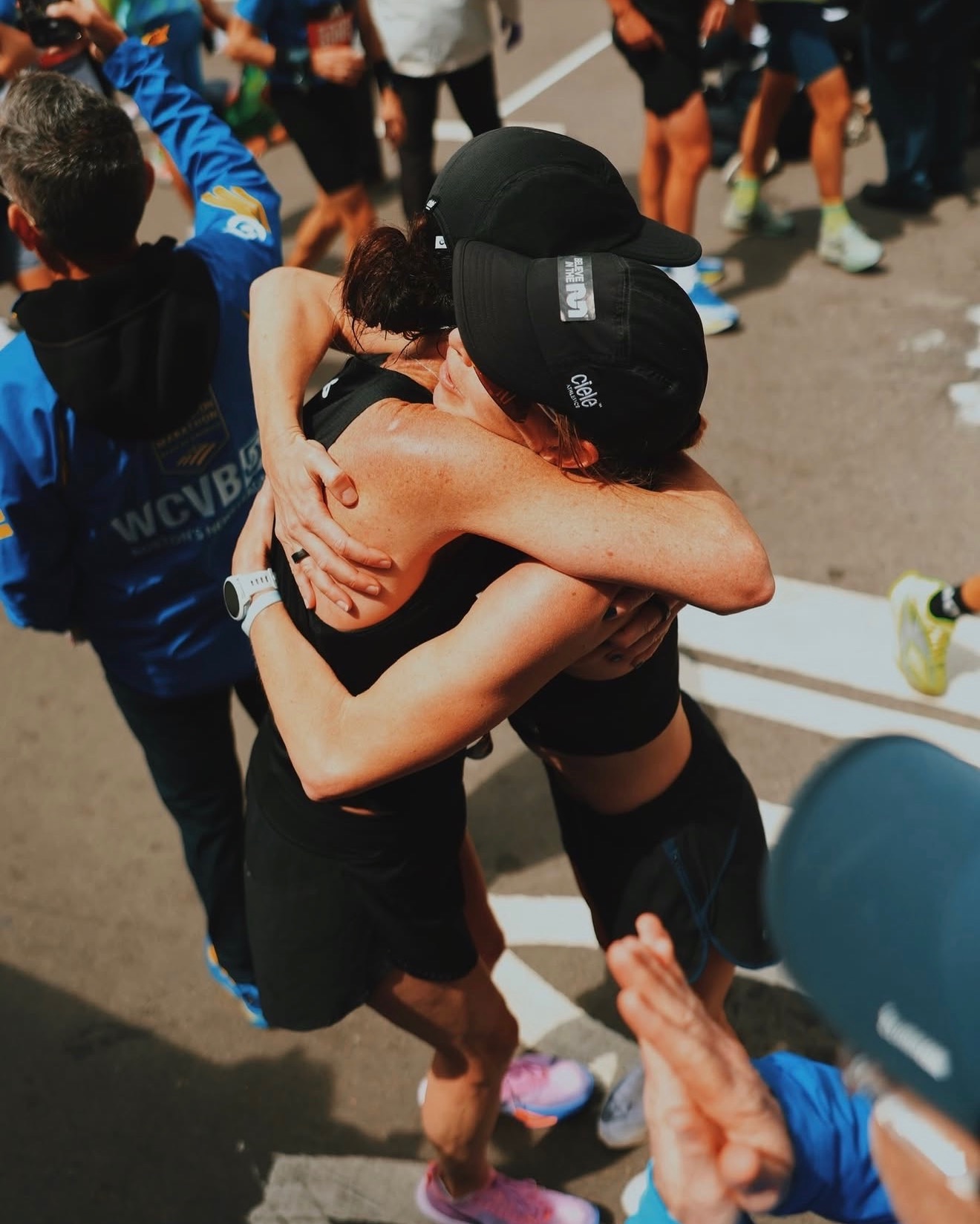
I crossed that finish line with the most massive smile ever. My face actually hurt from smiling so much. I stopped my watch and saw who was waiting for me, but Meg. The best finish line greeting. Thomas handed me a can of prosecco, which I immediately opened like Emma Bates’s iconic Modelo finish two years earlier.
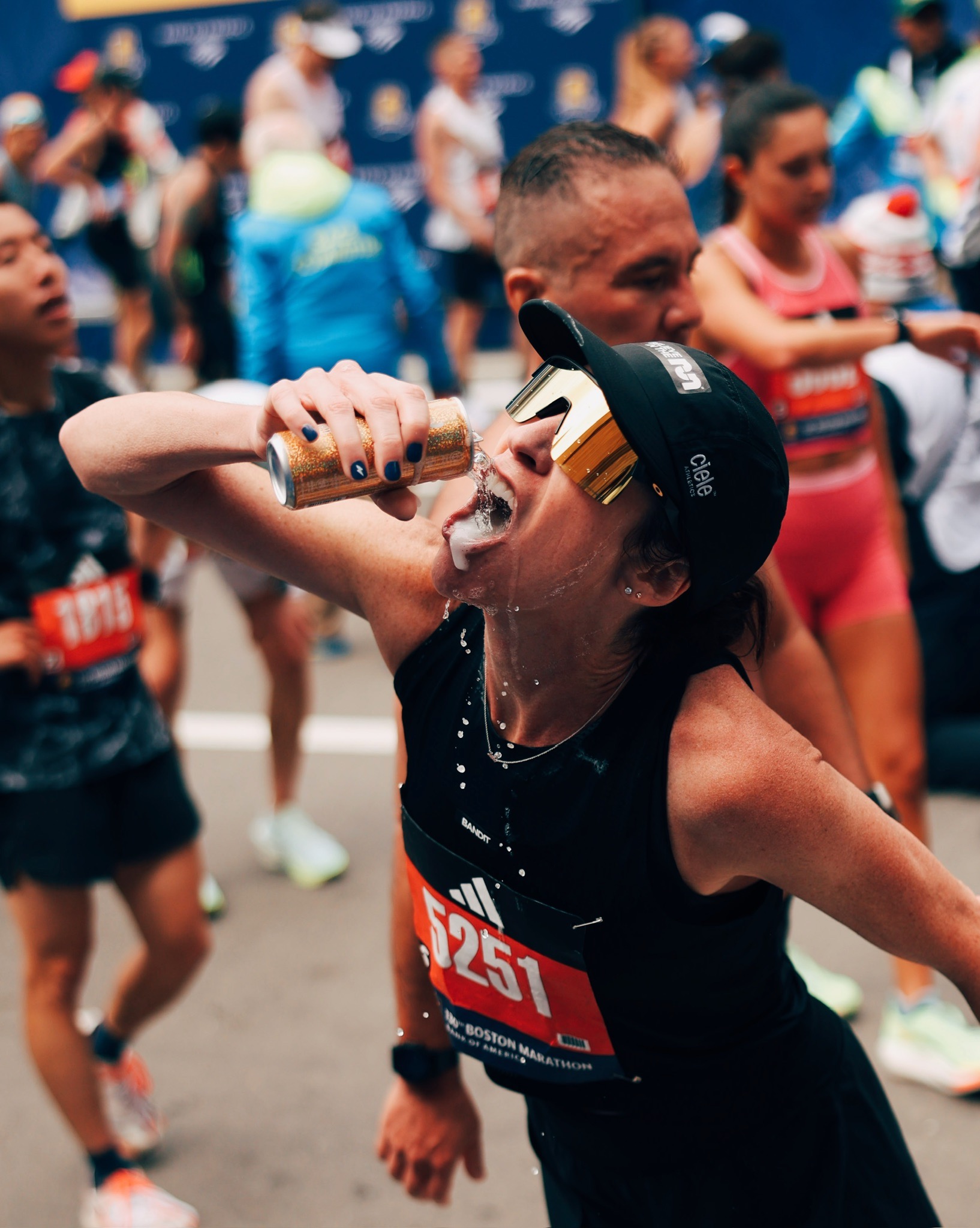
Then it dawned on me, I don’t even know my finish time! I looked down and saw 2:54:30 on my watch. Never in my wildest dreams did I think this body was ready to run a sub-2:55 again. This training block was different. Fewer days running (5 days per week), fewer miles (peaked at 52 mpw), more rest, reformer pilates twice a week, and more unscheduled downtime when I needed it. And, most importantly, a healthy body. There is no doubt in my mind that nutrition was the piece here that carried me so strongly to the finish. Never ever count yourself out, and pretty, pretty please nail your nutrition!
Total Race Nutrition: 67 g of carbs, 460 mg sodium, and 8 oz fluid per hour
Race Day Fit
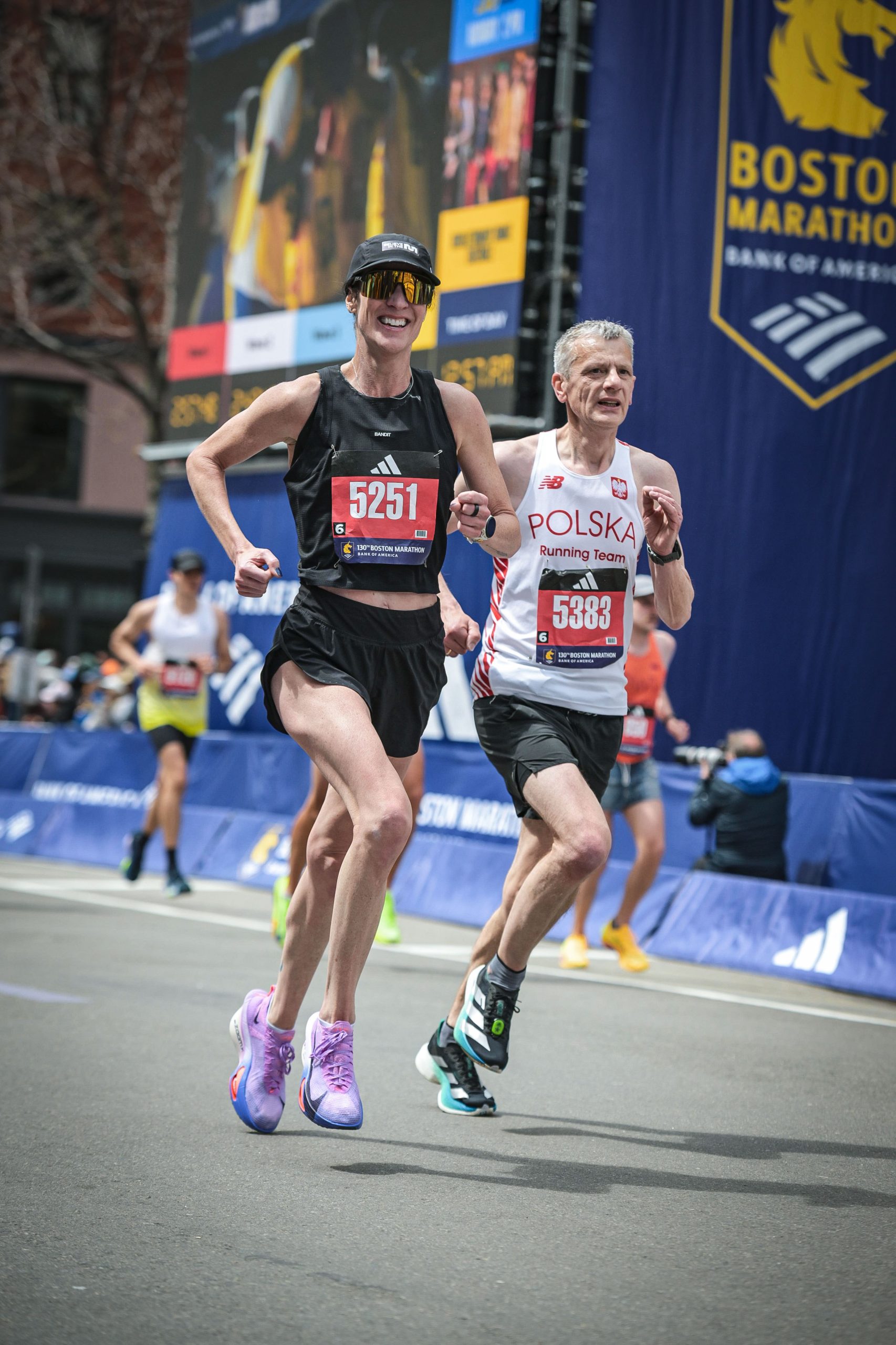
The question I always get is ‘where do you store all your gels?’ I hate gels in my shorts pockets so I have done many different things over the years, like stashing them between a crop & sports bra. But this year, I stuffed two gels in each side armpit pocket of my Bandit sports bra, and I put two in the loops of my handheld strap.
I wore purple AlphaFly 3’s on my feet. The Lululemon Fast and Free Split shorts. The Bandit Geomesh race singlet. The Bandit sports bra is linked above. My Believe in the Run Cielo hat. And, Oakley Sutro Lite sunglasses.
Post-Race
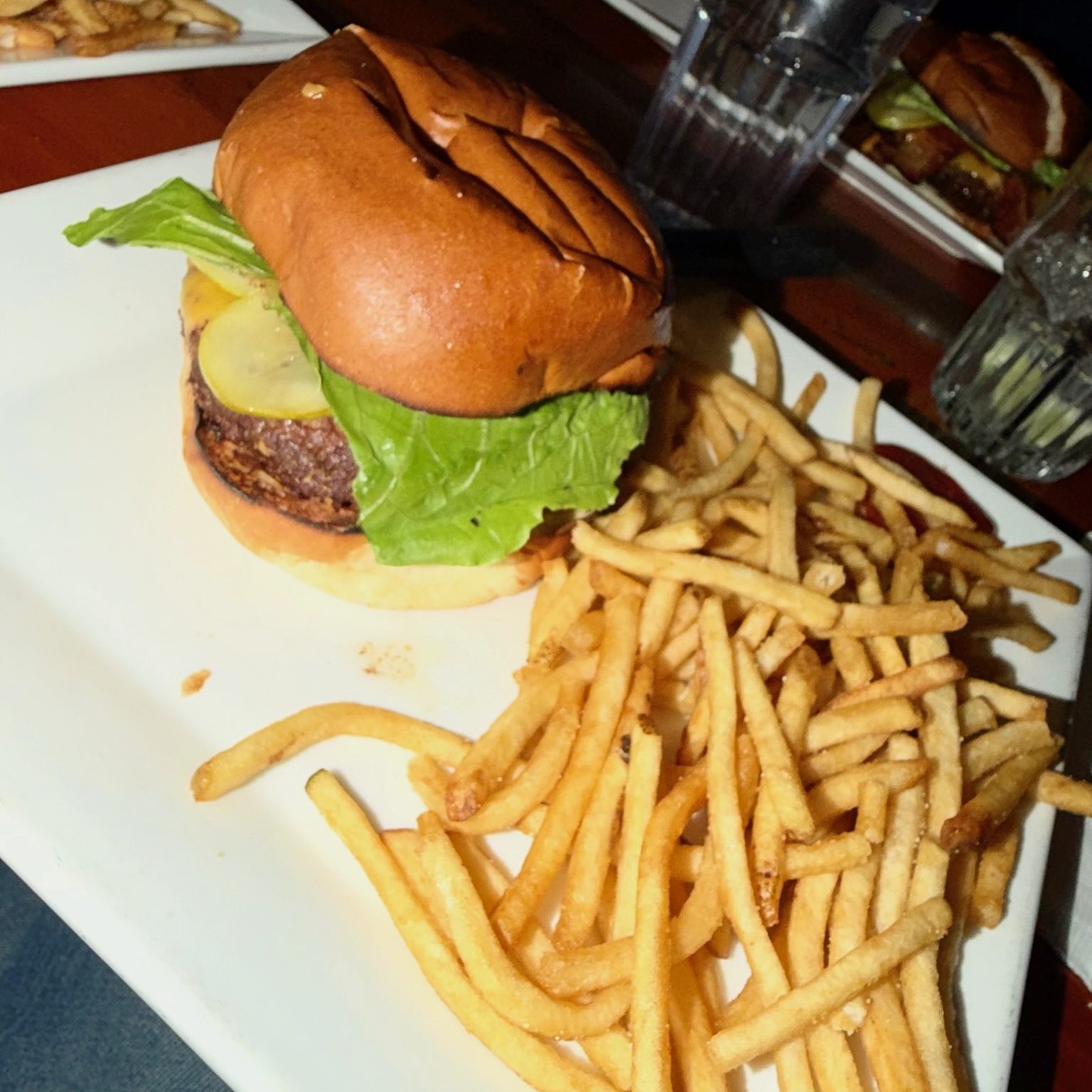
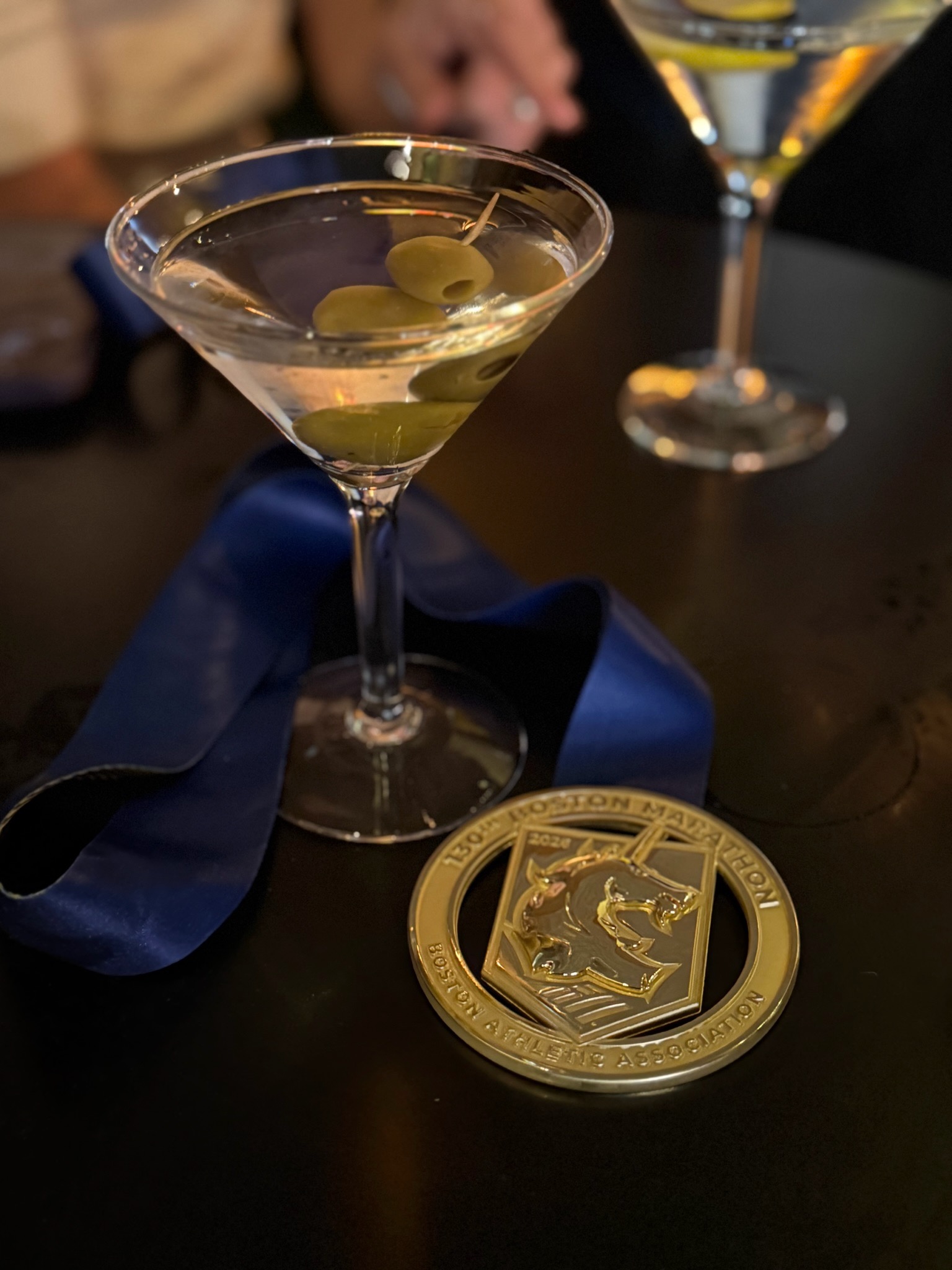
After a few quick hugs and receiving our medals, Meg and I walked back to our hotel to shower and get rolling for post-race fun. When we are together, this always includes a cheeseburger, French fries, and a martini (or two…). We found the best bar, called Anchovies, which all you Boston locals let me know on Instagram, is a gem. And I have to agree!
The End
Boston has a way of humbling you, no matter how many times you show up. But this year, I felt in control on the downhills, steady through the Newton Hills, and strong when the course demanded it late.
My training was much less than years past; however, it was strong and intentional. The biggest differences this year were improved ferritin, a crushed carb load, and strategic on-course hydration and nutrition. It was a highlight of my weekend to hear from so many fellow Boston Marathon runners how much solid nutrition has changed their running. If you are reading this, and you haven’t yet dialed in your race day nutrition, consider this a sign to do it now!
Until next time, Boston!
I am so grateful I found Fuel For the Sole. I PRd at NY Marathon 2025 because of you, Meg and Thomas.
I am hoping to BQ at the Hudson Valley Marathon this coming Sunday May 3rd.