

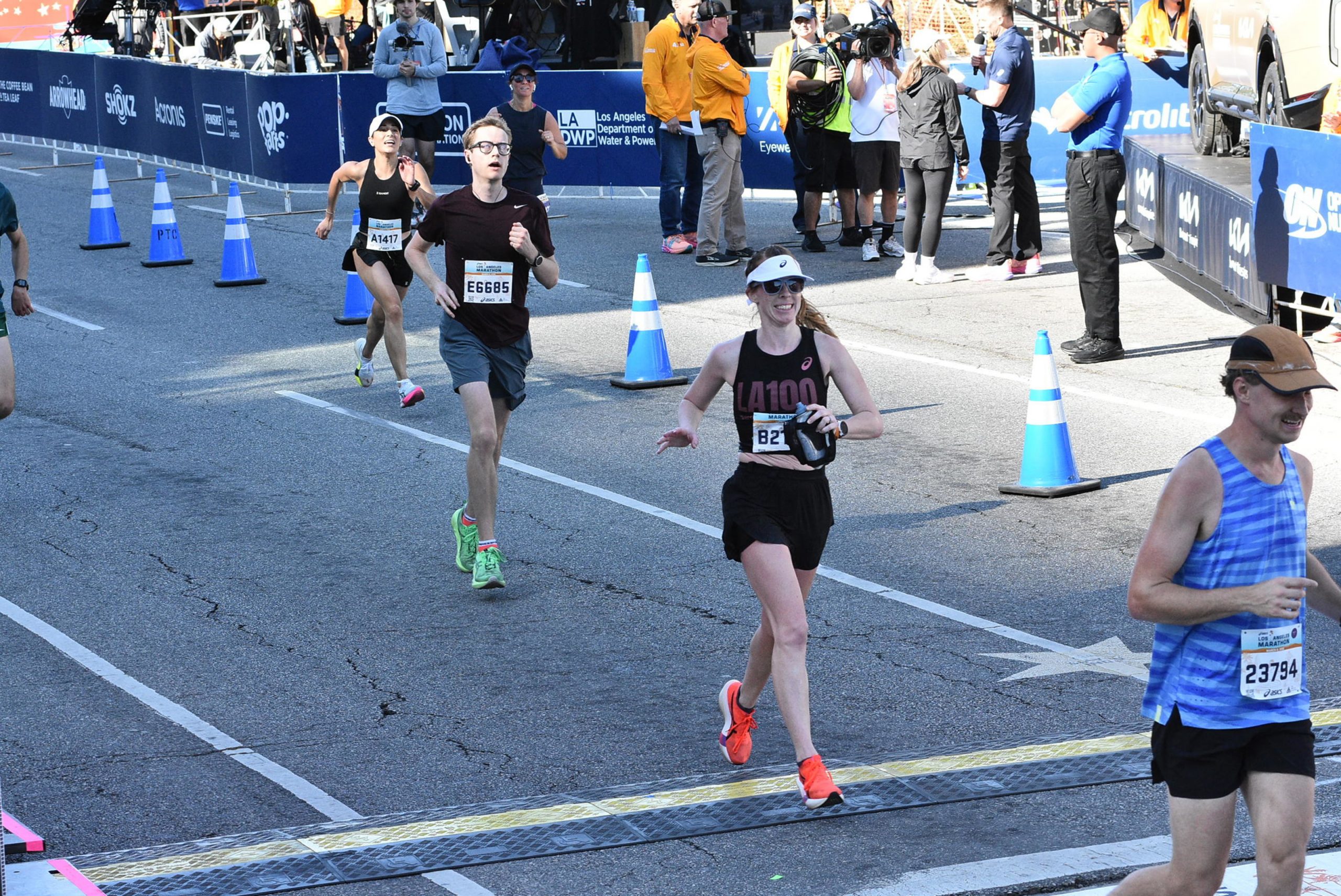
Sarah's LA Marathon Recap: Running with the LA 100
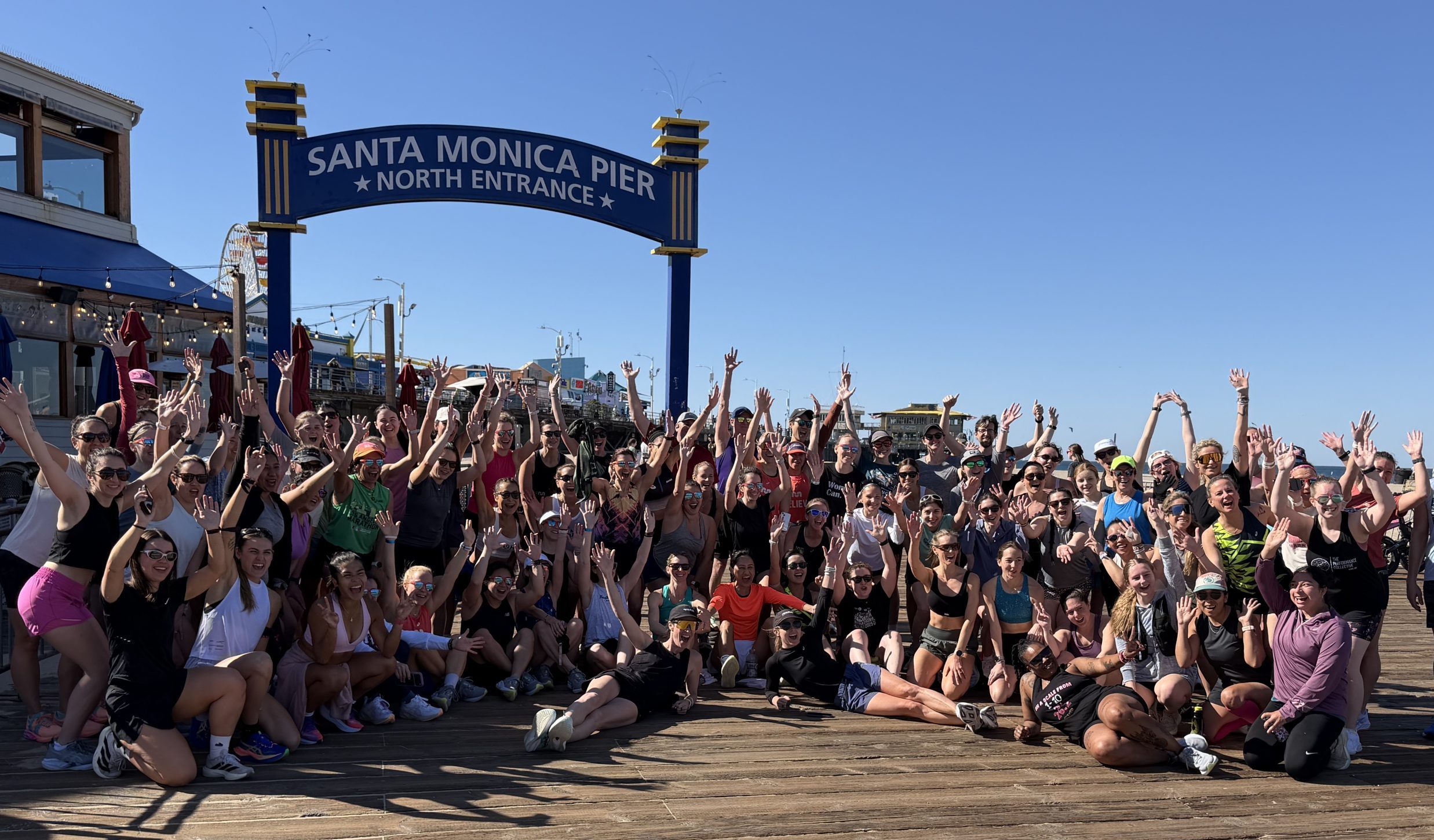
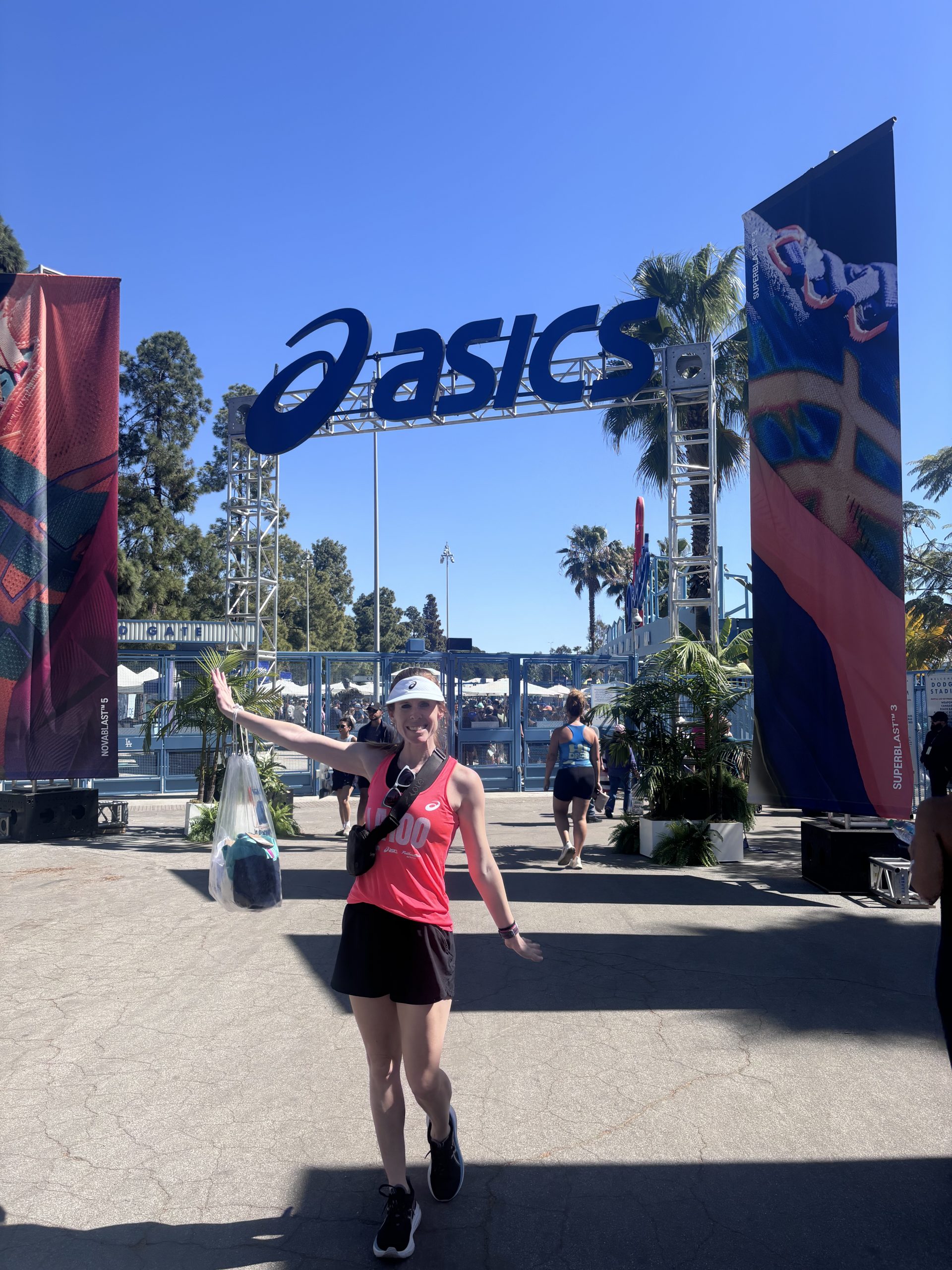
I had the amazing opportunity to run the LA Marathon and be part of the LA 100 with ASICS, Featherstone Nutrition and Believe in the Run. Through this program, we brought together 100 women from all over the country, Canada & Europe, provided them with 16 weeks of run coaching and nutrition coaching (plus some fun gear perks!), and then met up in person to run the Los Angeles Marathon together.
Throughout training we had a Slack channel with all 100 of us, and it was so cool to watch all of the women connect, ask questions, and encourage one another throughout the journey. When we finally got to LA, things only got better! We made friendships, hung out, grabbed dinners, and even started making plans for future meetups.
As I’m writing this on the plane home, I can still feel all the excitement and energy from the weekend. I feel so grateful to have been part of it—not only from a work perspective, but also as a participant.

The Carb Load
This was the first race I’ve traveled for in a long time. Over the past five years with young kids, I’ve mostly stayed close to home, so carb loading and planning meals away from home hasn’t been something I’ve had to think much about.
In the days leading up to the race, I spent a lot of time thinking about what I’d need and what I should pack. I came fully loaded with anything I could think of: bagels, Pop-Tarts, pretzels, Swedish Fish, graham crackers—you name it.
The goal of a carb load is to fully top off glycogen stores before race day. I’ve done carb loads in the past and can absolutely attest to how much they help prevent hitting the wall. With an extremely hot race predicted for Sunday (we burn through carbs faster in the heat), I knew I wanted to set myself up for success.
Using our Carb Load Calculator, my goal was 400–425g of carbs per day X three days. Those numbers can feel intimidating at first, but the more you practice carb loading, the easier it gets.
Day 1 – 390g carbs
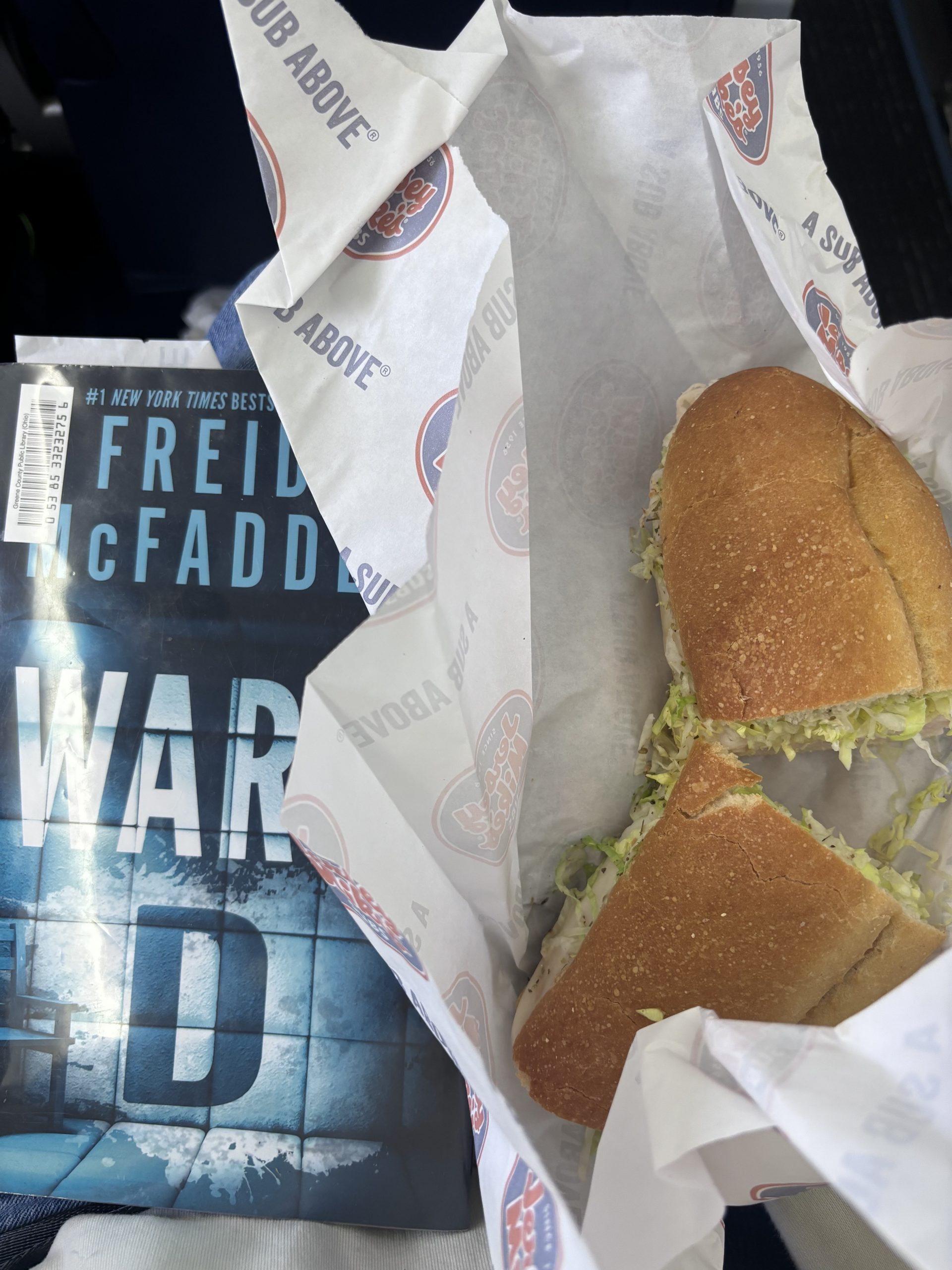
Cinnamon sugar bagel bake, mini Gatorade, Jersey Mike’s turkey and provolone sub, apple juice and Biscoff cookies on the plane, Jimmy John’s Beach Club, mini Dr Pepper and pretzels on the plane, and two servings of Swedish Fish.
Day 2 – 405g carbs
Pre-run s’mores Pop-Tart, post-run bagel with peanut butter, two large slices of avocado toast with scrambled eggs, animal crackers, two slices of bread, tortilla chips with guacamole, dried and fresh fruit, apple juice, crackers with hummus, and two servings of Swedish Fish.
Day 3 – 400g carbs
Pre-run s’mores Pop-Tart, post-run bagel, juice, bagel with peanut butter, pretzels, three servings of Swedish Fish, two-thirds of a margarita pizza, animal crackers, and Liquid IV.
For the most part, I stayed pretty laid back with my carb load. On travel day, I focused on making sure I hit my numbers, and once I got to LA I just made sure to scale up my carbs and eat frequently.
One lesson learned: when we went to pick up our bibs on Saturday, it took much longer than expected (thanks LA traffic). I didn’t pack snacks or extra fluids—big mistake. I had to play a little catch-up when we got back to the hotel. So lesson learned: always pack extra snacks and fluids when going to the expo.
This carb load relied less on liquid carbs than I’ve used in the past, mostly because of travel and what I was feeling that weekend. At the end of the day, you know your body best—so choose carbs you enjoy and that work well for you.

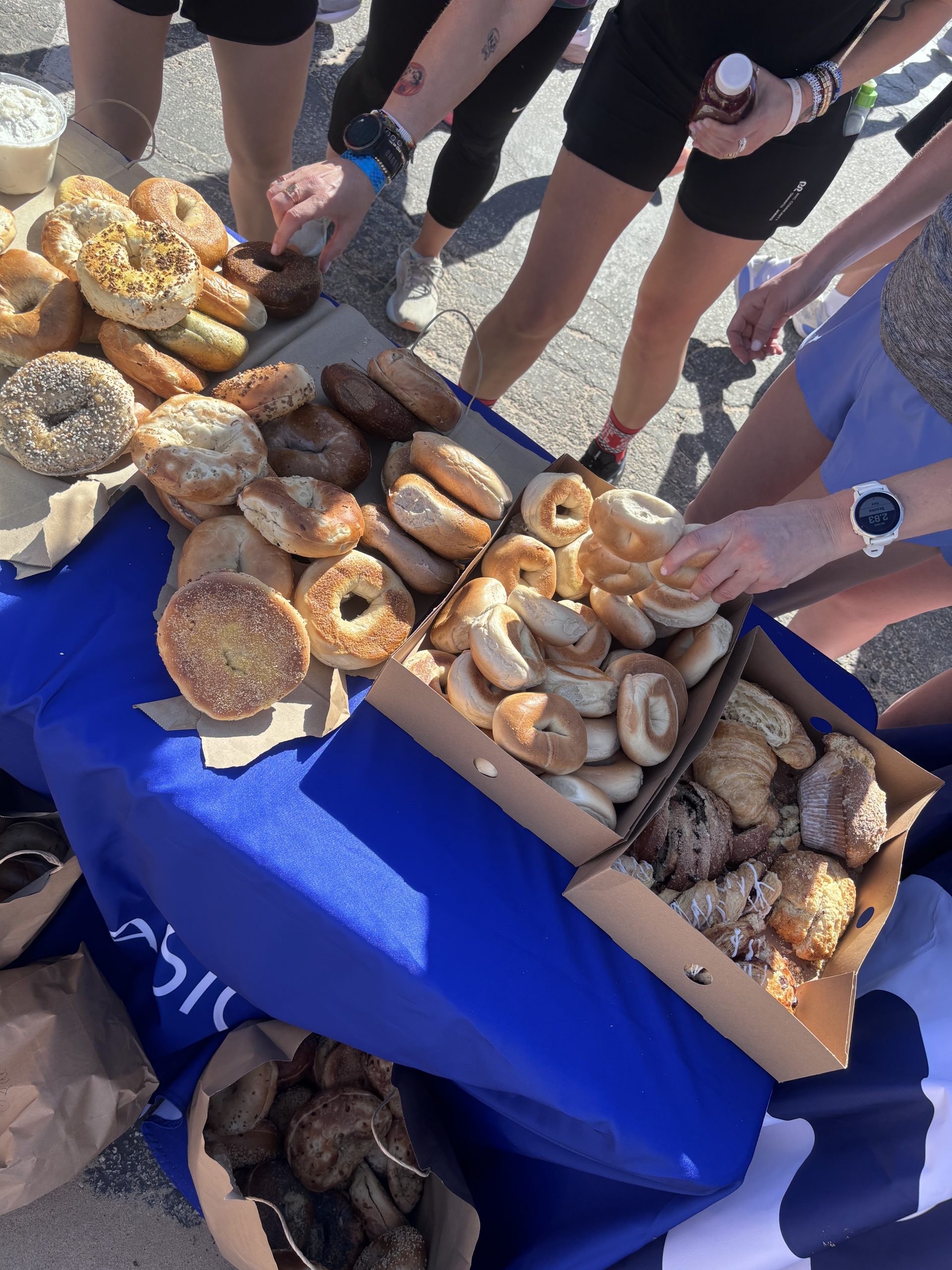

Pre-Race Nutrition
Pre-race nutrition was surprisingly hard for me this time. This was my first marathon in over two years, and I woke up feeling very anxious. Add in the time change from Ohio to LA and daylight savings, and my body had no idea what time it actually was.
Thankfully, ASICS provided a bus to Dodger Stadium, so we left the hotel around 4:00 AM. Since I woke up at 3:30 AM and the race didn’t start until 7:00 AM, I wanted to eat twice. If you’re up more than three hours before a race, it’s usually best to have two small meals.
At 3:30 AM in the hotel room, I had a mini bag of animal crackers and 12 oz of Liquid IV. Then once we got on the bus, I ate a pack of s’mores Pop-Tarts and slowly sipped more Liquid IV.
Being able to stay in the Dodger Stadium suite before the race meant we had access to food, water, and real bathrooms. We felt incredibly spoiled and very grateful.
Around 6:20 AM, we headed to the corrals. A group of the LA 100 women sat together on the ground, chatting, making last bathroom stops, taking our final pre-run gels, and laughing way too hard. Those 15 minutes before the race were probably the most relaxed I’ve ever felt before a marathon—and I have those six women to thank for that.
Total pre-race nutrition: Animal crackers + two s’mores Pop-Tarts + Liquid IV
86g carbs and ~20 oz fluids
Race Day Conditions
We knew this race would be a grind. Weather reports were predicting 90+ degrees, and the LA sun delivered. At the start it felt relatively cool with low humidity, but it was already 63°F at race start.
The first few miles were nicely shaded as we looped through downtown LA, ran down Sunset Blvd, passed the Hollywood Walk of Fame, and headed toward Rodeo Drive. It was a beautiful course. The runner next to me especially enjoyed when I saw the Hollywood sign and immediately started singing Party in the USA.
The crowd support was phenomenal. There was hardly an empty spot along the course. Water stops and Electrolit were available about every mile for much of the race, and run clubs filled in the gaps with water and snacks.
Since I was getting sodium from both my gels and handheld bottle, I mostly stuck to water on the course. I skipped the first few aid stations and sipped from my handheld. After mile four, though, I grabbed water at almost every station and dumped multiple cups over my head as the temperature climbed toward 80°F.
The final eight miles were absolutely brutal—full sun, rolling hills, and temperatures reaching about 85°F by the finish. One LA Times article described the course as a “concrete hellscape,” and honestly… that felt pretty accurate in the moment. And that final hill at mile 26? Truly cruel.
Race Nutrition
Before this race, I made several changes to my in-run nutrition. In the past, I always used UCAN gels. But at only 15g of carbs per gel—and with my goal of at least 50g per hour—I knew I needed more.
Over the summer I tested my sweat rate using a Levelen sweat test, and discovered I lose about 1 liter of fluid and 1800 mg of sodium per hour. My sodium needs are extremely high.
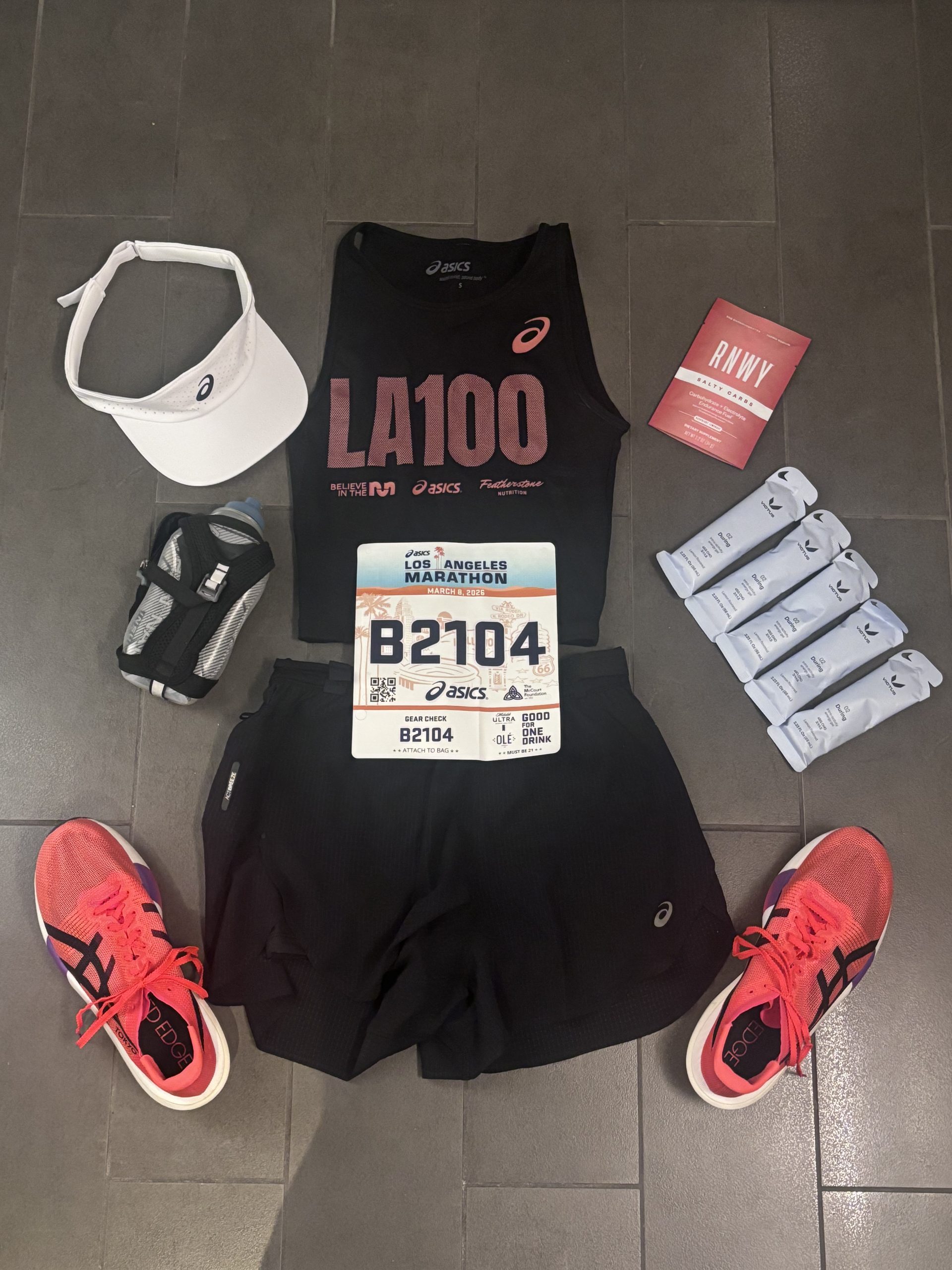
I tested a lot of gels leading up to this race and ultimately landed on Victus, which is both high-carb and high-sodium. I’ve had stomach issues during races in the past, but these settled really well for me. I also carried a handheld water bottle with a full serving of RNWY Salty Carbs (raspberry lemonade flavor, of course).
Race Fuel Summary
Overall, my in-race nutrition went almost perfectly. I started feeling nauseous in the last five miles, which I suspect was due to flavor fatigue (I only packed lemon gels plus one random UCAN gel I was very thankful to have) combined with the heat. I made it to the finish line without major issues, though I was extremely grateful to the medical volunteers who handed me a vomit bag immediately after finishing.
Gels
20 minutes pre-race: UCAN Edge Pineapple
30 minutes: Victus
65 minutes: Victus
1:10: UCAN Edge Strawberry Banana
1:40: Victus
2:20: Victus
Hydration
1 serving RNWY Salty Carbs in a 20 oz handheld bottle
~2 oz of water at most aid stations after mile 4
Totals per hour:
75g carbs, 640mg sodium, 19 oz fluid
The Gear & Shoes
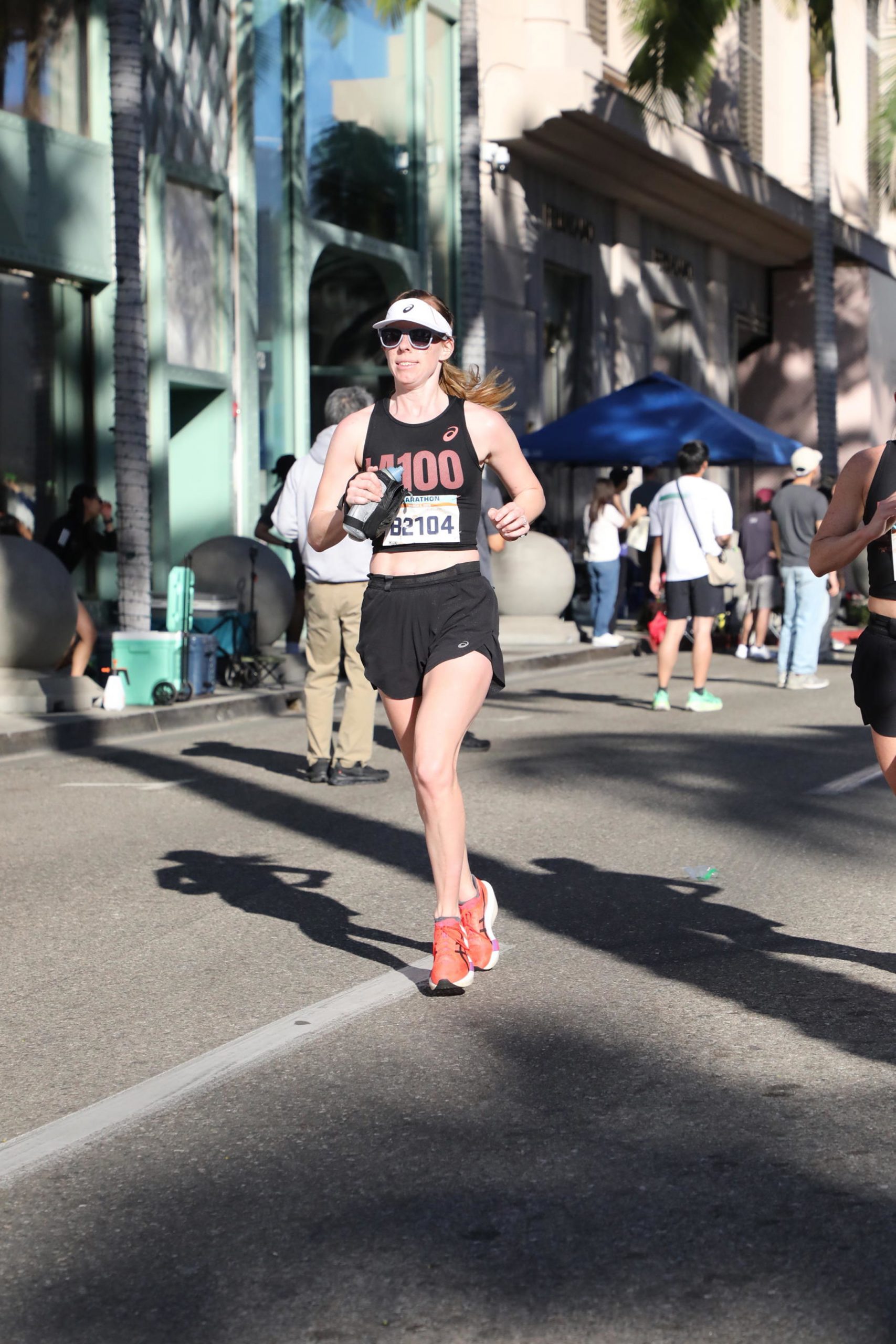
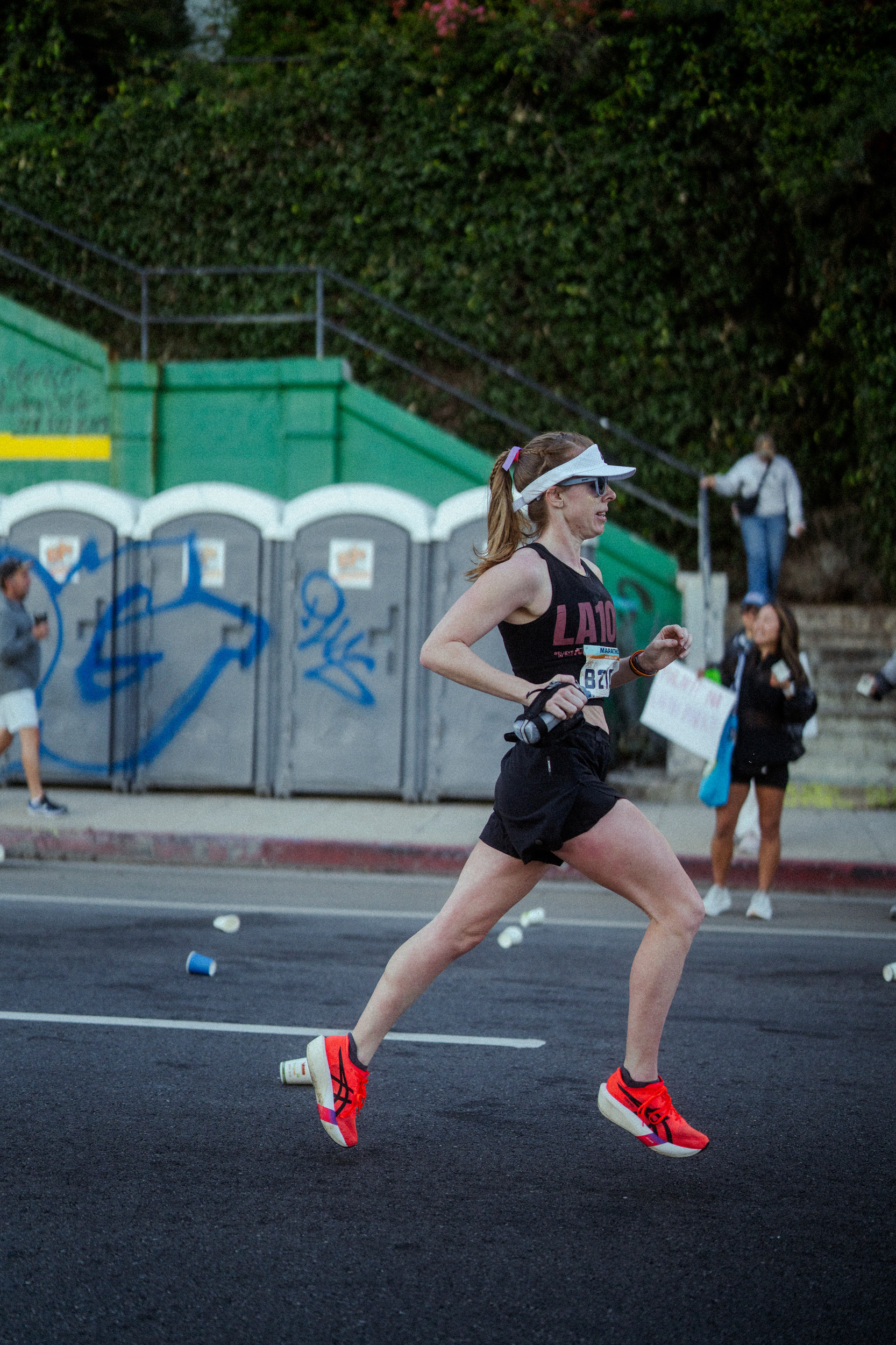
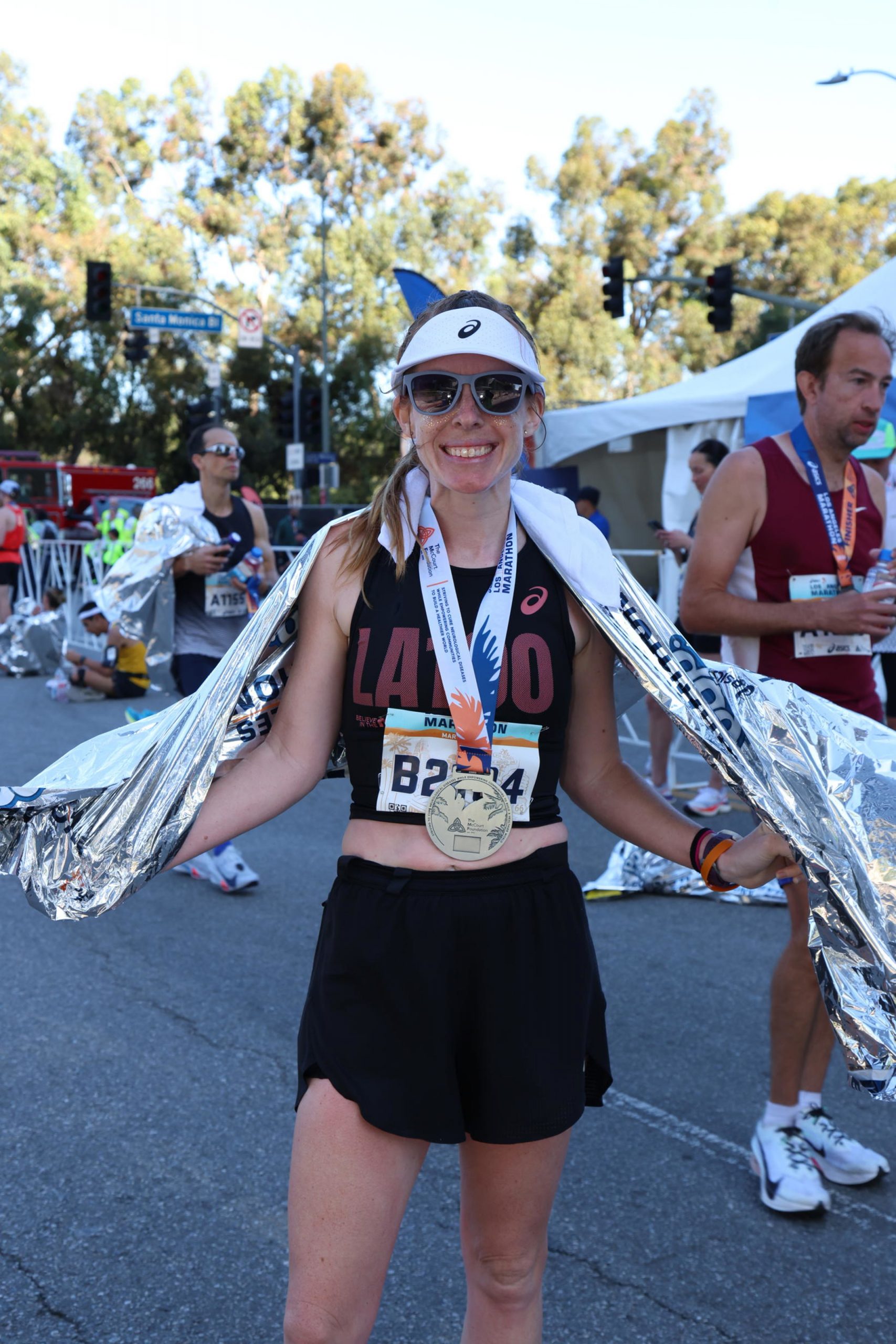
Being part of LA 100 came with some amazing perks—including an awesome crop top we all raced in. It made it so easy to spot teammates on the course, and we were constantly cheering each other on as we passed.
I also wore the ASICS Metarun split shorts and a white ASICS visor. The shorts were super comfortable, though I struggled a bit fitting my larger gels into the pockets. I ended up putting one gel in the back zipper pocket, my first gel in my handheld bottle, and the rest lined up in the front of my sports bra—which actually worked really well.
For shoes, I wore the ASICS Metaspeed Edge Tokyo. I had never raced in ASICS super shoes before. I’ve always loved the Nimbus, Novablast, and Superblast for training, but hadn’t tried their race-day options yet. I picked up a pair at my local running store and did one 20-mile run in them before race day—and immediately fell in love. They had the perfect bounce, felt comfortable for the full 26.2, and were incredibly light. My toes took a little bit of a beating, but I think that was mostly due to the steep downhill sections of the course that were so insanely aggressive! These are definitely staying in my race-day rotation.
Post-Race Nutrition
After the race, we headed to True Food Kitchen for our LA 100 post-race celebration. There were tons of options for food, juices, and fresh cocktails. My stomach felt better, but food still didn’t sound great at first. My mouth felt like cotton, so I immediately went for water and drank the chocolate milk volunteers handed out after the race.
I tried a few bites of noodles but still wasn’t feeling it, so I grabbed a wrap to go and got on the bus back to the hotel. By the time we returned, I was finally getting hungry again and ate part of the chicken wrap along with a bag of pretzels.
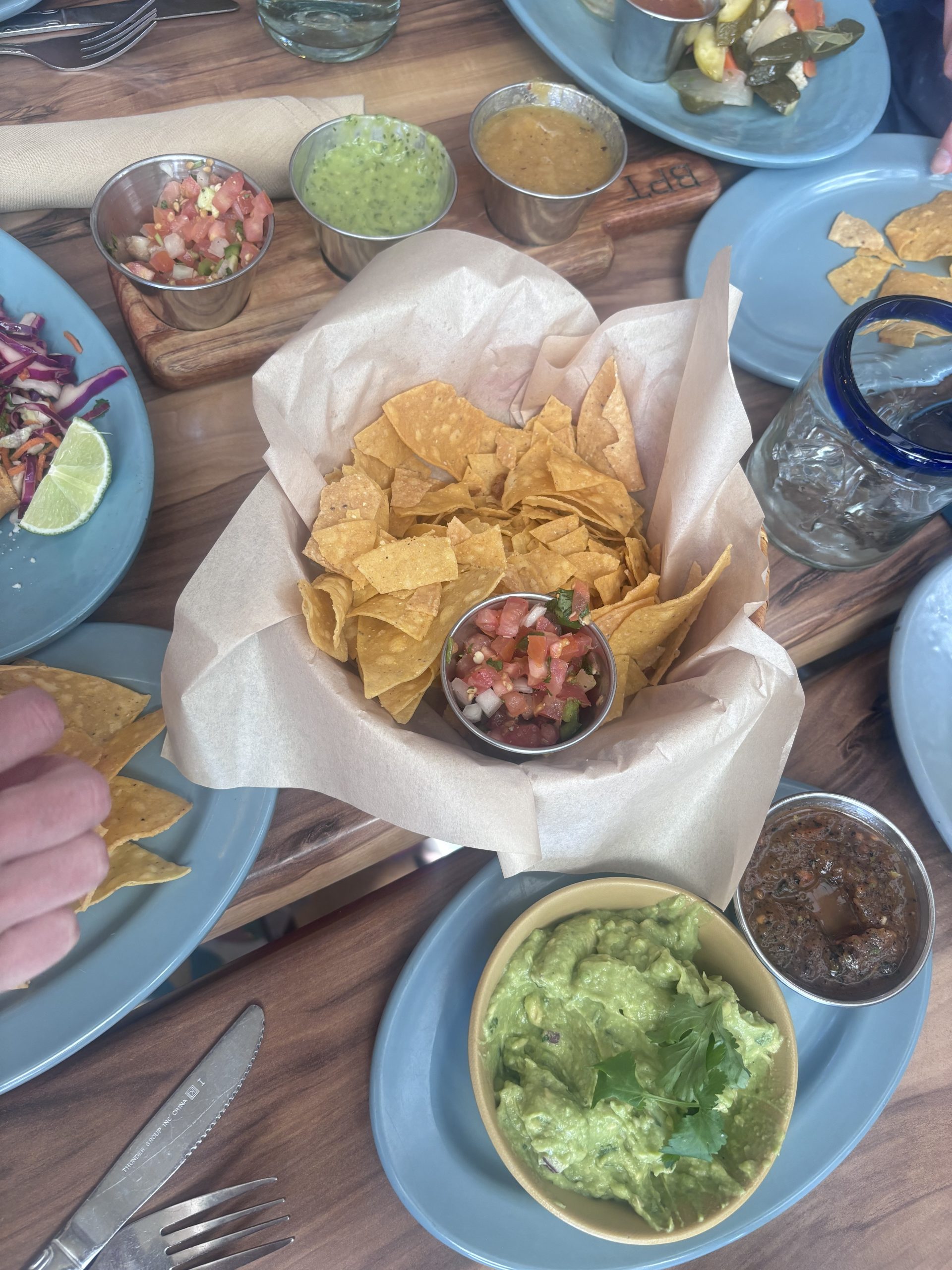
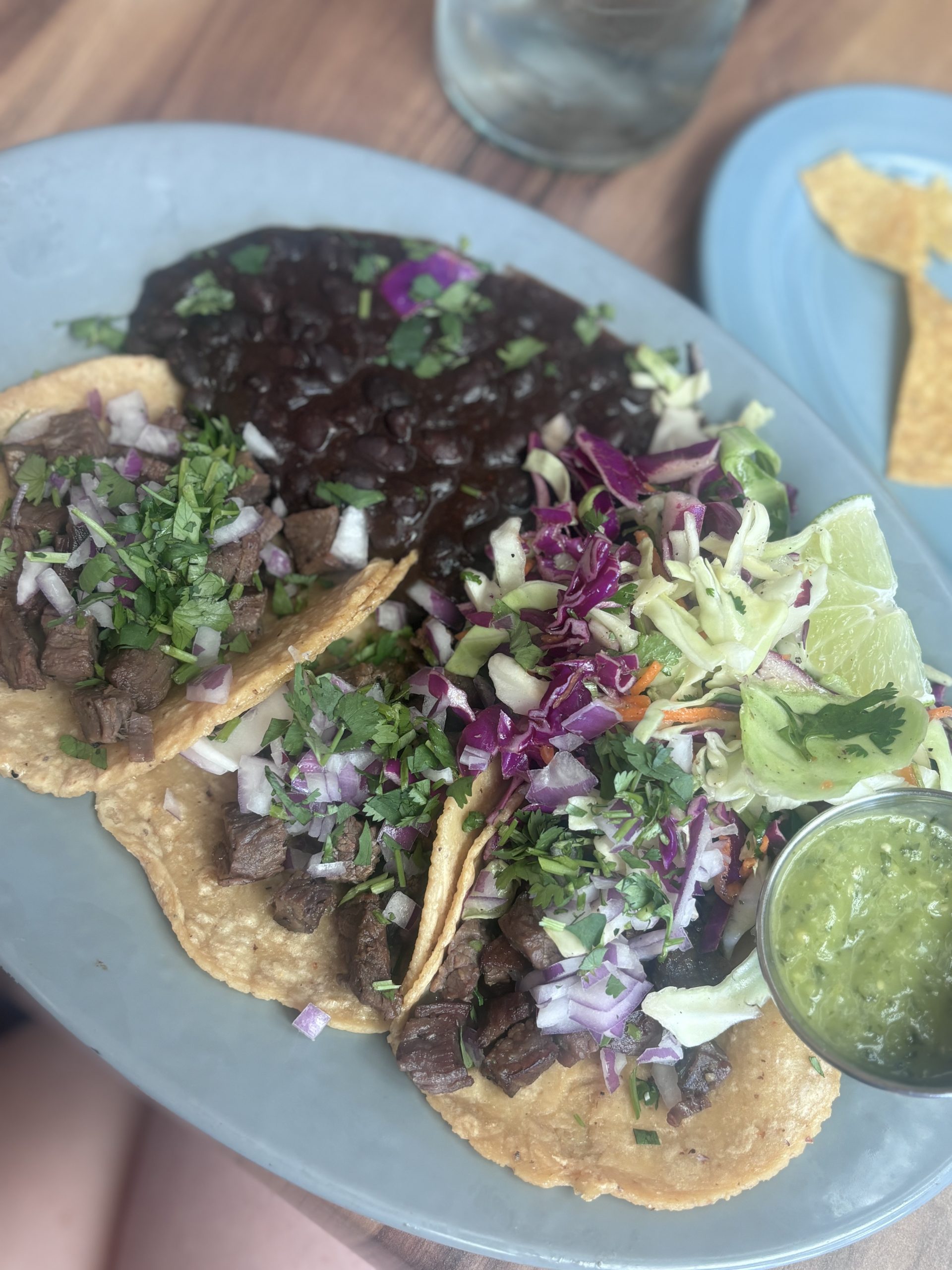
Later, a bunch of us cold plunged and swam before heading out for post-race tacos, chips, and guacamole—which we had been craving since before the race.
The End
This marathon was truly unforgettable.
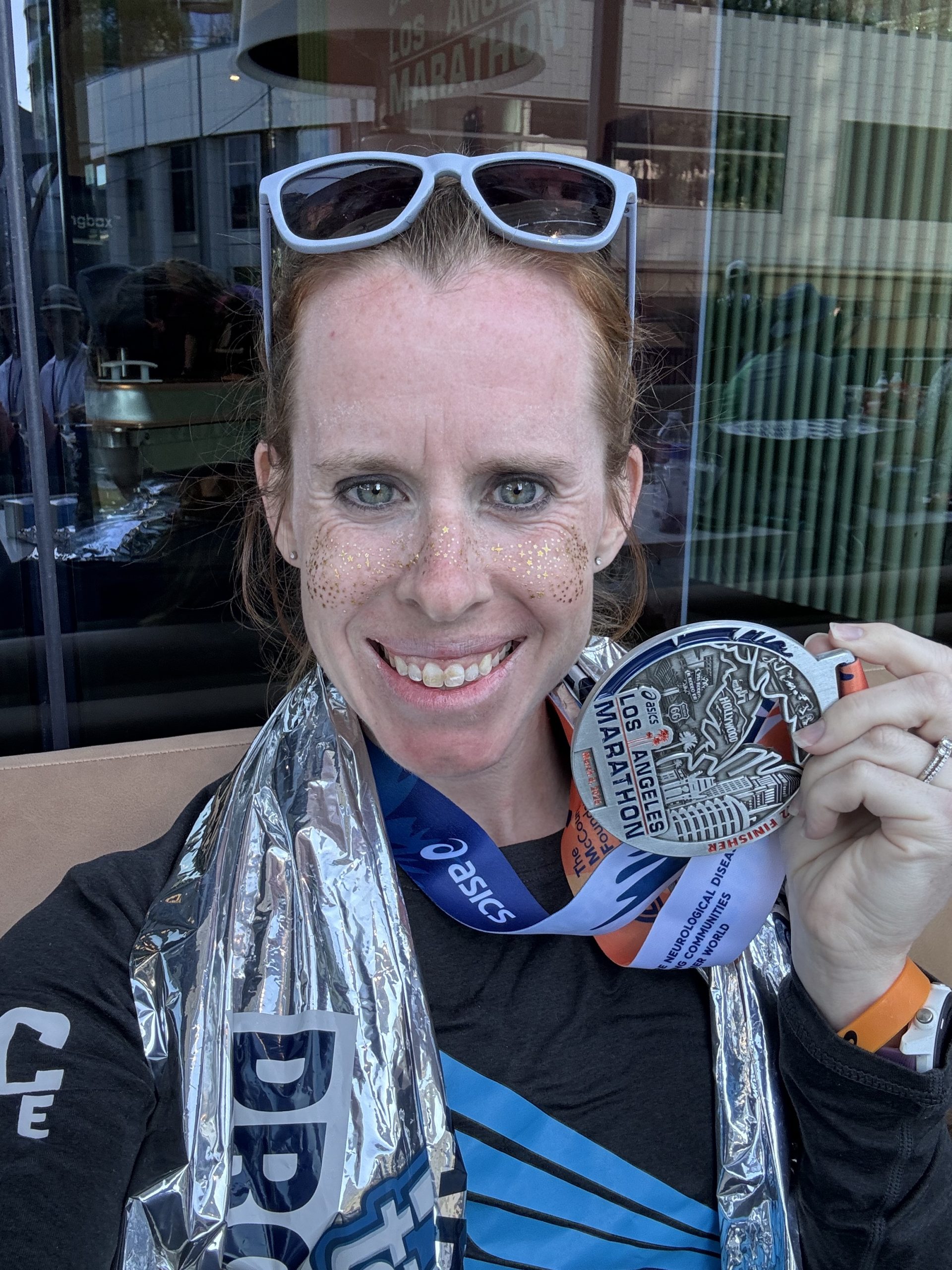
The heat and hills will definitely stick with me for a long time (and I don’t think my legs will let me forget them anytime soon). But the relationships and experiences with the LA 100 group were something really special.
The cherry on top? A postpartum PR.
I felt strong the entire race—mentally and physically—which hasn’t always been the case postpartum. I’m still riding the high from the weekend and hoping this is just the beginning of many more races to come.
Now the real question is…
Which fall marathon should I sign up for next?
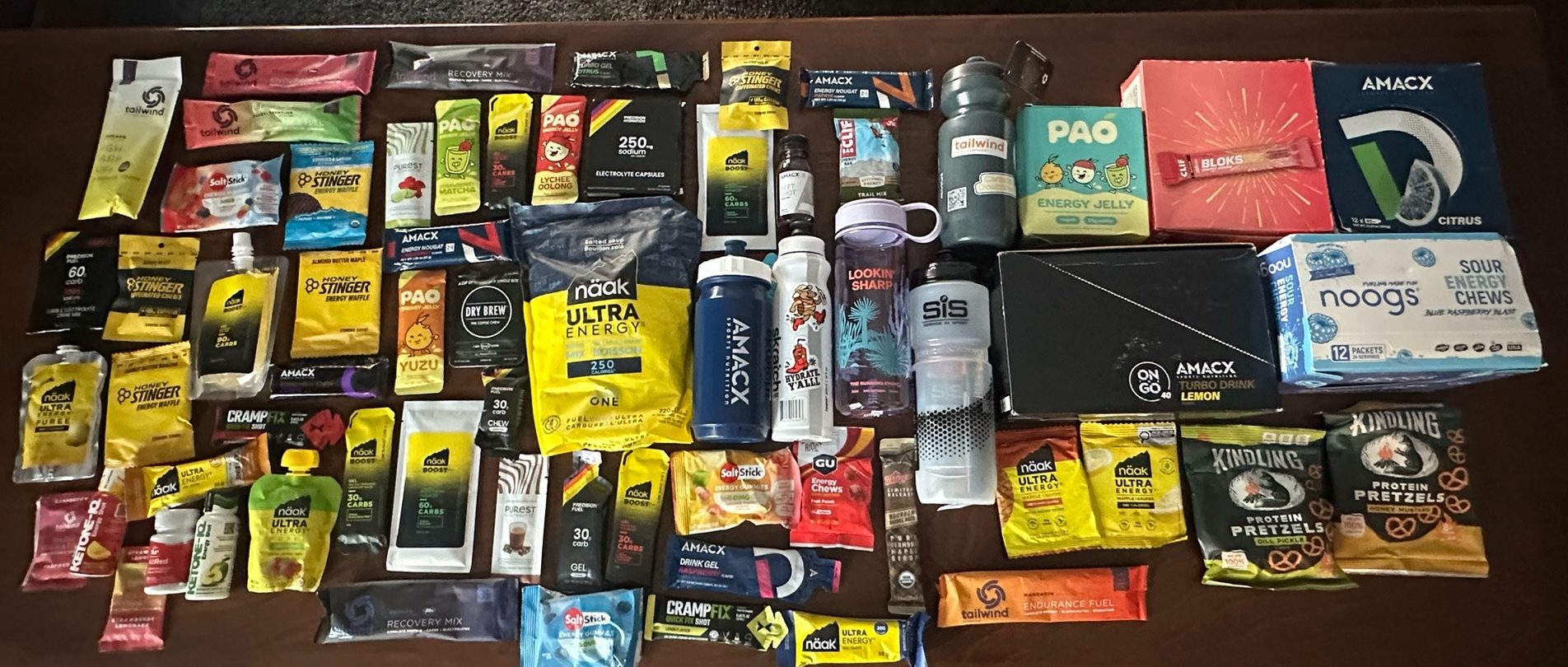
The Running Event (TRE) Nutrition Recap
The Running Event (TRE) is an annual conference and trade show that brings together running brands, retailers, media, and professionals in the running space. This is my third year attending as a sports dietitian, and I was able to visit over 40 sports nutrition companies, ask questions, learn about their brand, try their products, and get a glimpse into new products and see where running nutrition products are headed in 2026.
As a sports dietitian, I am constantly observing our nutrition landscape as runners. My goal is to find products that actually support our performance, recovery, and provide options to support the many different nutrition preferences of runners.
Unlike the shoe industry that can create new foams, plates, and shoe tech yearly, nutrition is not quite so sexy. We are working with three macronutrients – fat, protein, and carbs. We can’t create new ones. But, I love to see companies continuing to follow performance nutrition trends from the latest research and adjust their products to give runners what we are looking for to support our training.
Each year, I take away a few trends that new products fall into. And, this recap will walk you through these trends, products I discovered or learned more about, and how these might fit into your performance nutrition plan.
More Caffeine
Caffeine is one of the most well researched, effective, and legal performance enhancers for runners. Many of us choose to consume caffeine pre-run to help us wake up, empty our GI tract, and increase focus. But, caffeine can do so much more than this for overall running performance.
Caffeine can reduce perceived effort and fight off fatigue. Caffeine blocks a neurotransmitter in our brain that signals tiredness, which can translate for runners into being able to hold onto race pace longer in races. Caffeine has also been shown to improve endurance performance by allowing us to maintain faster paces for longer. It can also improve mental tenacity, focus, and grit in the later miles. Caffeine also decreases our perception of pain, which is advantageous in the later miles of a race when it gets hard to hold on mentally and physically.
Research shows that we need 3 – 5 mg caffeine per kilogram of body weight just before and/or during our race. I found that many sports nutrition companies are increasing the amount of caffeine that are in their nutrition products to help runners meet these amounts.
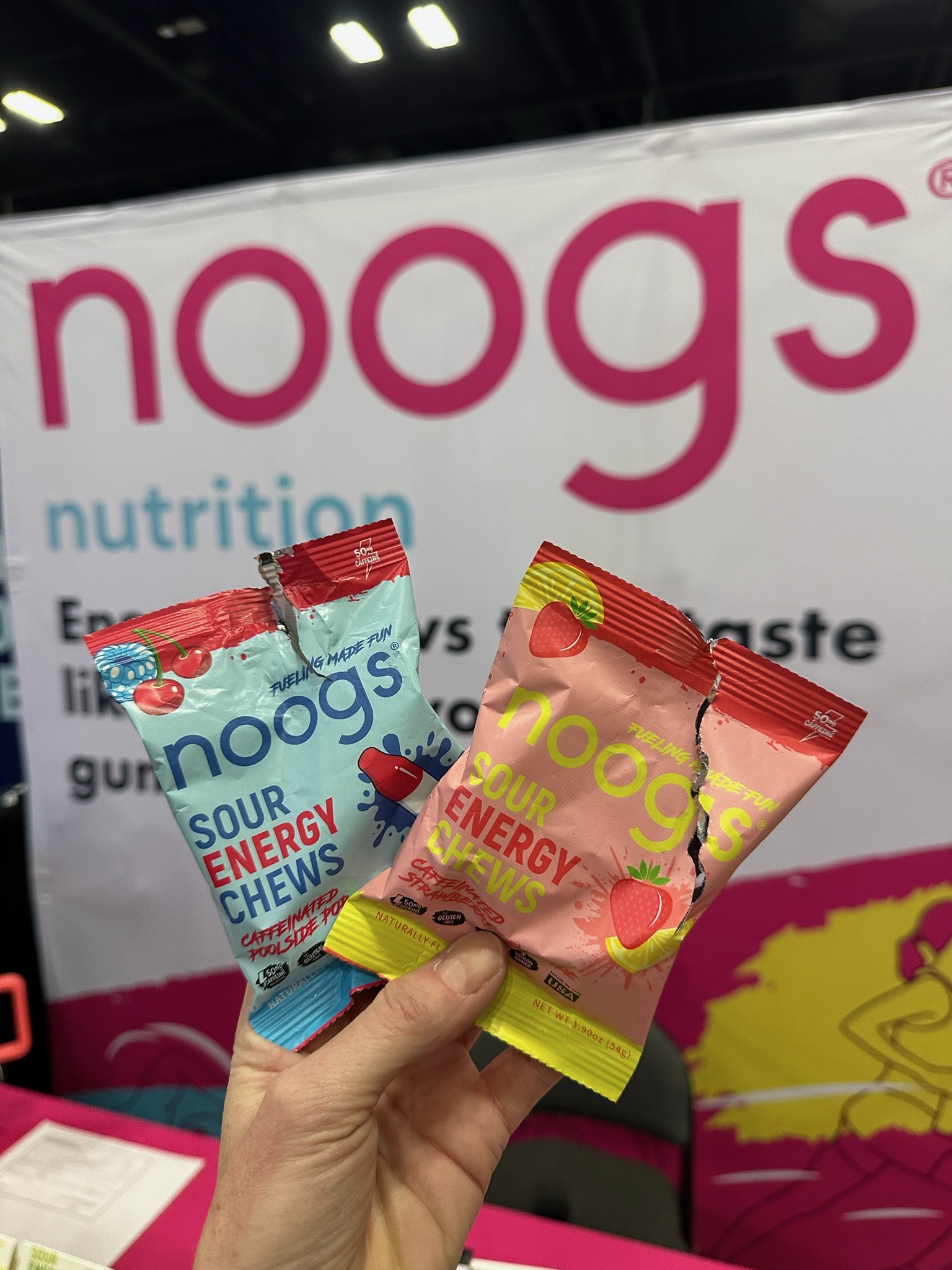
First up was Noogs Sour Energy Chews. I met the Noogs team last year at TRE and quickly fell in love with their sour chews, that their cofounder is also a dietitian, and that one bag of chews packs 38 g carbs and 300 mg sodium. This year, they added two new flavors to their line up that contain 100 mg caffeine for bag. For those who don’t know, caffeine is a very bitter substance and is not easy to mask that at high amounts. But, Noogs nailed with their Poolside Pop and Strawberry Lemonade flavors.
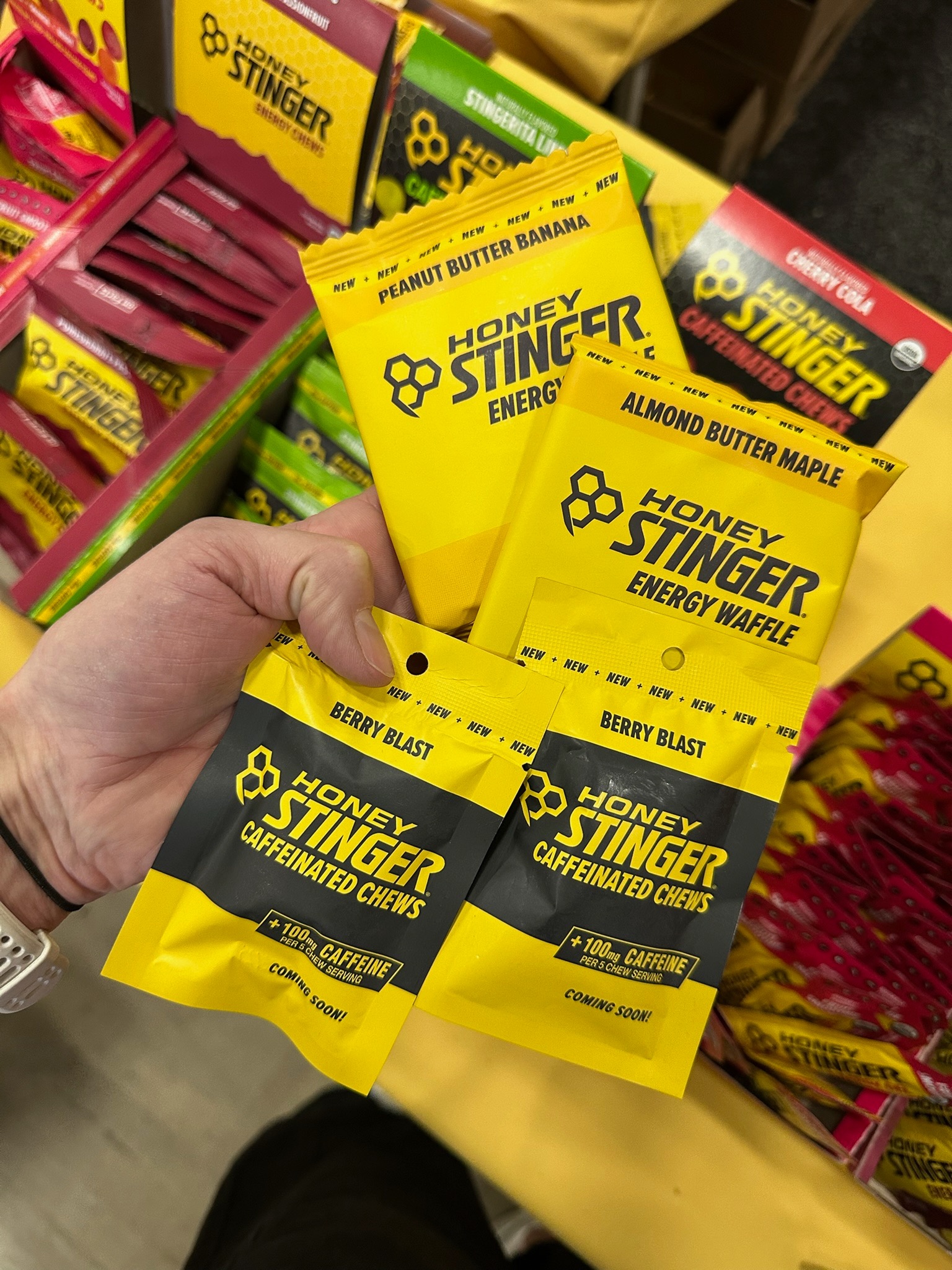
Honeystinger chews are doing something similar. Currently, their Stingerita Lime caffeinated chews have 50 mg caffeine per bag but in 2026 they have a new Berry Blast chew coming out that packs 100 mg caffeine in just five chews.
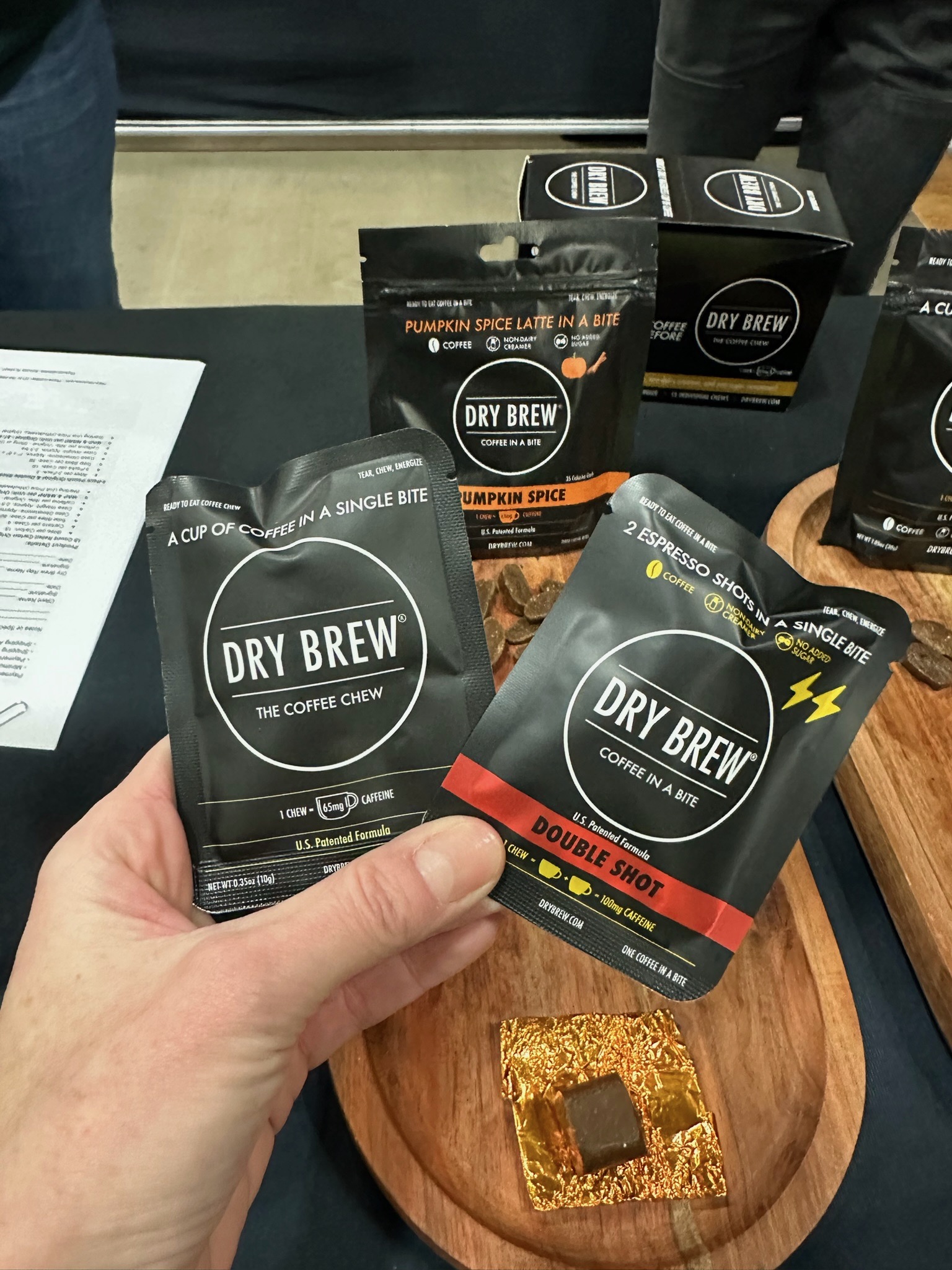
As someone who travels a lot and cannot always handle gross hotel coffee makers (does anyone else worry what’s growing inside of these between the layers of plastic?!), I often head out for runs under-caffeinated. Stumbling upon Dry Brew, a company that makes coffee chews allowed me to try these pre-run while at TRE, and I was impressed. They make two different caffeine ‘strengths.’ The OG Coffee Chew which has 65 mg caffeine. And, the Double Shot 100 mg caffeine. One thing that stood out to me about this company was their curiosity into my thoughts on the ingredients in their product and their willingness to make changes to meet the wants, needs, and demands of runners. And, I am always willing to nerd out of product creation, ingredients, and ingredient trends.
Higher Sodium
No one would be shocked if I reviewed all the new daily electrolyte brands 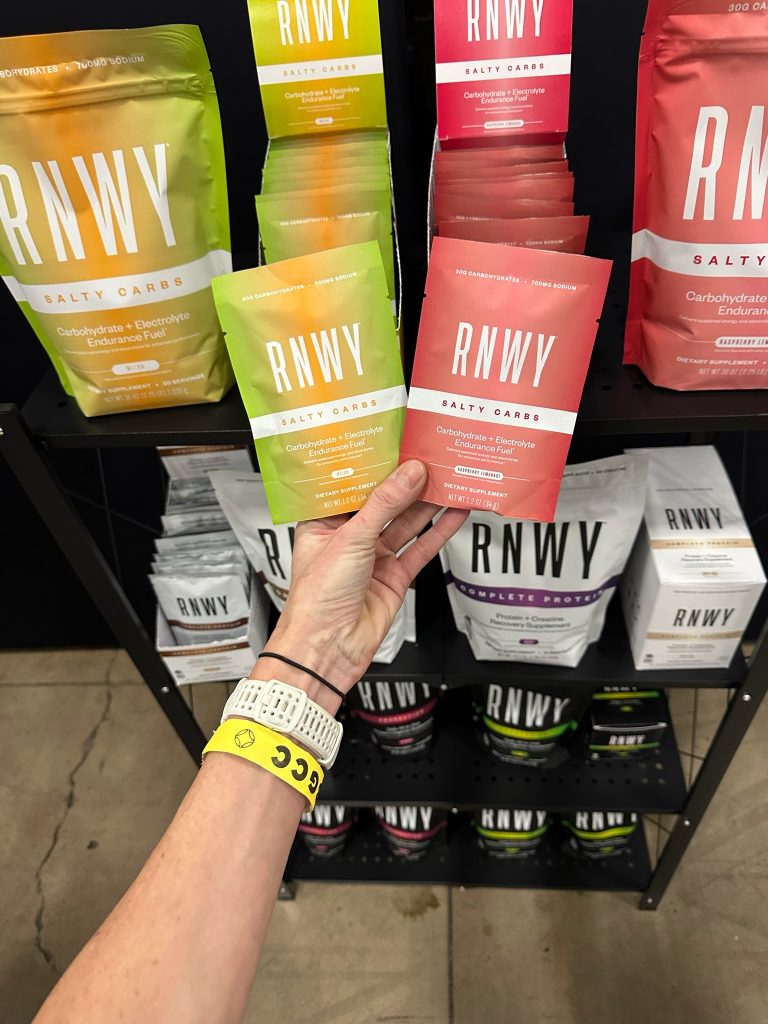 popping up. But what intrigues me more are the new options that make it easier for us to consume adequate sodium during our runs.
Sodium plays a key role in supporting our running performance, especially for heavier and salty sweaters. Sodium supports fluid absorption, helping us hydrate faster. It also allows us to maintain performance in longer, hotter runs. It can help decrease GI issues during and after runs as well. Not to mention, it’s imperative to replace the sodium we lose through sweating. If we can replace some of this while running, it reduces the burden post-run and can speed up recovery.
A massive win of a new product from 2025 is RNWY Salty Carbs. This contains 30 g carbs and 700 mg sodium per serving. And, you can stack this and double up for two servings per bottle, if needed. It comes in Raspberry Lemonade, Melon, and Unflavored.
Another option would be a higher sodium gel, like Carbs Fuel Salted, which contains 450 mg sodium + 50 g carbs per gel.
Skratch Labs came out with a new product this year, Skratch Electrolyte Booster. This booster can be added to any Skratch product to add 400 mg of sodium per scoop. For heavy, salty sweaters, being able to add 1 – 2 scoops into your bottle on top of your favorite sports drink can be a game-changer for performance.
Higher Carbohydrate
Over the last few years, extensive research has been conducted to determine 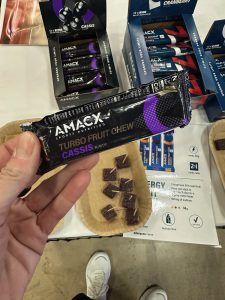 how many grams of carbs per hour we can actually tolerate, absorb, and utilize for energy while running. We used to believe that 30 – 60 g carbs per hour was appropriate. Now, we know that many runners are pushing to 90 – 120 g carbs per hour and improving performance. As new research emerges on these topics, we have seen sports nutrition companies respond with high-carbohydrate products to help runners meet these demands. Many different companies have higher carbohydrate products, but here are a few that jumped out to me from TRE.
Precision Carb & Electrolyte drink mix has 60 g carbs and 1000 mg sodium. Adding this to your handheld and sipping it for 1 – 2 hours on top of your gel routine could make a huge difference in the grams of carbs you consume per hour on race day.
Tailwind High Carb Fuel packs 90 g carbs into one bottle and comes in ginger lime & lemonade flavors. Some of my runners will use this to fuel the first hour or so of their race, then switch to gels.
Amacx Turbo Gel packs 40 g carbs and 200 mg sodium and comes in citrus & cola lime flavors. Higher-carb gels like these let you continue to fuel every 25 – 30 minutes while consuming significantly more carbs per hour. Amacx also has delicious Turbo Fruit Chews, as another option.
SIS Beta Fuel + Electrolytes also contains 40 g carbs and 200 mg sodium, allowing you to push your total grams of carbs per hour up with fewer gels to carry.
Non-USA Nutrition Brands Making Moves
With the help of retailers like The Feed, we have easy access to sports nutrition 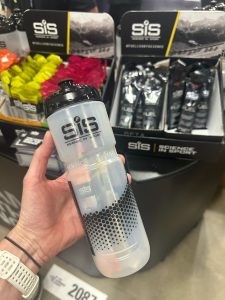 products from other countries. Three leading nutrition companies from other countries stood out to me at TRE.
SIS is from the UK and has some fun products like Rego clear whey protein and Beta + Electrolytes, and a strong interest and presence in the research space. I applaud this company for all they contribute towards research to further our understanding of sports nutrition.
Naak is a Canadian brand that offers more trail-running nutrition options, including bars, waffles, and drinks with protein and fat. But, they have a new, higher-sodium gel for road running launching in 2026.
Amacx is a brand from the Netherlands, and I appreciate that they produce gels with 30 g and 40 g carbs so athletes can easily stack to 60, 80, 90, or 120 g carbs per hour with either product. They also have some fun nougat energy bars that taste delicious.
Comment below on what products you are most excited to try!
Please note that while I may have received free product samples at TRE, I paid my own way to attend, did not accept compensation from any brands to attend, and all these opinions are my own.
We have discount codes available for some of these brands on our Recommended Products & Discount Codes page.






Postpartum Nutrition for Athletes
Many unknowns often surround the postpartum journey back to running. How is my body going to feel? When can I get back to running? What will my running schedule look like? How does my nutrition need to change? With so much advice out there, it can feel overwhelming, so let’s address some of these questions regarding nutrition.
I, Sarah Kittle, just had my third baby in under five years, and when they say to be gracious to yourself in the journey, they genuinely mean it. Sleep is unpredictable. You are learning to care for another human while keeping yourself afloat, all while everything in your life has changed.
So, congratulations! You made it through nine months of pregnancy, you have recovered, and your doctor or pelvic floor physical therapist has cleared you to return to training. Now what? How do you fuel your body for training while supporting healing and maintaining a milk supply, if you choose to breastfeed?
Energy Needs
We already know that our energy needs for training are high. To train and recover effectively, we need to eat enough to support our body’s daily energy needs and consume enough additional energy to support exercise. When breastfeeding, we also nourish another life, which requires even more energy. Research suggests that nursing mothers need an extra 330-400 calories daily beyond their regular diet. When you add training on top of that, the energy demands are significant and often higher than pregnancy energy demands.
These additional calories help support milk supply, making it essential to consume them in addition to the nutrition needed for training and daily life. This could mean adding two additional snacks throughout the day (check out our Brookie Energy Bites and High Protein Sugar Cookie Energy Bites—they’re great for this!) or increasing calorie intake through liquids, which we will discuss further below. The most important thing is ensuring we give our bodies enough energy.
Protein Needs
Beyond overall energy needs, our bodies require additional protein. The stress of pregnancy and childbirth can be compared to recovering from an injury. Pregnancy and childbirth place a significant physiological strain on the body. One study found that protein requirements were highly underestimated, recommending that women consume roughly 1.7-1.9g/kg daily.
Hydration
Fluid needs increase significantly while breastfeeding. Hydration is crucial for establishing and maintaining milk supply. Breastmilk is estimated to be about 87% water, and nursing mothers lose approximately 25 ounces of fluid daily. As we add training back into our routine, we must also account for fluid and sweat loss from exercise, which could mean an additional 30-40 ounces of fluid per day.
Remember, all fluids count toward hydration, except for alcohol—even those much-needed cups of coffee during the newborn phase. Electrolyte drinks like Skratch, LMNT, or Liquid IV can help with hydration and electrolyte replenishment during training and lactation.
Bone Health & Nutrient Deficiencies
One concern for postpartum runners is the increased risk of bone stress injuries. After delivery, there is a rapid decline of estrogen and progesterone. Estrogen is one of the protective factors of bones. This and increased prolactin are associated with increased bone mineral loss. This is why calcium needs are increased both in pregnancy and postpartum periods. Calcium is in high demand during pregnancy and postpartum to support the baby’s development and the mother’s bone health. During lactation, 300-400 mg of calcium is transferred to the infant. Studies show that around 26% of women experience vitamin D deficiency postpartum. While vitamin D is essential for infants, it also plays a vital role in calcium absorption, bone metabolism, immunity, and muscle recovery for mom.
Low calcium intake, vitamin D deficiency, and hormonal changes can increase the risk of bone stress injuries. While Vitamin D supplementation isn’t always necessary, it’s important to know if you are Vitamin D deficient to supplement properly. Eating a well-balanced diet with adequate energy intake and a variety of foods can help reduce the risk of bone stress injuries caused by nutritional inadequacies.
The postpartum period is HARD. Trust me—I’m living it right now! As you return to training, listen to your body, rest when you can, and, most importantly, nourish yourself. The key to establishing and maintaining a healthy milk supply and/or starting to train again consistently isn’t special foods or supplements—it’s ensuring that you support your body with enough nutrition and hydration. Listen to your body and rest when your body needs rest.
PMC7257931, PMC11243499, PMC11243499 PMC8343162 PMC6045510, PMC5104202, PMC5397784 , PMC8835773, PMC11569573
Disclaimer: The content in our blog articles provides generalized nutrition guidance. The information above may not apply to everyone. For personalized recommendations, please reach out to your sports dietitian. Individuals who may chose to implement nutrition changes agree that Featherstone Nutrition is not responsible for any injury, damage or loss related to those changes or participation.
Comparing Vegan Protein Powders for Athletes
This post is part of a paid sponsorship with RNWY.
Vegan protein for athletes
Adequate protein consumption is imperative for athletes to maintain, repair, and rebuild muscle so our bodies can continue performing daily during our chosen activity. Consuming enough protein can be difficult for many athletes. It can be even more difficult for vegetarian and vegan athletes due to fewer protein options when cutting out meat or animal products. Many plant-based proteins’ lower quality and digestibility increase our protein needs as plant-based athletes.
Supplementing with protein powder
Protein powders have grown increasingly popular to help athletes and the general population meet their protein needs quickly. While we always recommend eating a balanced diet with plenty of whole foods, fruits, and vegetables, protein powders can be a valuable tool to help meet increased protein requirements. Plant-based protein powder is a great way to meet protein needs for vegetarians, vegans, plant-based runner, and other runners.
Leucine: An essential amino acid for athletes
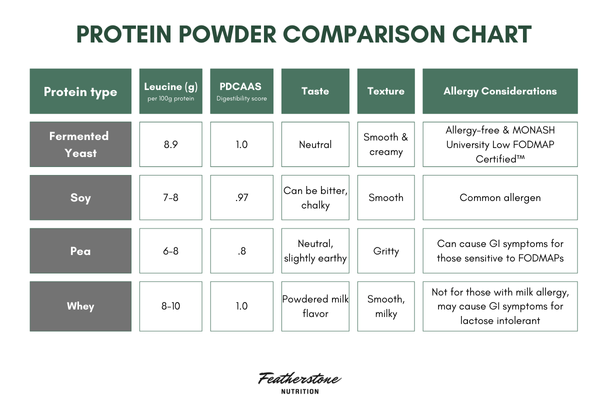
The limiting factor of some plant-based proteins or protein powders is that they lack adequate leucine. Leucine is an essential branched-chain amino acid (BCAA) that is required for muscle protein synthesis (MPS). MPS is necessary for muscle recovery and growth. Studies have shown a greater response in MPS when consuming whey protein vs. soy protein post-exercise. When consuming 20g or 40g of whey protein compared to 40g of soy protein post-exercise, MPS was more significant in the whey protein groups.
Along with an adequate protein intake of 20-40 grams at least three times per day, research has shown that we need at least 2.7g of leucine to stimulate MPS. Generally, athletes who are vegan or vegetarian need to consume 20-40% more protein than those consuming animal proteins to meet leucine needs, which equates to 20-54g of plant-based protein per eating occasion.
Types of vegan protein powder
Soy protein
Made from soybeans and contains all 9 essential amino acids. As one of the top food allergens, soy may cause allergic reactions or sensitivities in some people.
Pea protein
Made from dried yellow split peas, it contains all 9 essential amino acids. Although this protein powder is easily digestible for some, it can cause GI symptoms for those with sensitive guts.
Baker’s Yeast (Fermented Nutrition Yeast Protein)
Derived from yeast during the fermentation process and contains all 9 essential amino acids. It is an allergy-free, sustainable, and high-quality protein source. Baker’s Yeast also uses less carbon emissions than soy or beef.
Digestibility
Plant-based proteins are more difficult for our bodies to digest & absorb, which is part of the reason we have to eat more of a certain food or protein powder to reap the muscle recovery and/or growth benefits. Plant-based protein quality is measured by the PDCAAS score (Protein Digestibility Corrected Amino Acid Score). The closer this number is to 1.0, the better the protein digestibility and the less you have to eat of that protein to stimulate muscle recovery and growth.
Which vegan protein powder is right for me?
When it comes to nutrition supplements, to ensure that your protein powder has adequate amounts of leucine (and every other ingredient on the nutrition facts label), look for an amino acid breakdown on the label certification from Informed Sport or NSF Certified for Sport.
You may also want to consider: What type of protein do you tolerate the best? How many servings will you need to consume to meet your protein and leucine targets? What tastes the best to you?
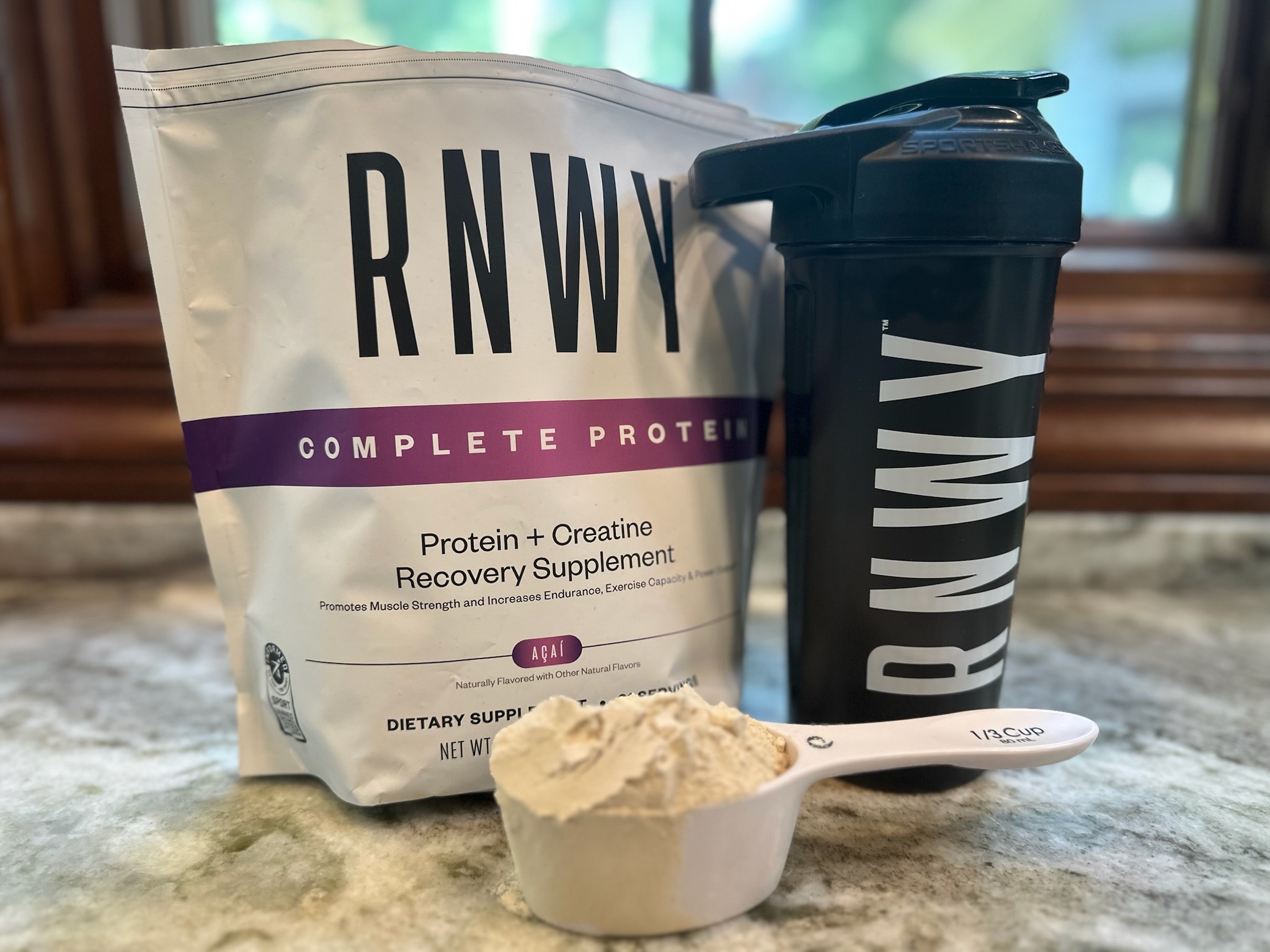
The new vegan protein powder from RNWY provides 25 g protein from bakers yeast, 2.2 g leucine, nine essential amino acids, 5 g creatine, and 150 mg digestive enzymes. YESTEIN, the Baker’s Yeast product in RNWY Complete Protein, is produced using a circular economy model that reduces water and land use, and carbon emissions. Try the new RNWY Complete Protein and save 15% with code FEATHERS15.
PMID: 33266120, 30167963, 38626029, 25628520
Disclaimer: The content in our blog articles provides generalized nutrition guidance. The information above may not apply to everyone. For personalized recommendations, please reach out to your sports dietitian. Individuals who may chose to implement nutrition changes agree that Featherstone Nutrition is not responsible for any injury, damage or loss related to those changes or participation.
Meghann's Berlin Marathon 2024 Race Nutrition Recap
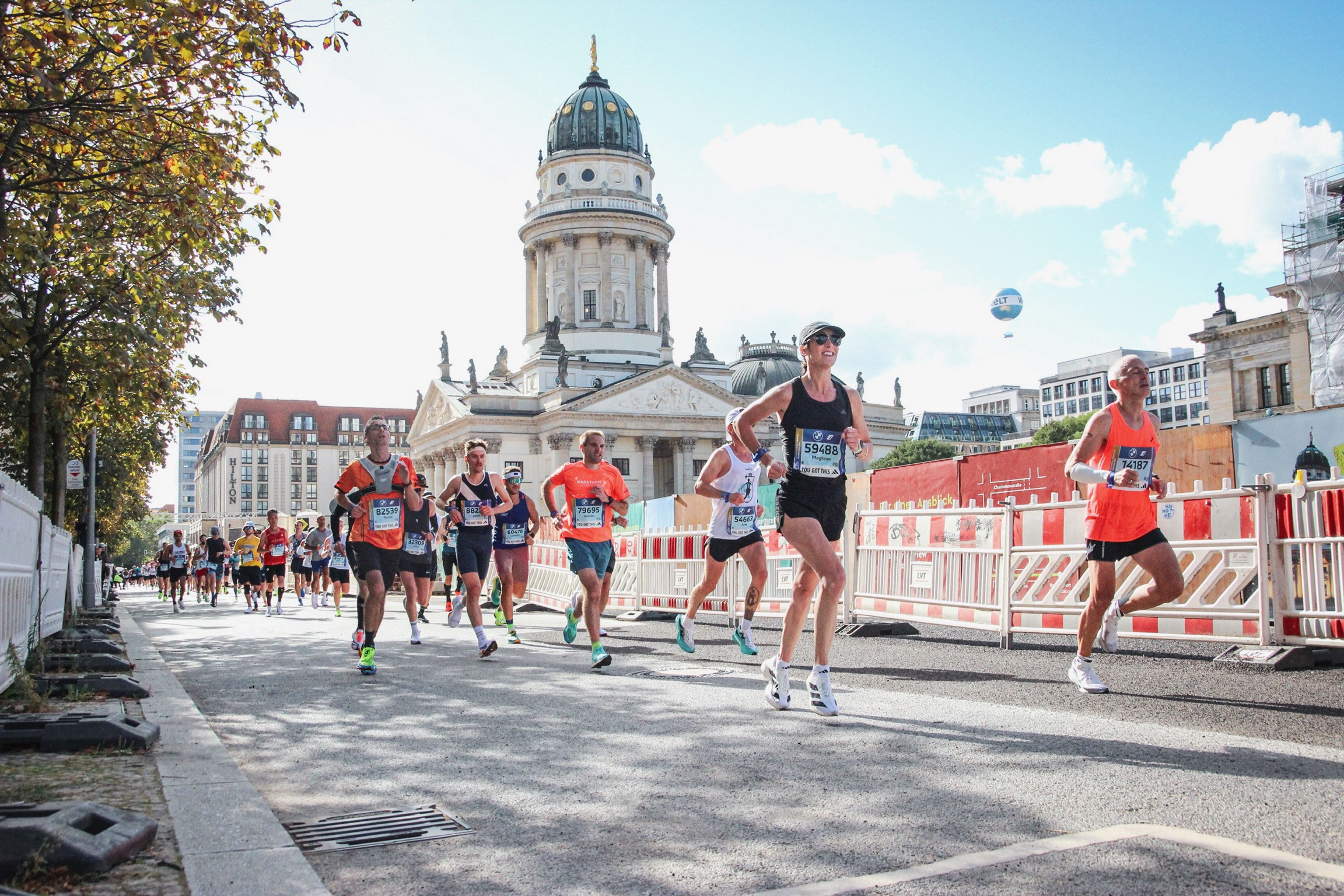
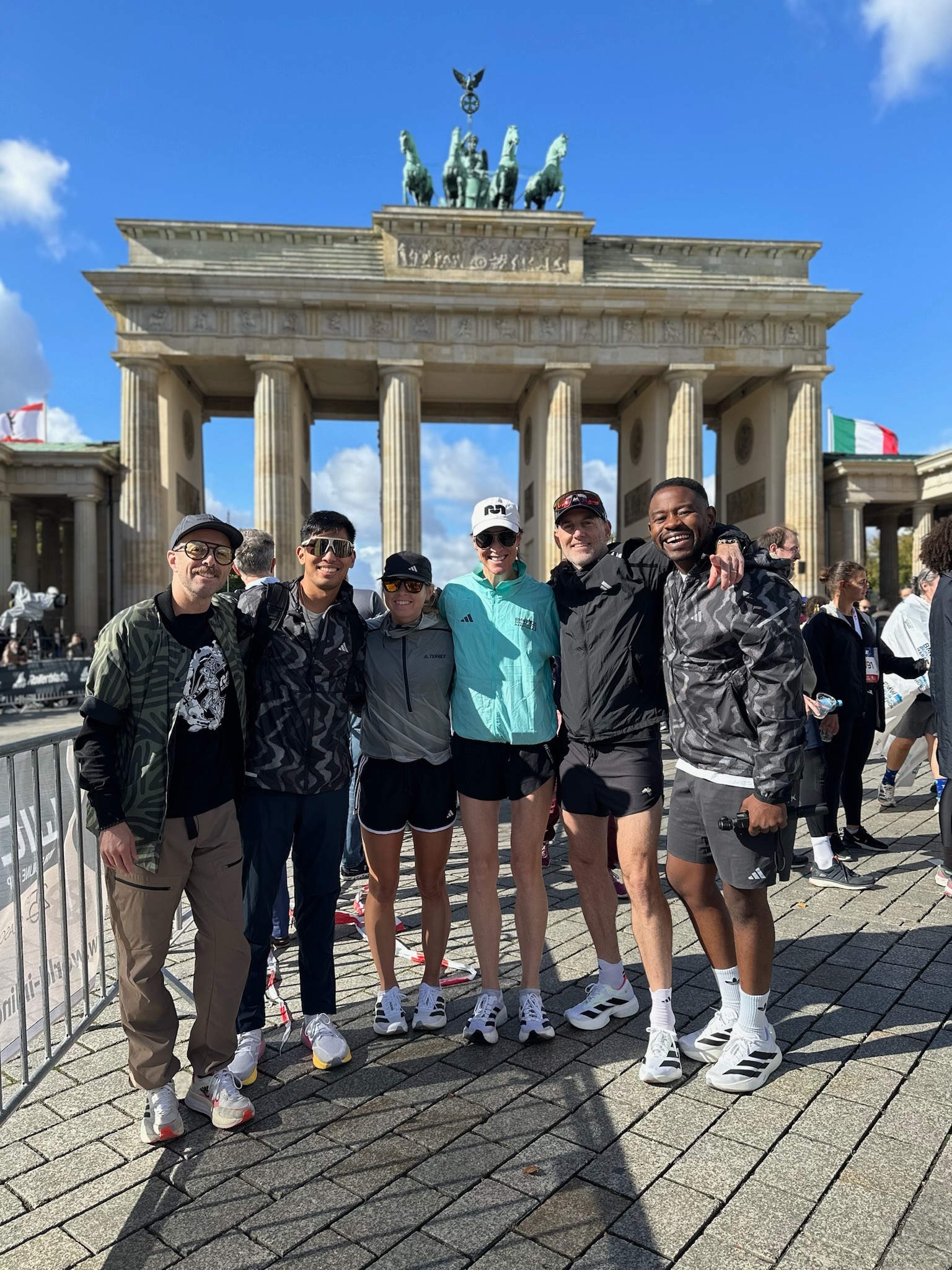
I had the amazing opportunity to return to the Berlin Marathon again this year with Adidas Running and Believe in the Run. I ran the Berlin Marathon last year and set a PR of 2:49 shortly after turning 40. I hesitated to return, as I wasn’t sure how to top last year. But my Fuel for the Sole counterparts, Meg and Thomas, were getting their six-star medals, and I knew I wanted to be there with them to celebrate such an incredible accomplishment! And, I have zero regrets about this decision. We had an absolute blast on this trip from start to finish.
I decided to leave a day earlier than usual for overseas races since I have the worst travel luck. I left Cleveland at 3 pm Tuesday, connected in Newark, and flew overnight to land in Berlin at 7 am without any delays. I always hop right onto local time to squash any jetlag asap. We stayed at the Soho House Berlin and ate breakfast while we waited for our rooms. I took a 30-minute power nap on a couch but stayed up through our dinner events and went to bed at 9:30 pm local time. That first day is always the hardest, but after a good night’s sleep, anything feels manageable again!



The Carb Load
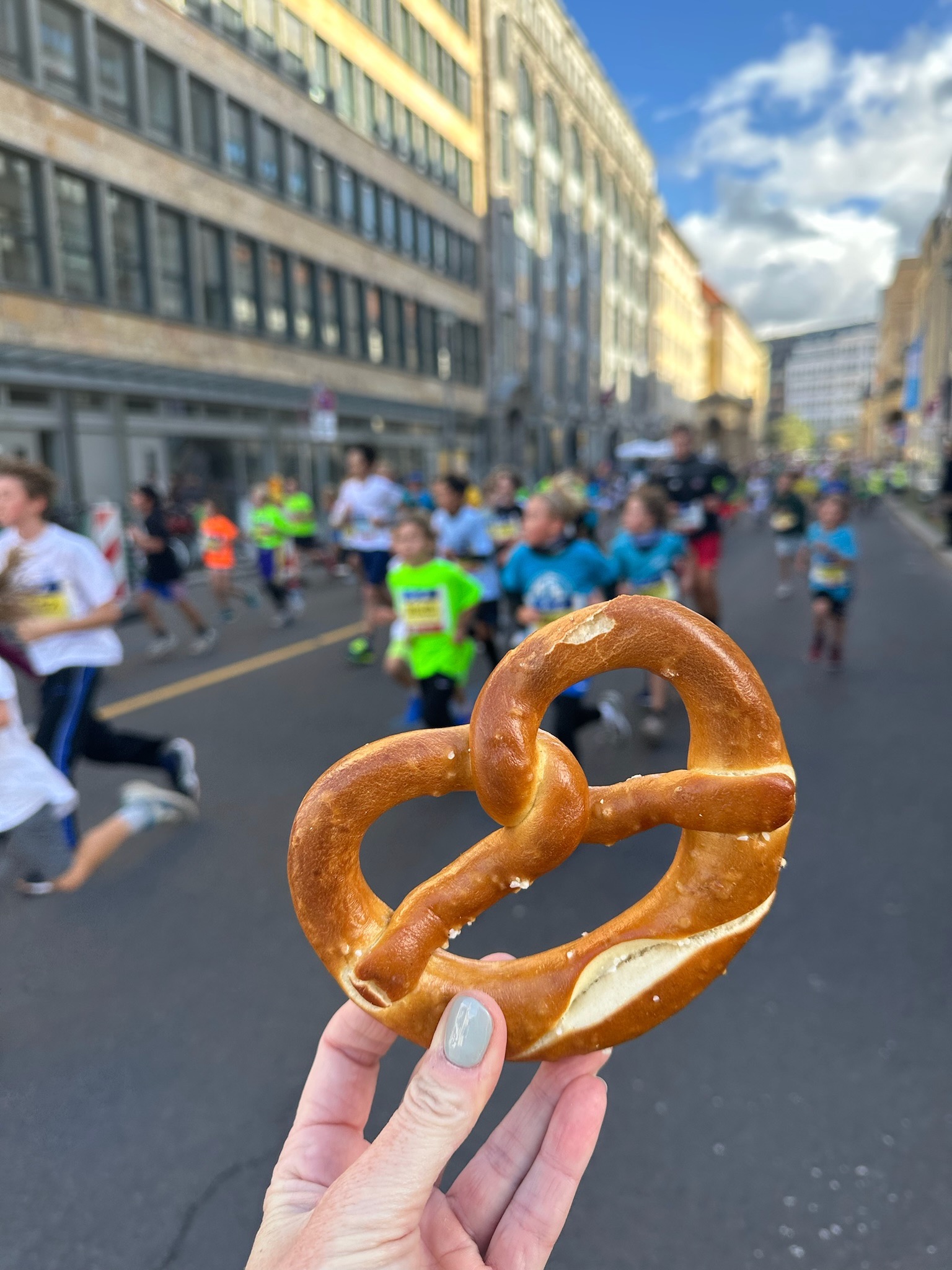
When I went to Berlin last year, I overpacked my ‘comfort’ foods and never needed them. This year, the only food I brought from the States was my box of graham crackers and two protein shakes. If you have no food allergies, you will have no problem carb-loading in Berlin. There is no shortage of fresh-baked bread, soft pretzels, wood-fired pizzas, fresh-baked sandwiches with all the bread, and fresh-squeezed juices.
Traveling while carb-loading can take some extra attention, but it’s also quite fun to embrace new experiences. Using my Carb Load Calculator, my goal is 400 – 500 g carbs daily x three days. This is my tenth time carb-loading for a marathon in the last three years, so I can attest that it gets easier the more you do it.
Research suggests that fully loading our glycogen stores pre-race improves performance by 3+ percent. This equates to 5 minutes faster over the marathon for me. Carb loading is a non-negotiable in my book to allow our body to hold marathon pace until the finish line without hitting the wall.
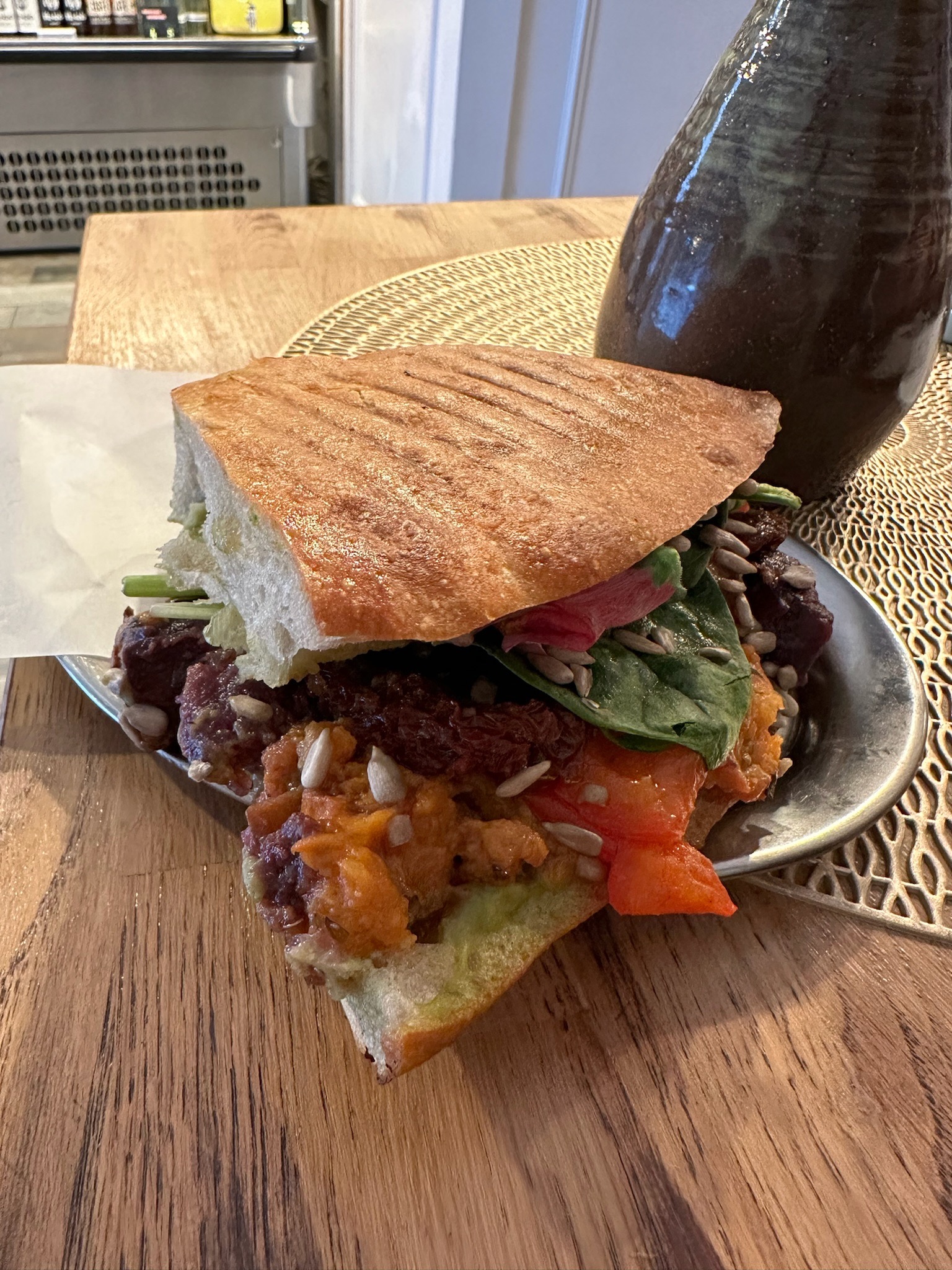
Day One Carb Load: pre-run graham crackers, egg white omelet + fresh sourdough toast, Maurten solid bar, a large vegan sandwich stuffed with sweet potatoes and avocado, another Maurten solid bar, burrata + 6 slices sourdough toast = 400 g carbs
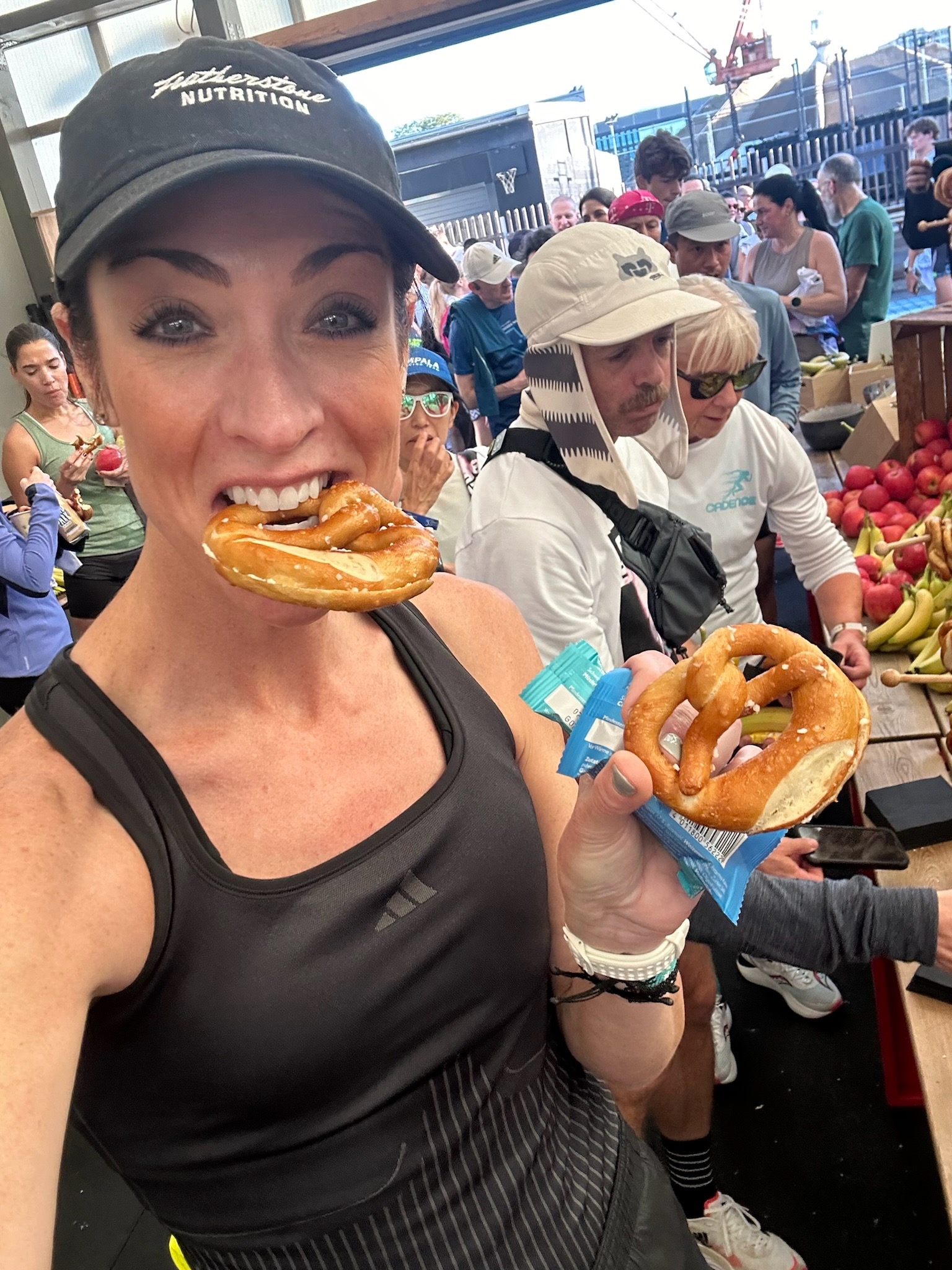
Day Two Carb Load: pre-run graham crackers, six small soft pretzels at our shakeout run <I juggled a few>, protein shake, 2 Maurten solid bars, large wood-fired cheese pizza, Milka chocolate bar, Carmallows, and burrata + 4 slices sourdough toast = 485 g carbs
Day Three Carb Load: granola bar, 16 oz juice + egg white omelet + 2 potatoes + 2 slices sourdough toast, 2 giant soft pretzels, Maurten solid bar, another large soft pretzel, ½ large wood-fired cheese pizza + small scoop pasta + bites of desserts, grahams for a bedtime snack with one Liquid IV = 450 g carbs
This was the most laid-back I have ever been with a carb load, and it worked great. I had no GI issues on race day. I track my carbs in the notes section of my phone. As I eat, I make a note and estimate the total carbs. Then, I add up the estimated total to know if I need to eat anything more before bed. This approach has always worked great for me. If you remember, I have been more boring in the past, leaning on very simple carbs like plain bagels, pretzels, and bread. But, as I run more races, I feel less nervous. Less nervous Meghann on race day means my stomach can handle more variety. Pick foods you are familiar with and enjoy for your carb load. Only you know how to best carb load for your best race day.





Pre-Race Nutrition
You guessed it. I ate graham crackers. The Berlin Marathon starts at 9:15 a.m. for corral A—D. We planned to leave the hotel at 6:45 a.m. to meet friends, jump on the U-Bahn, and head to the athlete start area. I woke up at 5:45 a.m., drank two small cups of coffee, ate four graham crackers in bed, and then got ready for the race.
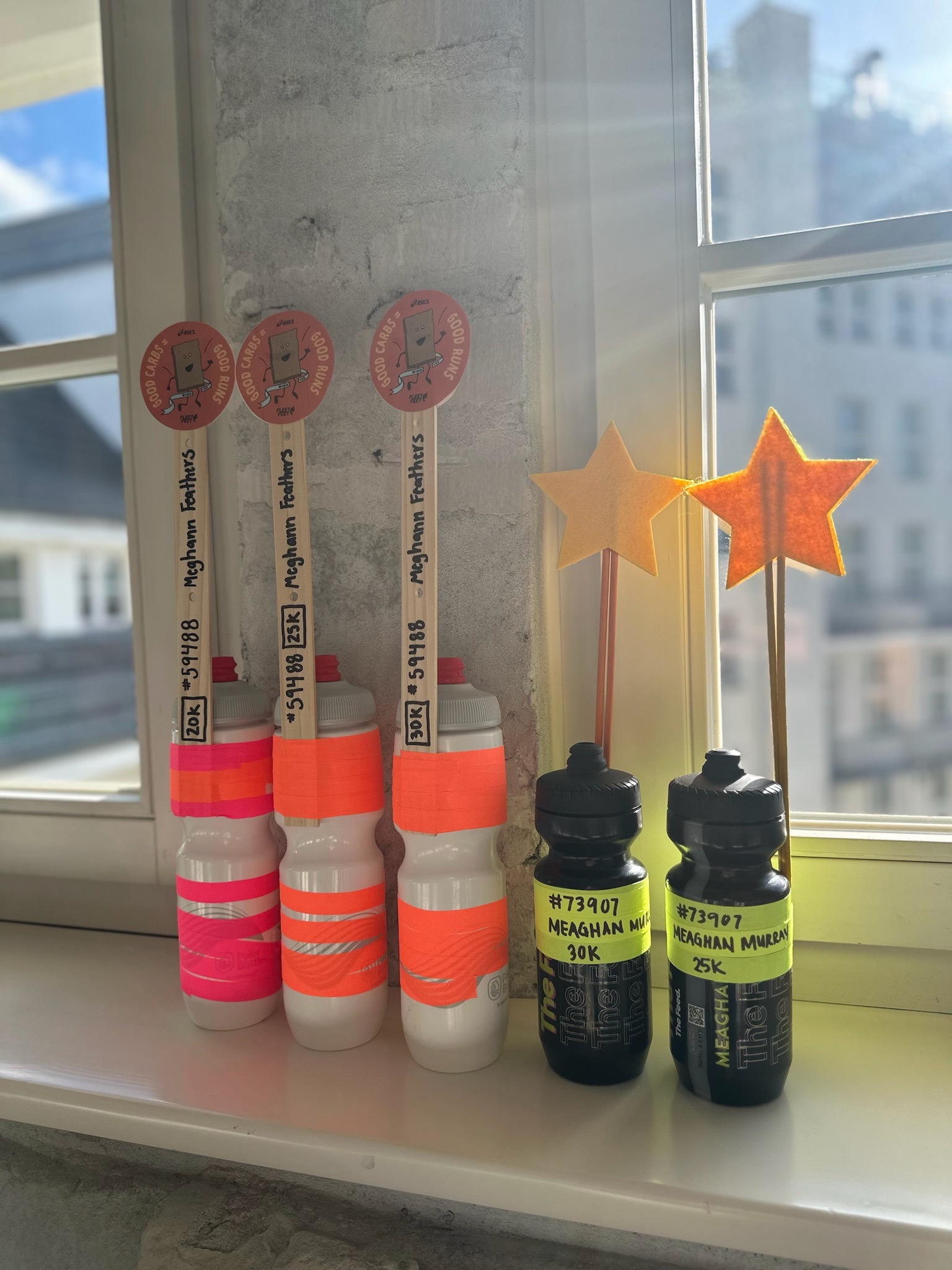
I recommend eating twice before a race when awake for 3+ hours pre-race. So, I carried my box of Honeymaid graham crackers with me to the start area. I crafted three bottles to drop at the Own Refreshment points on the Berlin Marathon course. Berlin is the only major marathon that allows all runners to drop bottles on the course. Own or Personal Refreshment areas are offered at: 5, 9, 15, 20, 25, 30, 36, and 40k. Drop-off is only open from 7 – 7:45 am so we headed there first, then waited at the Adidas Runner area to finish our pre-run eating and bathroom stops.
At 7:30 am, I was feeling more hungry than I expected, so I made the game-time decision to eat a Maurten solid bar along with four more graham crackers. Maurten solid bars always sit great in my stomach, but I have never eaten one pre-run. <broke that nothing new on race day!> Along with this, I sipped on water throughout the morning.
Race Morning Nutrition: 8 graham crackers + Maurten solid bar + 2 small coffees + water = 130 g carbs + 20 oz fluid
With an hour until race time, Meaghan Murray, Ben Johnson, and I headed to corrals B and A, respectively. It was an absolute madhouse. Everyone was using the Tiergarten as their personal restroom, and getting into the corrals was sheer chaos. I recommend spending as little time in this area as possible if you get race-day nerves. Meg and I arrived just in time to hop the fence into the front of corral B, take our pre-race gel 15 minutes before start time, and go!
Race Nutrition
This was hands down my most successful race nutrition yet. I learned a few things from my former nutrition best at the Berlin Marathon last year and decided to try some changes this year and see how it went.
The day before the race, Meg Murray asked if I wanted to run the first 20 miles with her and that was a no-brainer, yes. Meg has been my coach for over two years, and at that time, I went from a 1:25 to 1:21 half-marathoner & a 2:56 to 2:49 marathoner. Those of you who follow along on social media know we’ve also traveled, worked, and turned work into fun for the last two years. There is a comfort when I am with Meg that I was so excited to bring to race day.
We were unprepared for how crowded the entire course would be, and we decided early on that bobbing and weaving wouldn’t benefit us here. The only weaving we did was to find enough space to run side by side as much as possible. The weather was, however, incredibly favorable. It was 48 degrees F at the start and 58 degrees F at the finish, with a few clouds but mostly sunny, the best weather in race history.
I used Maurten gels, Skratch Labs hydration sports mix, and everyday drink mix for fueling. I took 7 Maurten gels, 2 servings of Skratch Labs hydration mix, and 3 scoops of everyday drink mix. <I am a very heavy, salty sweater. Combining the two Skratch Labs hydration products to allow for more sodium has been a complete game changer for my performance.>
Gels
10 minutes pre-race: Maurten 100 caffeine
25 minutes: Maurten 100
50 minutes: Maurten 100 caffeine
1:15 hours: Maurten 100
1:40 hours: Maurten 100
2:05 hours: Maurten 100
2:25 hours: Maurten 100
Hydration
1 scoop Skratch Labs hydration sports mix + 1 ½ scoops everyday drink mix in 18 oz
Hydrapak Tempo bottle: finished by 20k
Picked up my Own Refreshment bottle at 20k and refilled my 18 oz Hydrapak Tempo bottle with the same mix above: finished by 32k
Total Nutrition + Hydration for the Berlin Marathon
78 g carbs per hour
705 mg sodium per hour
12 oz fluid per hour
With Meg’s help, I could refill my hydration bottle while holding race pace, which might be the greatest accomplishment of the day.
I wore the Lingo by Abbott continuous blood glucose monitor for the carb load and the race. There are no alerts during running, so nothing changed my fueling in race, but it was fascinating to look back on my blood glucose data after the race and notice what was happening. The goal is to keep our blood glucose high and steady during the marathon to provide our muscles with consistent carbohydrate availability. Interestingly enough, my blood glucose started to drop at just over 2 hours around mile 22. This is precisely where most of us ‘skip’ our last gel for various reasons. Yet, my blood glucose data showed that my last gel at 2:25 hours into the race saved my performance. It gave me consistent energy and fuel to finish the marathon at race pace, without slowing down, and with a smile on my face. Pretty neat. Don’t skip that final gel!
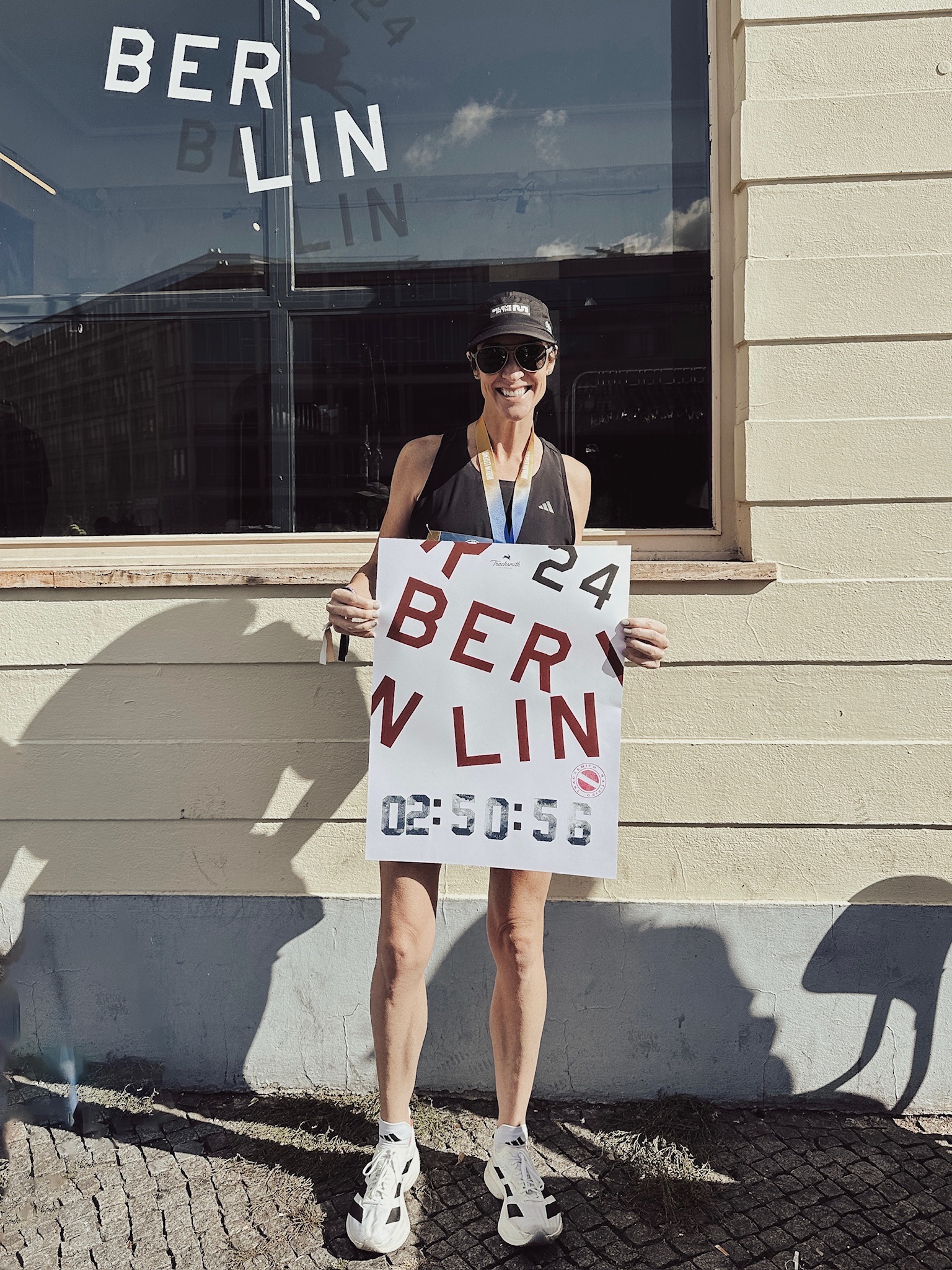
I came through the finish at 2:50:56 – just 61 seconds off my PR from last fall. It felt wonderful to run hard but without a time goal and take in the sights of Berlin this year. Reflecting on this day as I write, I realize that my body feels terrific post-race. I attribute this to solid nutrition, fabulous shoes, and not forcing a specific pace.
The Gear & Shoes
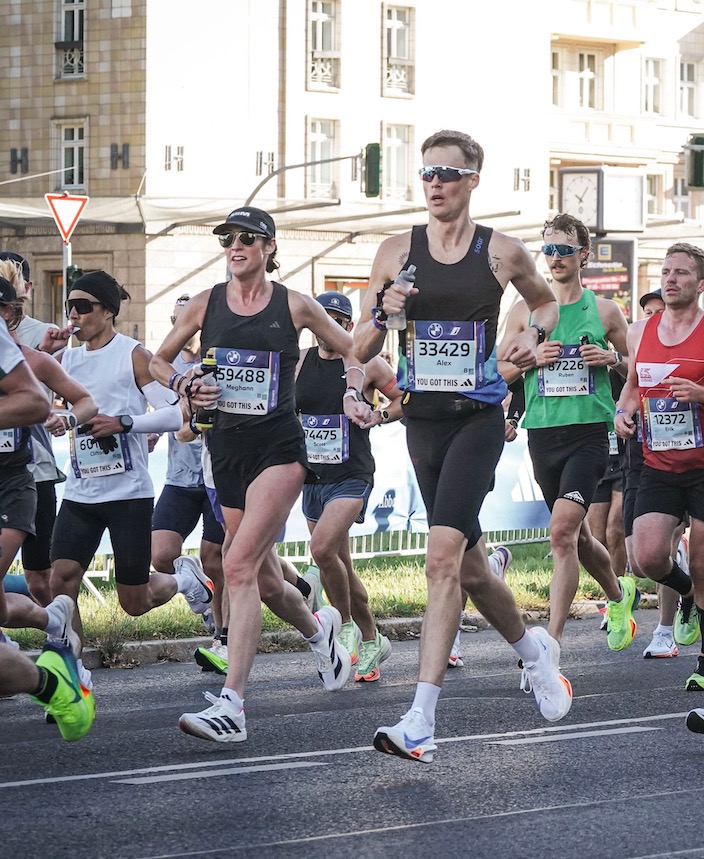
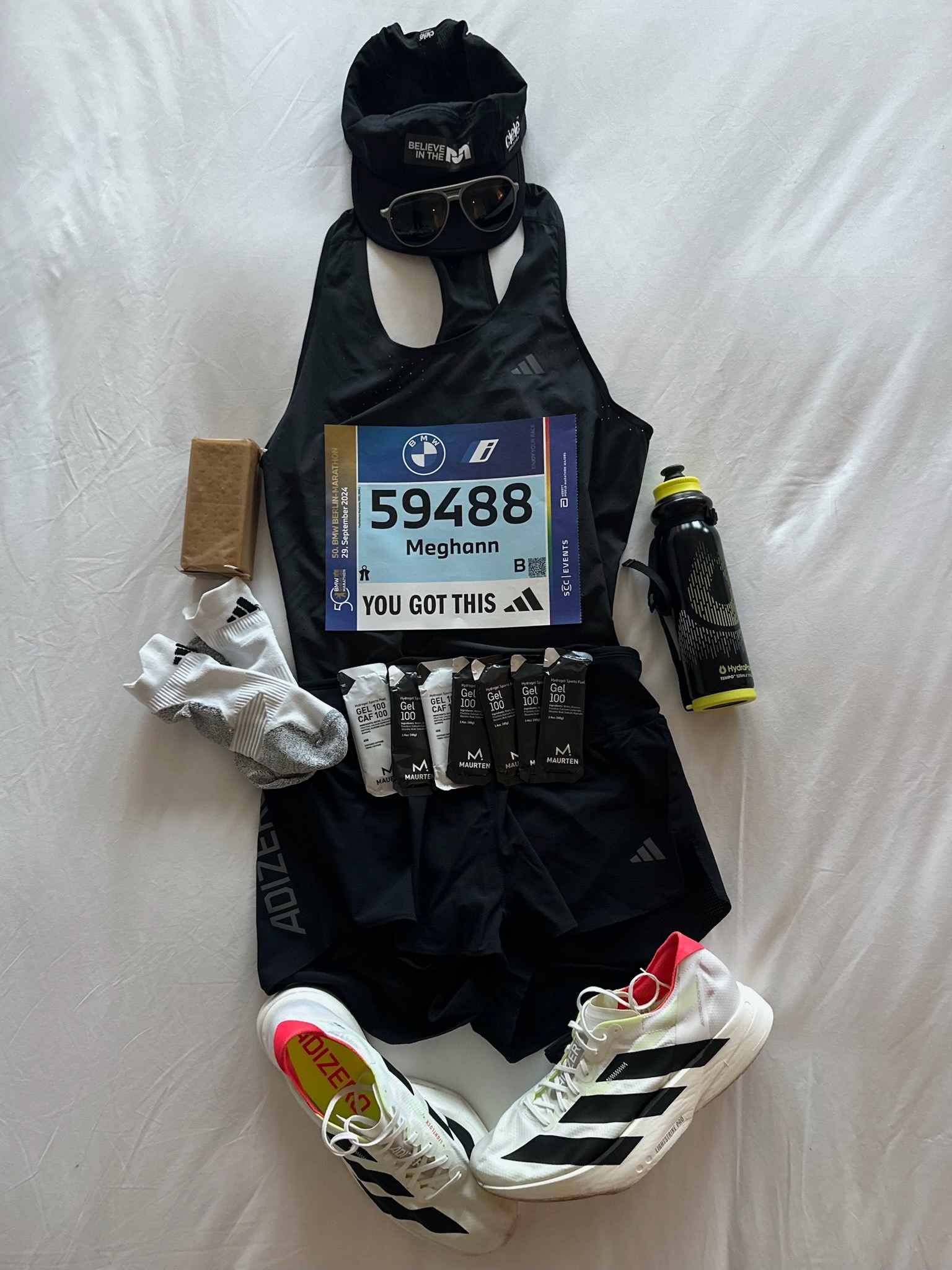
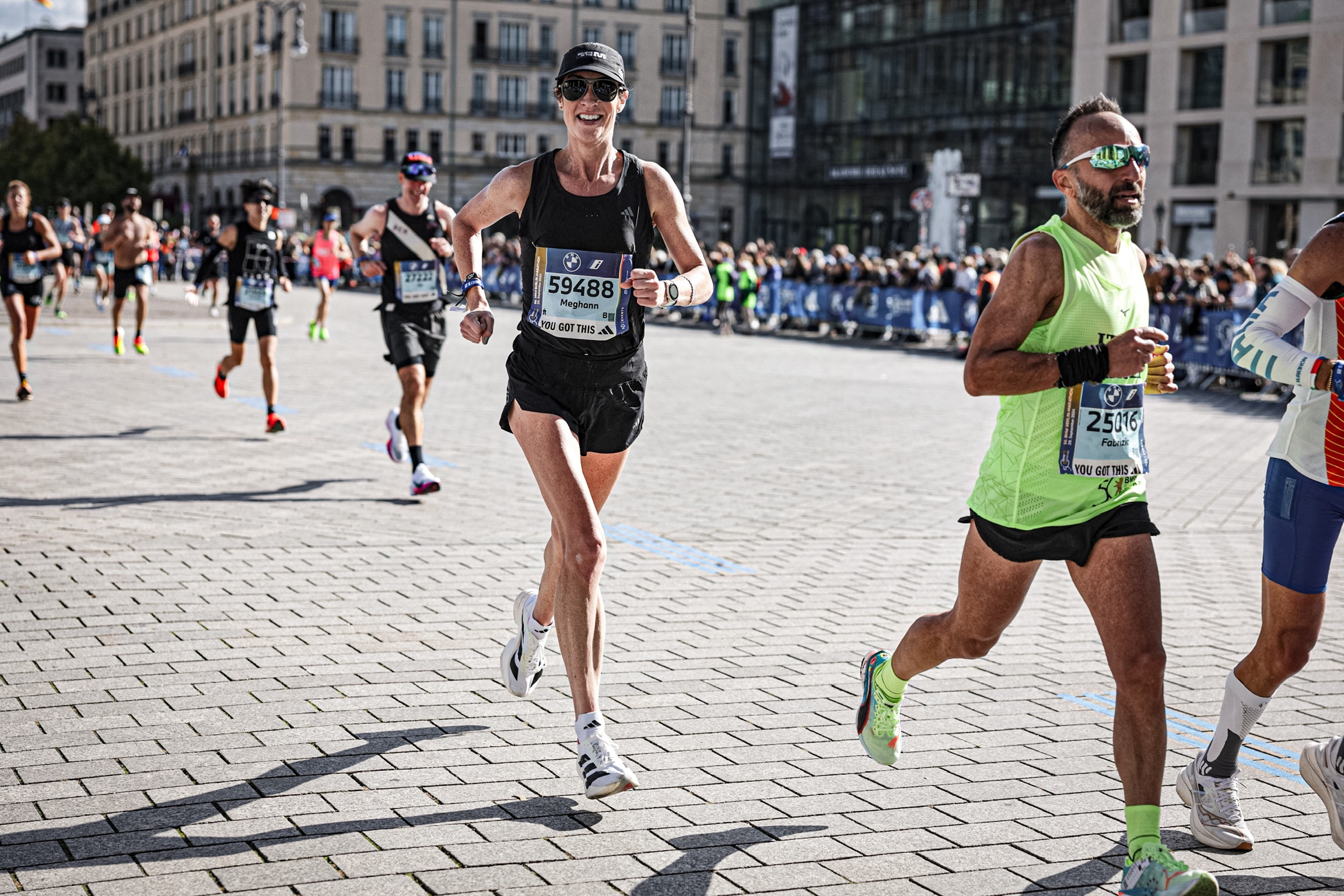
True to form, I wore all black and white out there on race day. My ‘lucky’ hat from Believe in the Run x Ciele. Goodr Mach G shades in grey to hide my eyes when things started to hurt. Then, down to this black tank top from Adidas Adizero.
The most common question I have gotten, ‘Where did you carry all your gels?’, can be summed up by my choice of sports bra and shorts. I carried a gel in each armpit of my Bandit sports bra. It may sound weird, but it works great. And I carried four gels in the pockets of my Adizero Running Gel Short. These shorts were purchased in Berlin and again broke the ‘nothing new on race day’ mantra. But, let me tell you – they were studly! The entire waistband contains four separate pockets. Historically, I could not stand gels in my shorts bc they ‘bounced,’ but I never even noticed these. These appear unique to Germany, but I found the same pair on another website. (Here’s a link to the pink as long as they last!)
Now for the shoes… if you’ve followed along on my running journey, you know that I am quite the Princess and the Pea when it comes to shoes. I have very little mobility in my big toes, which means cushion and plates are my best friends. I won’t pretend to be a shoe reviewer so check out Believe in the Run first thoughts on the Adidas Adizero Adios Pro 4, which I wore for the Berlin marathon. But, from my experience, this was a phenomenal shoe. It felt bouncy, supportive, and light on race day. And, I have to say – I’d 100% wear this shoe again. My longest run in this shoe pre-race was an easy 14-mile run, and I could hold race-pace with no difficulty for the entire marathon. My feet and body felt phenomenal post-race as well. Thank the dear sweet lord because next up…. NYC Marathon!
Post-Race Nutrition
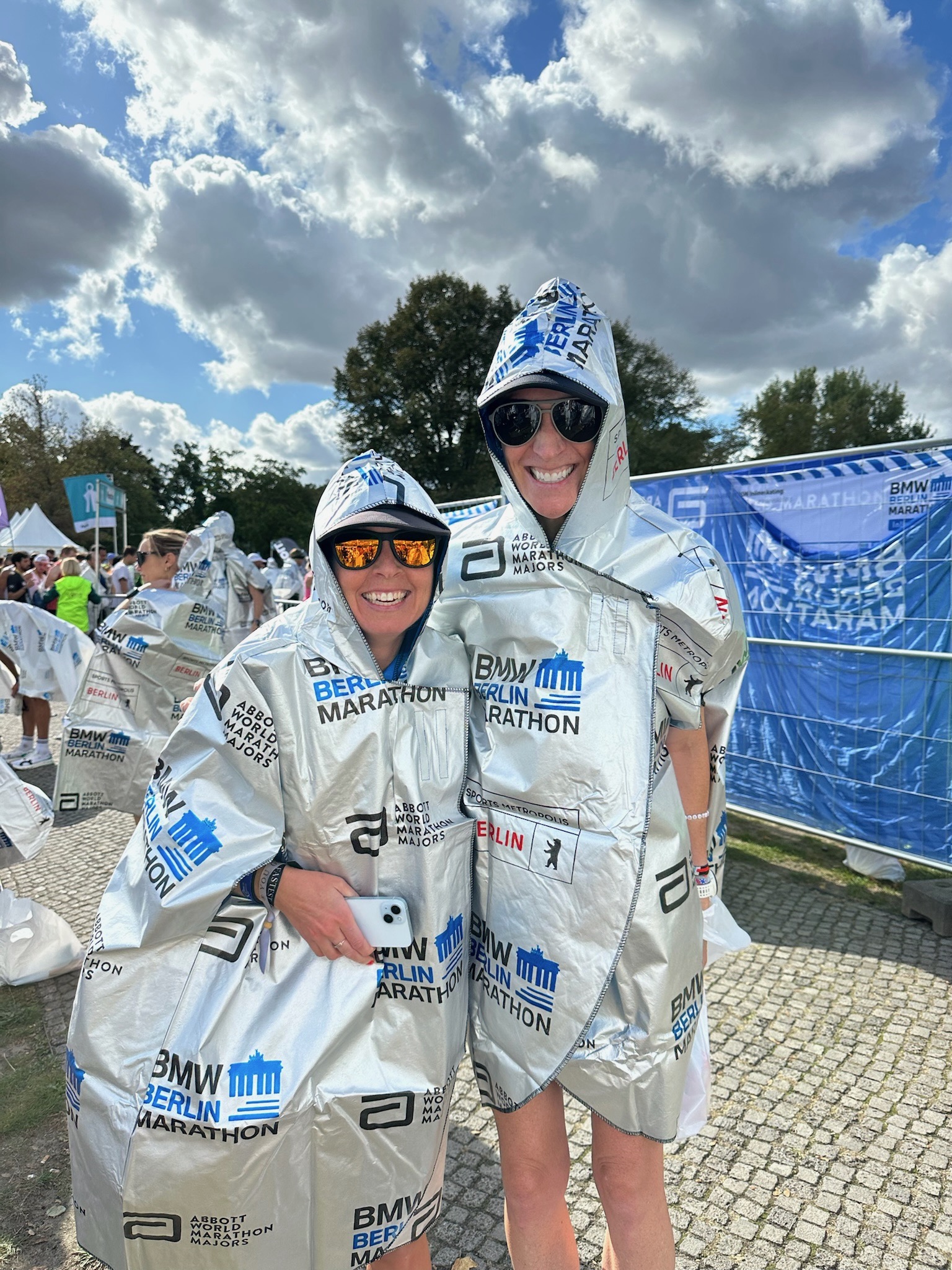
Immediately after the race, we went on a search for water. This took a moment and came from a hose and dipping cups in a vat of hose water. I drank five cups and lived to tell about it so it couldn’t have been too terrible. We got our ponchos, which were much needed when sweaty and wet in the 50s. Meg and I hopped back on the U-Bahn to grab our Tracksmith posters stamped with our times and headed back to the Soho House to shower and start the celebration. I chugged a Fairlife nutrition shake I packed from home, ate a leftover soft pretzel sitting in my room, and enjoyed the most epic shower with lovely water pressure at the Soho House Berlin. Eventually, we went to dinner at the restaurant at Soho House, and I enjoyed a burger & fries with Meg <our post-race go-to>.

The End
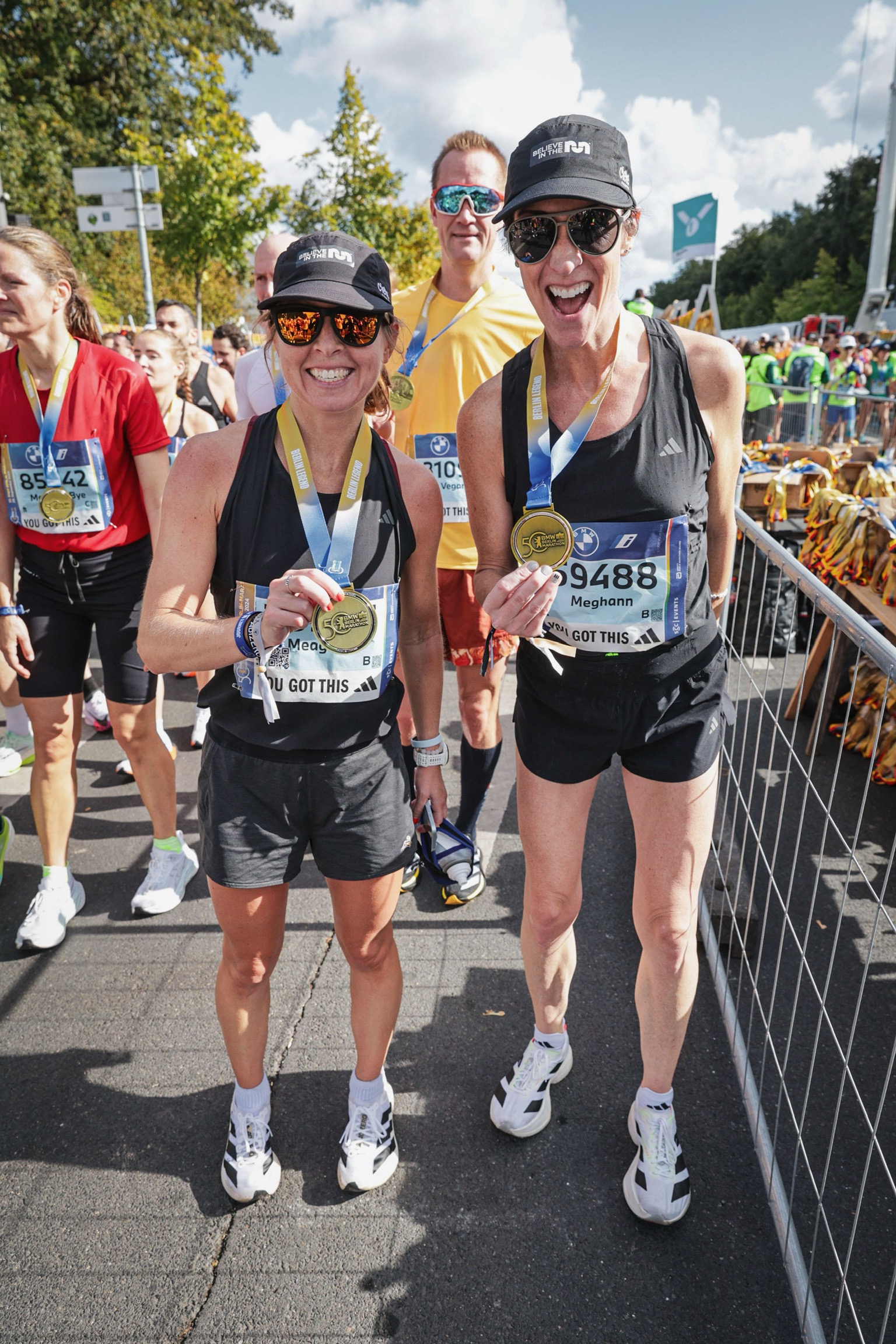
Cheers to another epic Berlin marathon and my 18th marathon on the books! I am forever thankful for this running community, which allows me to chase my dreams and help you all chase yours. Never in my wildest dreams did I think I would be here, and I hope you all have these exact moments in life.
A huge thank you to the Believe in the Run crew and Adidas Running for making this trip so lovely.
Next up… spectating the Chicago marathon and running NYC marathon. I hope to see so many of you there!
Should I Take Creatine as an Endurance Runner?
This post is part of a paid sponsorship with RNWY.
Creatine supplementation is widely recognized in sports for its benefits in high-intensity, short-duration activities such as weightlifting, swimming, and sprinting. It is one of the most popular and well-researched supplements. Studies have consistently shown that creatine supplementation increases the intramuscular stores of creatine beyond what we can achieve through diet alone. <PMID: 28615996>
Recent research has also suggested potential advantages for endurance athletes. One of the most frequent questions is: Should I take creatine as an endurance runner? Let’s explore how creatine supplementation may benefit endurance runners, the science behind it all, and practical considerations for its use.
What is Creatine?
Creatine is a naturally occurring compound found in muscle cells, primarily as phosphocreatine. It plays a critical role in producing adenosine triphosphate (ATP), which is fast energy for cells. When you engage in short-duration, high-intensity activities, ATP is rapidly depleted, and phosphocreatine helps regenerate it, thus sustaining performance.
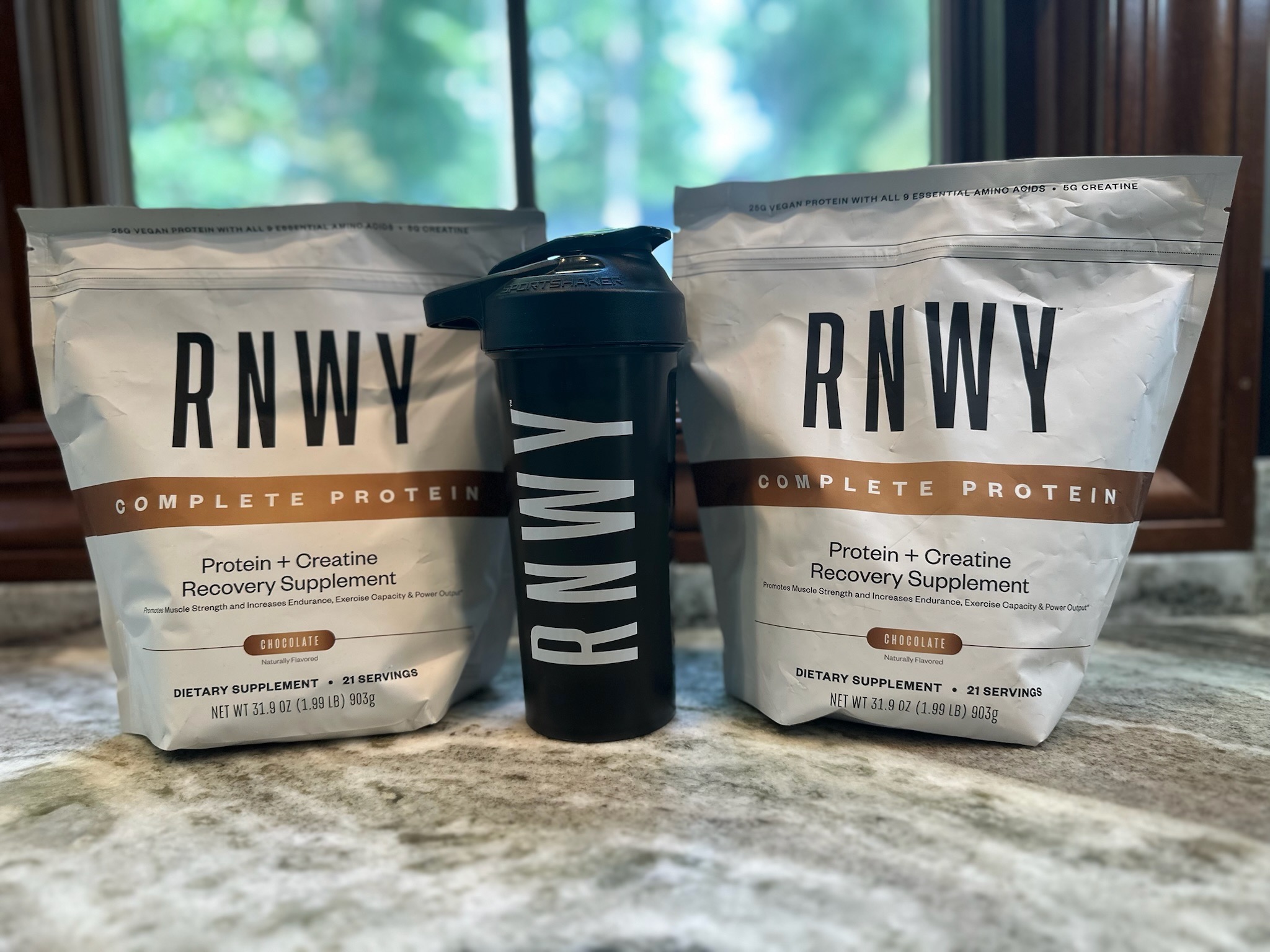
We consume creatine by eating foods rich in creatine, such as red meat, seafood and dairy. Since creatine is only found in animal tissues, vegans and some vegetarians may have lower levels of creatine stores. In order to fully saturate our muscle creatine stores, we need to supplement with something like RNWY Complete Protein – Protein + Creatine Recovery Supplement.
Benefits for Endurance Runners
The creatine phosphate energy system is utilized for quick, short bursts of intense activity. This energy system can create energy for up to 25 seconds. In the past, athletes who performed shorter bouts of exercise through weight lifting and sprinting were more likely to utilize creatine supplements.
However, in recent years, more endurance athletes have turned to creatine supplementation to improve their performance, recovery and mental health. However, the effects on endurance performance are less known. Let’s examine the research and discuss potential mechanisms of how creatine may impact endurance performance.
Improved Recovery: Creatine, due to its antioxidant and anti-inflammatory effects, has been shown to enhance muscle recovery post-exercise. This could mean reduced muscle soreness and quicker recovery between training sessions, leading to more significant fitness gains and better overall performance for endurance runners. <PMID:33800880>
Enhanced Muscle Glycogen Storage: Some studies suggest that creatine supplementation may increase the muscle’s ability to store glycogen. Glycogen is our muscle’s carbohydrate storage form, a key energy source during prolonged running. Improved glycogen storage can potentially enhance endurance. <PMID: 10444618> One study found that post-exhaustive endurance exercise participants stored more glycogen on a high-carb diet with the addition of creatine vs placebo. <PMID:27193231>
Improved Muscular Efficiency: In theory, creatine supplementation may lower the demand for oxygen consumption by working muscles during endurance performance. One study found a 4% reduction in oxygen consumption during heavy exercise when supplementing with creatine. <PMID: 12015375>
Hydration and Electrolyte Balance: Creatine helps retain water within muscle cells, which could benefit hydration status during endurance activities. Avoiding excessive dehydration is crucial for endurance performance and recovery. One study found that loading with 20 g of creatine for seven days induced a hyperhydration effect and allowed for more efficient thermoregulation in prolonged exercise in the heat. <PMID:15467102>
At this point, no research studies have evaluated the effectiveness of creatine supplementation on half marathon or marathon performance. However, as illustrated above, the potential for improvement in endurance running and marathon performances is plausible. Runners know that faster paces in track workouts, heavier lifting, greater lean muscle mass, and improved recovery could all benefit marathon performance on race day.
Recommended Dosage & Protocol
There are different approaches to taking creatine. Many strength and power athletes use the loading phase dose, followed by the maintenance dose. Many endurance athletes choose to take the maintenance dose daily. Others take a lower dose of 3 grams per day.
Loading Phase: For strength and power athletes, a loading phase of 20 grams per day (divided into 4 doses) for 5-7 days is typically recommended to rapidly saturate muscle creatine stores.
Maintenance Phase: Following the loading phase, a maintenance dose of 3-5 grams daily is commonly used. Research suggests endurance athletes skip the loading phase and go straight to the maintenance dose. Creatine stores can be saturated in 4 weeks with this approach. <PMID: 37096381>
Timing: Creatine can be taken at any time of day, though it may be most effective close to training. Consuming carbohydrates with creatine can enhance muscle uptake.
Considerations & Potential Side Effects
Weight Gain: Creatine supplementation can lead to weight gain due to increased muscle water retention. This is most often seen when using the Loading Phase dose of creatine and may not be experienced with the lower Maintenance Phase dose.
Digestive Issues: Some individuals experience gastrointestinal discomfort when taking creatine. Starting with a lower dose and gradually increasing it can minimize these issues. <PMID: 18373286>
Individual Response: Some people respond to creatine supplementation in different ways. While many athletes see benefits, some may experience little changes in endurance performance. This may be associated with genetics, as athletes with more fast twitch muscle fibers responded to creatine. Those with lower baseline muscle creatine content also responded better to creatine supplementation. <PMID: 15320650>
Quality and Purity: Choose high-quality creatine monohydrate to ensure safety and effectiveness. Choosing products that are NSF Certified for Sport or Informed Sport certified helps ensure we are getting a high-quality, verified product.
Vegan and Vegetarian Athletes: Given that creatine is consumed via animal and marine proteins, populations who avoid or limit these food sources may benefit from creatine supplementation. Creatine supplementation in vegetarians increases total creatine concentrations in muscle and increased lean muscle mass, strength, and endurance in one study. However, studies are mixed if creatine supplementation benefits vegetarian and vegan athletes more than omnivorous athletes. <PMID: 32349356>
Discussion & Conclusion
Creatine supplementation offers promising benefits for endurance runners, including improved recovery, enhanced glycogen storage, and potentially increased muscular efficiency.
Further research is warranted to determine if creatine supplementation can enhance in-race pace changes and surges, in other words, higher-intensity bouts of running in a marathon. The interplay between carbohydrates and creatine is also exciting and needs further research, but the takeaway here is adequate carbohydrates plus creatine augment recovery and glycogen storage. It’s also important to note that there is individual variability in response to creatine supplementation, so it’s recommended that we practice supplementation in the off-season.
By understanding the science behind creatine and following recommended usage guidelines, endurance athletes can make informed decisions about incorporating this supplement into their training regimen. Consulting with a healthcare provider or a sports dietitian can help tailor supplementation to your individual needs and goals.
This educational blog post is sponsored by RNWY, a sports performance brand dedicated to supporting your athletic journey. Running isn’t just an activity. It’s our shared passion. It’s a lifestyle. It’s a relentless pursuit of improvement. Together, we’re on a mission to fuel your journey.
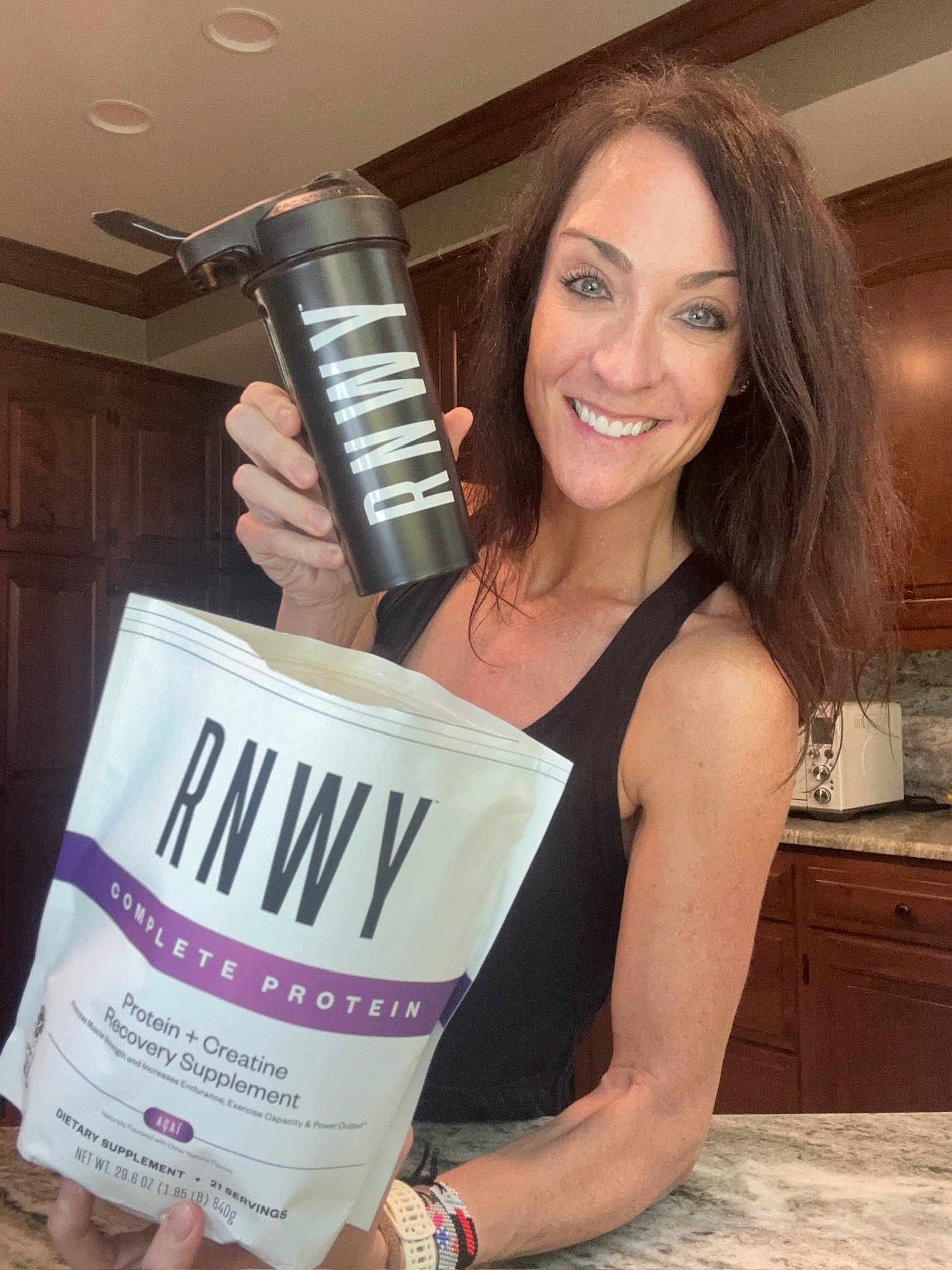
Try the new RNWY Complete Protein – Protein + Creatine Recovery Supplement. With 25 g of protein and 5 g of creatine per serving, you can recover and give the above benefits of creatine a try. Available in chocolate & acai flavors. Use code Feathers15 for 15% off your order at RNWY.life.
Disclaimer: The content in our blog articles provides generalized nutrition guidance. The information above may not apply to everyone. For personalized recommendations, please reach out to your sports dietitian. Individuals who may chose to implement nutrition changes agree that Featherstone Nutrition is not responsible for any injury, damage or loss related to those changes or participation.
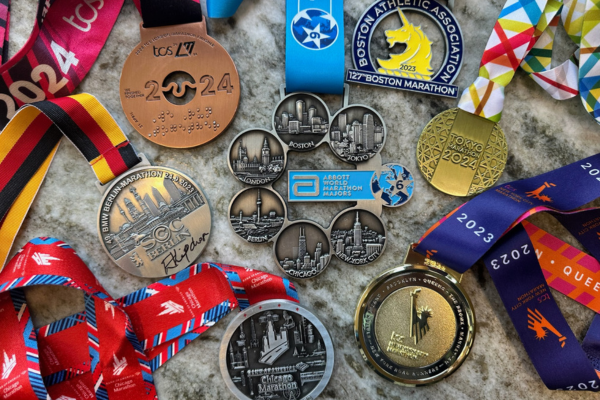
Nutrition tips for the Abbott World Marathon Majors
It’s no secret that nutrition can make or break our marathon performance. And, it’s also no secret that many of us rely on on-course nutrition and fluid options to support our marathon performance. During my six-star journey, I found it fascinating how different the nutrition and hydration options are at each Abbott World Marathon Major race.
Let’s take a look at the nutrition offerings at each race in 2023 – 2024. And, as a sports dietitian, share some of my tips to utilize these nutrition options for your best performance. Please note these offerings can change from year to year, so please check the course guide & websites before you run your next race listed below.
Tokyo
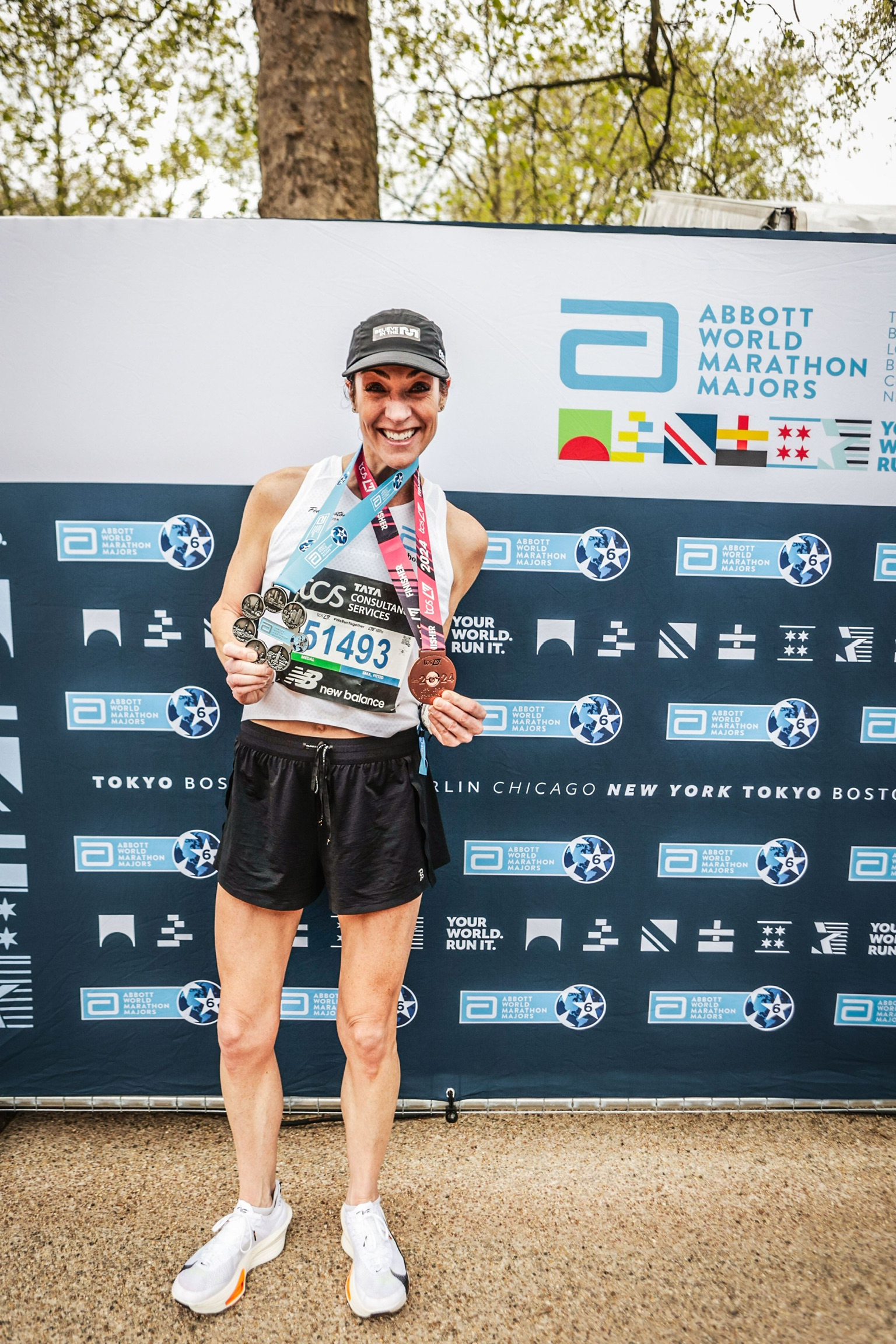
The course is flat and cool. With multiple out-and-back sections, you can catch the leaders and other runners which is unique to this World Marathon Major. Rules are strict and enforced here. You cannot take any hydration accessories onto the course. No handhelds. No hydration packs. No flasks. The other thing to note is you cannot throw your trash on the ground during the marathon. All cups must be thrown away in a trash can. You can carry all of your own gels, chews, and snacks. But, they ask that you keep all nutrition wrappers on your body to discard after the race in your own trash.
Nutrition: There are 15 aid stations on course. Nutrition offerings vary widely throughout the course. If you’re running Tokyo for fun, you could have a full meal out on the course! If you are running Tokyo for your best on the day, please carry all your fuel. For many of us, the fuel offerings are new and items we have not practiced with in training. They offer an assortment of foods from 17 to 38 kilometers, including pickled plum, chocolate, azuki-bean paste, cream-filled rolls, banana, calorie mate, glucose, salty candy, and doll-shaped pancakes.
Hydration: All hydration options are served in paper cups. They offer water every 2 – 3 kilometers starting at 5k throughout the race. They also provide Pocari Sweat every 5k. The fluid tables are very long and are labeled 0 – 9. They encourage runners to grab fluids off the table that correlate to the last number on their bib. For example, my bib number was 88065, so I stopped at the #5 tables for water. It was not strictly enforced and I saw many runners using other tables.
Meghann’s Tips: If you plan to use Pocari Sweat, order some in advance and train with it a few times to make sure you like it and your GI tract likes it too. Nothing new on race day. If you do not already, practice putting all your fuel wrappers back into your pockets during training.

Boston
A late start, Athlete’s Village, and no baggage check in the village means you need to be prepared for a full morning of fueling and hydration as you head to the buses. Pack your second breakfast & a bottle of hydration in addition to your race fueling. You can carry a handheld bottle or hydration flask. But, you cannot use a hydration pack with a bladder.
Nutrition: Maurten is the on-course fuel option at Boston. Maurten gel ‘depots’ are stationed at miles 11.8, 17, and 21.5. There are two gel options here: Gel 100 and Gel 100 CAF. Everyone should be fueling multiple times before mile 11.8, so if you plan to use on-course gels, please pack enough to get you to 11.8 miles. If you do not use Maurten, pack all your fuel.
I recommend that we strategically time our fueling in the front half of the race to take a gel around mile 15 to have fuel ready for the Newton hills. I do not recommend fueling while running uphill, take fuel on the downhills when possible. Taking a gel can increase our perceived exertion and heart rate momentarily, as does running uphill. To avoid compounding this increase, fuel on the downhill.
Hydration: Water and lemon-lime Gatorade Endurance is available every mile starting at mile 2. These tables are long and plentiful. They are very crowded at the beginning of the race, but if you don’t mind slowing down and getting caught in the crowd, you can access fluids. If staying down the center yellow line is more your jam, I’d recommend carrying a handheld for the first half.
Meghann’s Tips: Pack extra snacks and hydration for the bus ride & wait at Athlete’s Village. Do not count on finding any fuel or hydration in Athlete’s Village! Take what you would normally eat pre-long run. If you plan to use course fluids, make sure to adjust your plan based on the weather. Boston can be the first warm day coming off winter training which means we need more sodium & hydration than we did in winter training. If you are taking water off course, be sure to consume your sodium from gels, chews, or sodium caps or chews.
London
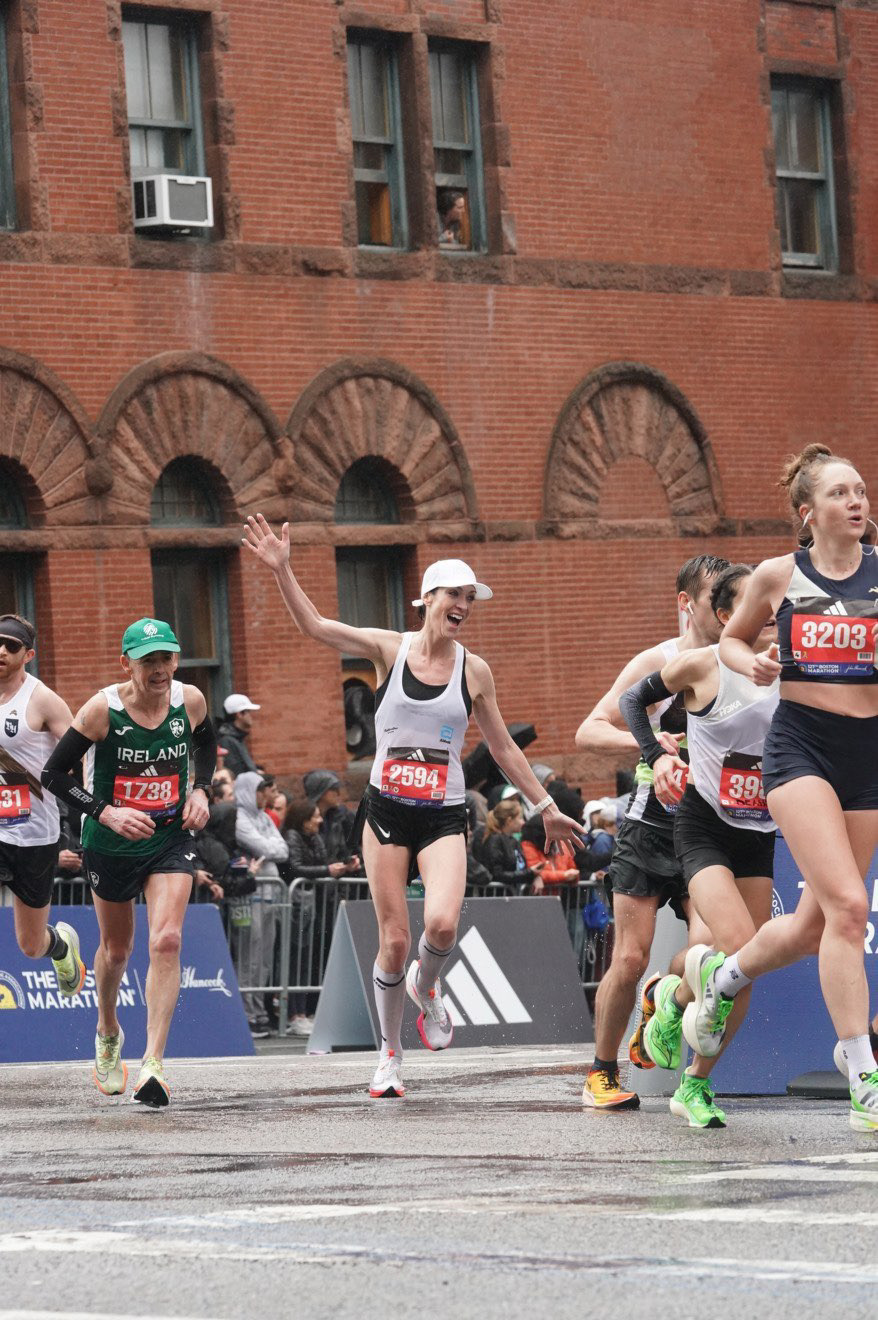
Hands down the most laid-back and enjoyable race of the Abbott World Marathon Majors, in my opinion. Anything goes in London! You can carry any hydration pack or bottle you desire. London is also a later start with the first wave starting at 10 am. Make sure you eat in your hotel & take a second breakfast for The Tube ride to the start.
Nutrition: Lucozade Sport gels are offered at miles 13.5 and 19. Remember, this is far too late and not enough to adequately fuel your marathon. If you want to use on-course gels, be sure to also carry some of your own.
Hydration: Lucozade Sport is the electrolyte drink option on-course. If you plan to use this on race day, order some to practice with during a few of your long runs to make sure you like it and it sits well in your GI tract. Lucozade Sport is comparable to Gatorade Endurance in nutrition with 32 gm carbs & 250 mg sodium per 16 oz. Lucozade is available at 4 stops, miles 9, 15, 21, and 24. Small bottles of water are available at 13 stops on the course, at varying distances apart. These are small 8 oz bottles of water with a spout on top which makes it very easy to drink from vs a cup. And, you can easily carry these bottles for a few miles, if needed. Of note, unlike the US Major Marathon locations water and sports drinks are not offered at the same stops. Also, it is encouraged that you spray out the water before tossing the bottle to minimize tripping risk.
Meghann’s Tips: If you use water during your marathons, I would highly recommend relying on the handy bottles they pass out and not carrying your own water. If you plan to use Lucozade Sport, practice with it in training. And, make sure to keep your head up on Tower Bridge, Canary Wharf, and the Mall. Fuel like a boss so you can appreciate the sights!
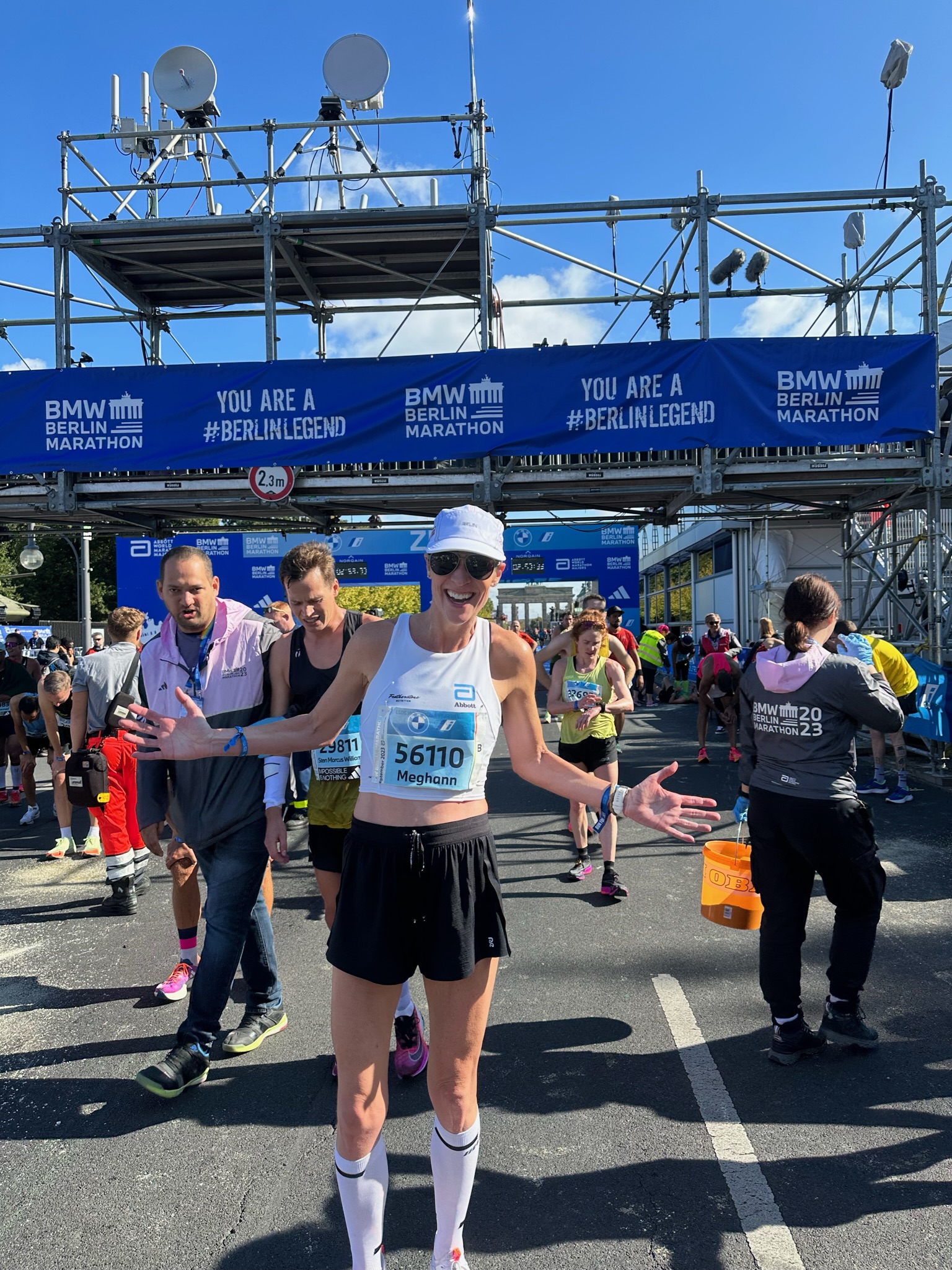
Berlin
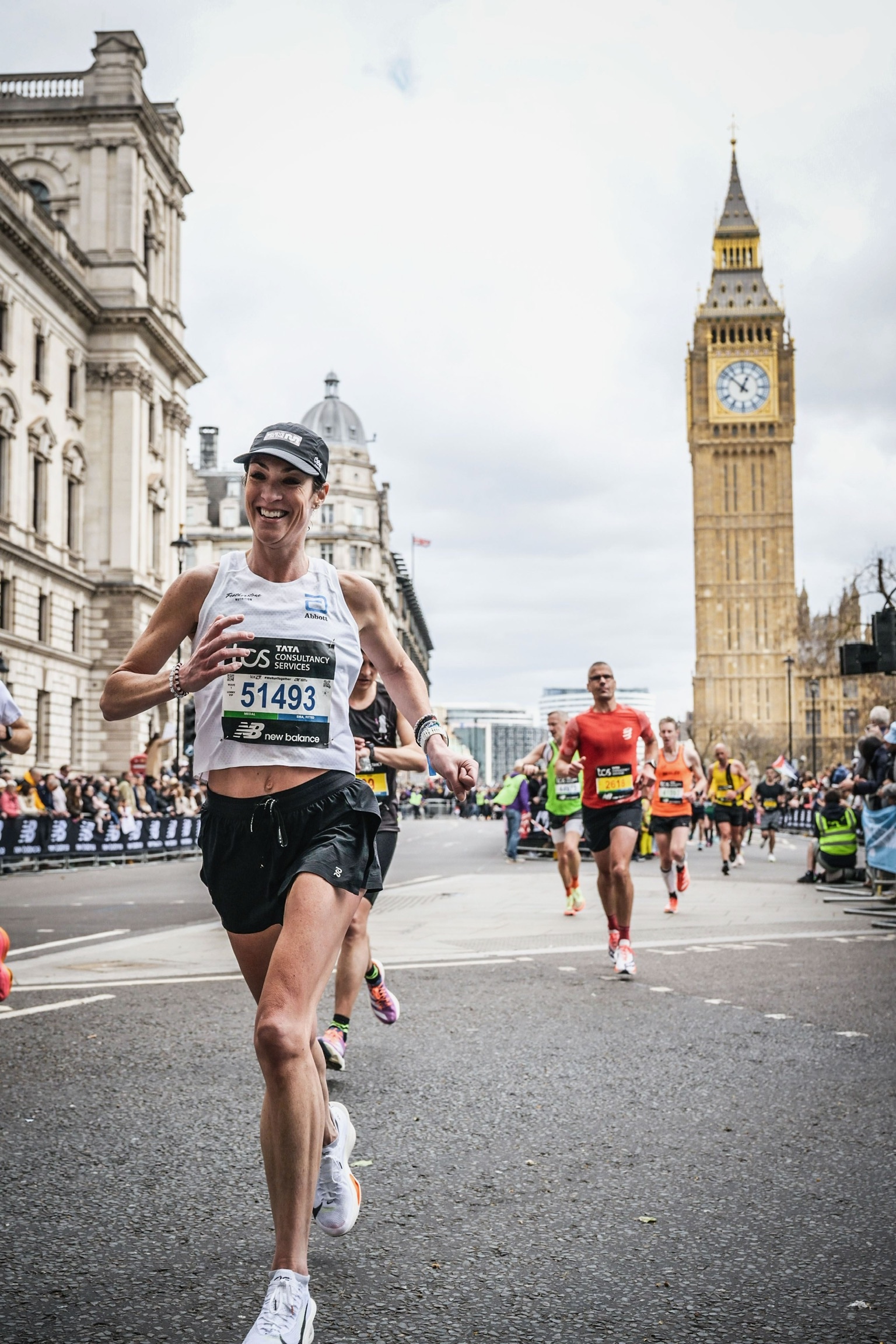
The Berlin Marathon is another fast and flat Abbott World Marathon Major race. Many records have been set on this course. If you’re running Berlin Marathon for fun, you may be very entertained by the drink & fuel options on-course. But, if you are running for a PR or your best race on the day, there are some things you may want to take into account.
Nutrition: Maurten is the on-course fuel at the Berlin Marathon. There is only one Maurten gel 100 station, and this is at km 27.5. There are also 6 Maurten 160 drink mix options between km 9 and 36.
Hydration: Refreshment points with fruit, tea and water are available at 9, 15, 20, 25, 30, 36 km. Then, water-only refreshment points are also available at 5, 12, 17.5, 22.5, 27.5, 32.5, 34.5, 38, and 40 km. I hope something jumps out to you here. None of these options contain electrolytes. The average weather for Berlin is in the high 50s – mid 60s, which for the majority of runners requires a conscious intake of adequate sodium. <the vomit at the 2023 finish line confirmed my suspicion that many runners did not get the memo to carry their own electrolytes – as nausea/vomiting is a common side effect of inadequate sodium intake>
Another unique option at the Berlin Marathon is a Personal Refreshment option. This is where you can fill your own bottles, much like the pros, and have them available to you on course at certain points. You drop them at a truck as you enter the start village. I did this in 2023 and found 1 of the 2 bottles I marked. Note: the tables with personal refreshments are VERY crowded so please drop a few and have a backup in case you are unable to locate your bottle.
Meghann’s Tips: You will likely need to carry all your fuel and electrolytes for the Berlin Marathon. Think this through in training and find your favorite way to carry all this for the marathon. If you rely on a specific electrolyte drink, I highly recommend dropping a couple bottles at the Personal Refreshment <also called Own Refreshments some places> truck to find on-course. However, have an electrolyte backup in case you don’t find them, as they are very crowded tables.
Chicago
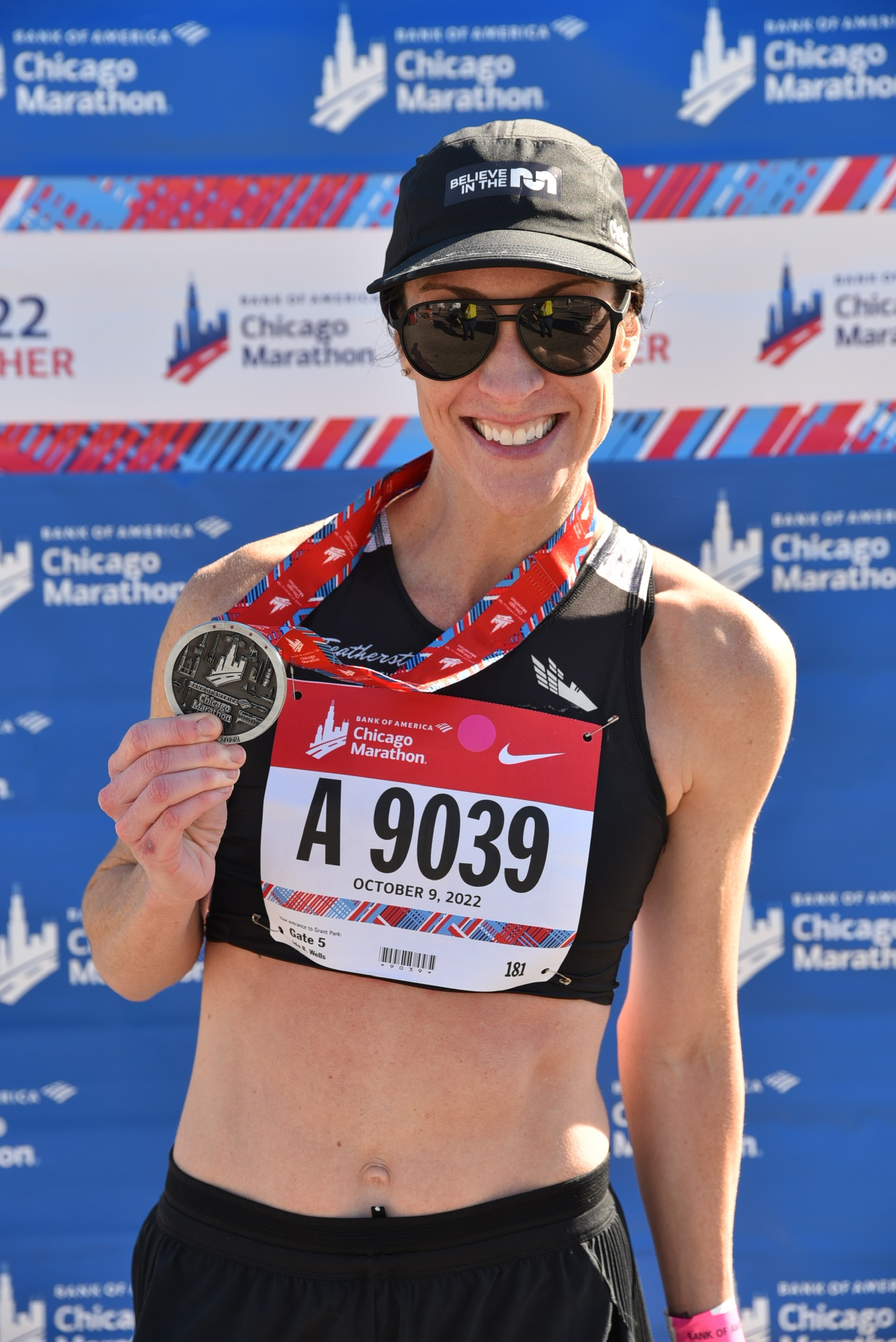
The Chicago Marathon is another very well-supported marathon with 20 aid stations on the course. It is known to be very flat, and a very fast marathon, which allows for a steady perceived exertion. While USATF rules prohibit taking aid from spectators, if you are not running for an award or prize money, this spectator-friendly race lends itself to seeing your friends and family multiple times throughout the race.
Nutrition: In the past, the Chicago Marathon has used Gatorade Endurance Energy gels but these have been discontinued as of November 2023. At this time, in May 2024, there is no information about what gels will be on the course of the 2024 Chicago Marathon. Historically, gels have been available just before miles 14 and 18.
Hydration: All aid stations offer water and lemon-lime Gatorade Endurance options. There are 20 hydration stations starting just before mile 2 with the final hydration station at mile 25.5.
Meghann’s Tips: There are adequate fluid stations on course if you prefer to rely on aid stations. However, if you choose to use an electrolyte drink other than Gatorade Endurance, I would recommend getting used to carrying a handheld during training so you are comfortable carrying your own electrolyte drink throughout the race. Watch for announcements about which gel will be available on the Chicago Marathon course.
NYC
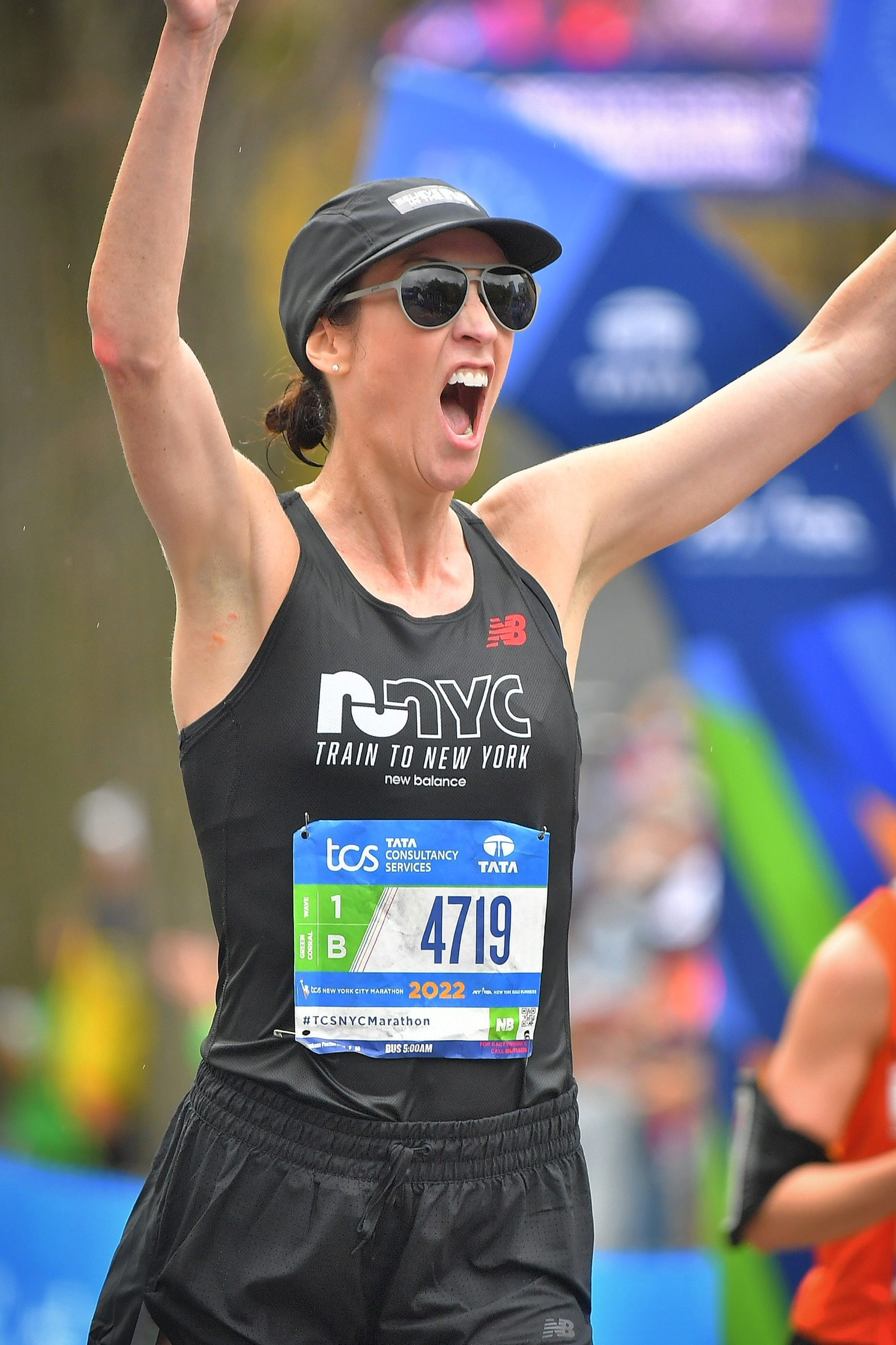
This iconic course through the 5 boroughs of New York City is lined with spectators for the entire 26.2 miles. Don’t forget to keep your head up and notice all the fantastic support! With long stretches of bridges where no aid stations exist and the unseasonable warm weather at this race the past couple of years, I recommend running with a handheld hydration bottle if you are a moderate to heavy sweater. This way you have what you need when you need it, the whole race. NYC has a wave start which means runners start anywhere between 9:10 and 11:30 am. Many runners find themselves on Staten Island for a couple of hours before their race starts. Be sure to pack snacks, hydration, and comfortable throw-away clothes.
Nutrition: The Start Village does have bagels, Gatorade, water, coffee, and tea. However, I do recommend bringing everything you need with you and using this as a bonus, if needed. Science in Sport Energy gels are available at miles 12 and 18. And, bananas are available at miles 21 and 23.
Hydration: Runners are allowed to carry a handheld, waistbelt, or vest with front pocket flasks for hydration. Runners are not allowed to wear any hydration backpacks. Aid stations offer water and Gatorade Endurance every mile starting at miles 3 through 25, except miles 5, 7, and 9.
Meghann’s Tips: Be sure to eat twice pre-race. Aim to eat 2 and 4 hours pre-race, the same amount you ate pre-long runs x 2. <Ideally, this is ½ your body weight in lbs in grams of carbs. For example, if you weigh 175 lbs. Eat 85 – 90 gm carbs twice.> And, fuel early and often throughout the entire race. The last 10k of this race is sneakily tricky with even the flats being a slight uphill. This is where we fall apart if our in-race fueling and hydration was not adequate. Carry an extra gel in case you need a carb boost to get you to the finish with a smile on your face.
If you have run any of the Abbott World Marathon Majors, what tips do you have to add? Comment below to help out our fellow runners.
The Benefits of Collagen for Endurance Athletes
Collagen is the most abundant structural protein, comprising around a third of the total protein in the body. It’s a fiber-like structure that makes up connective tissue and is a major component of bone, skin, muscles, tendons, ligaments, and cartilage. Collagen production within our bodies declines as we age, starting as early as our late 20s. There is solid research to support the benefits of supplementing collagen as you get older to support your training and recovery. Read below to learn the benefits of collagen.
This post is part of a paid sponsorship with RNWY.
The Benefits of Collagen
Cartilage Regrowth
Tufts Medical Center researchers found that when they gave 30 people over age 49 with knee osteoarthritis 10 grams of collagen or a placebo for 24 weeks, the ones who took collagen increased cartilage thickness and growth.
Joint Pain
A group of German nutritionists gave 139 active adults five grams of collagen daily for 12 weeks, and it reduced their knee pain. Another study conducted at Penn State involved 97 athletes taking 10 grams of collagen every day. After six months, they experienced less joint pain during activity.
Strengthened Ligaments and Tendons
Australian exercise scientists discovered that combining calf strengthening exercises with collagen supplementation for six months helped Achilles tendinopathy patients increase muscle strength and reduced discomfort. A paper released via the Journal of Sports Science & Medicine tested the ankle function of 50 male and female athletes with chronic ankle instability. After six months of collagen supplementation, they reported that their ankles felt more stable and had reduced their reinjury rates.
Bone Density
One hundred and two postmenopausal women participated in a study published in Nutrients. Following a year of taking five grams of collagen every day, they had greater bone mineral density, increased bone formation, and decreased degradation.
Skin Elasticity
A group of Japanese and Korean researchers concluded that taking just one gram of collagen consistently improved skin hydration and elasticity and reduced wrinkling.
What are the best food sources of collagen?
Bone broth: 1 cup has two to five grams of collagen, and the liquid form makes it easy to digest
Sardines or fish with the skin on: Marine collagen is found in the bones, scales, & skin
Gelatin: One packet of the Knox brand has 8 grams of gelatin. It has the same amino acid composition as collagen.
Chicken & turkey skin: It might not sound that appetizing, but poultry skin is a good source of collagen
Supplements: What to take & when to take it
Most people do not consume enough collagen through their regular diet. A collagen supplement can help you get a consistent dose of collagen. The optimal dose for most people is 10 to 15 grams, so pay attention to the serving size when comparing supplements.
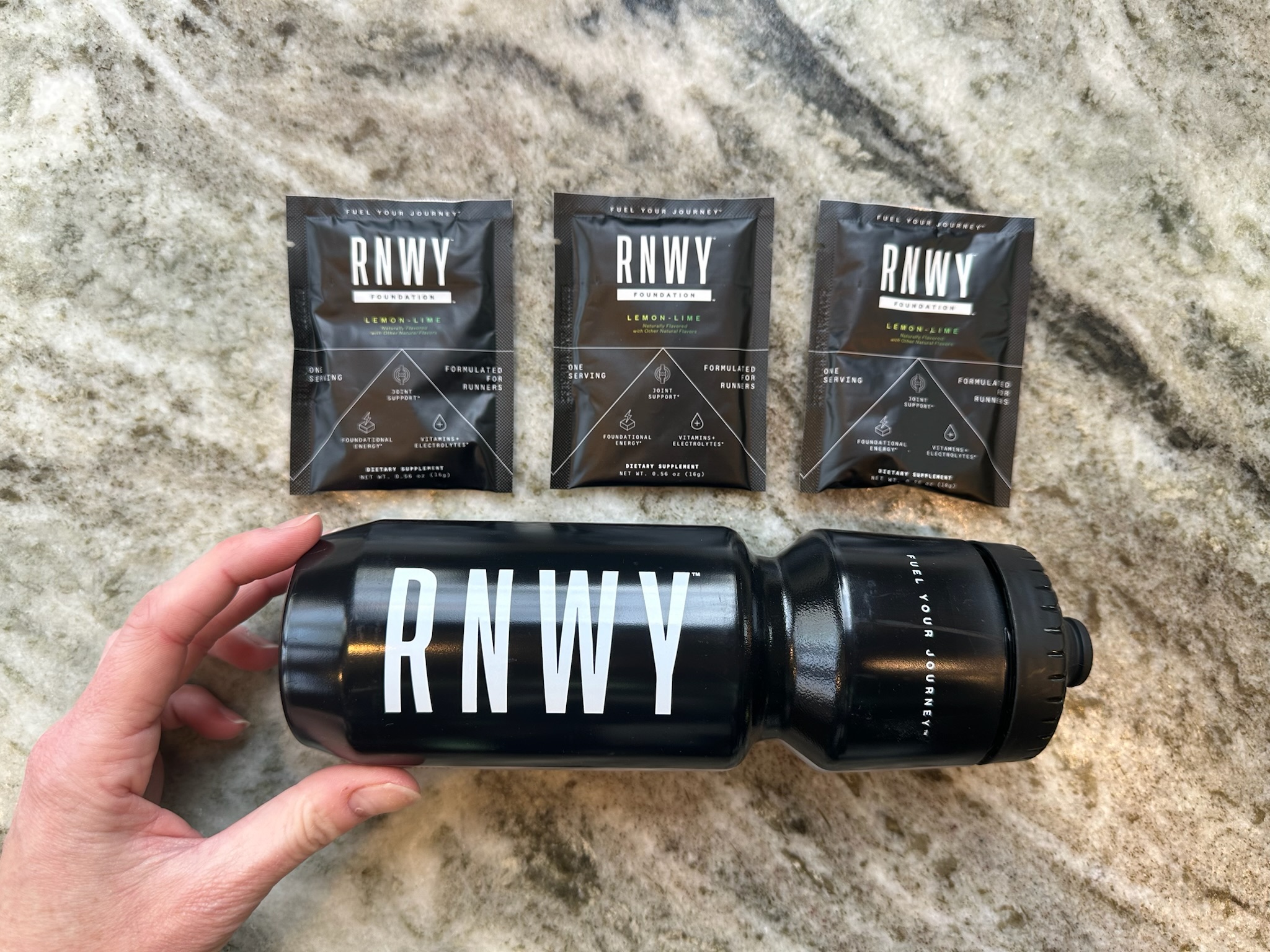
RNWY is a great option for a collagen supplement, containing 10 grams of collagen, as well as vitamin C & electrolytes. Try RNWY for yourself and save 15% with code Feathers15.
Research shows that collagen works most effectively when you take it 30 minutes to an hour before training or, if you’re injured, prior to physical therapy. A study published in The American Journal of Clinical Nutrition showed that jumping rope doubled participants’ collagen synthesis levels and when they took collagen with vitamin C an hour beforehand, it doubled again.
PMID: 21251991, 27852613, 29081241, 29337906, 29769831, 29949887, 18416885, 30609761
Disclaimer: The content in our blog articles provides generalized nutrition guidance. The information above may not apply to everyone. For personalized recommendations, please reach out to your sports dietitian. Individuals who may chose to implement nutrition changes agree that Featherstone Nutrition is not responsible for any injury, damage or loss related to those changes or participation.
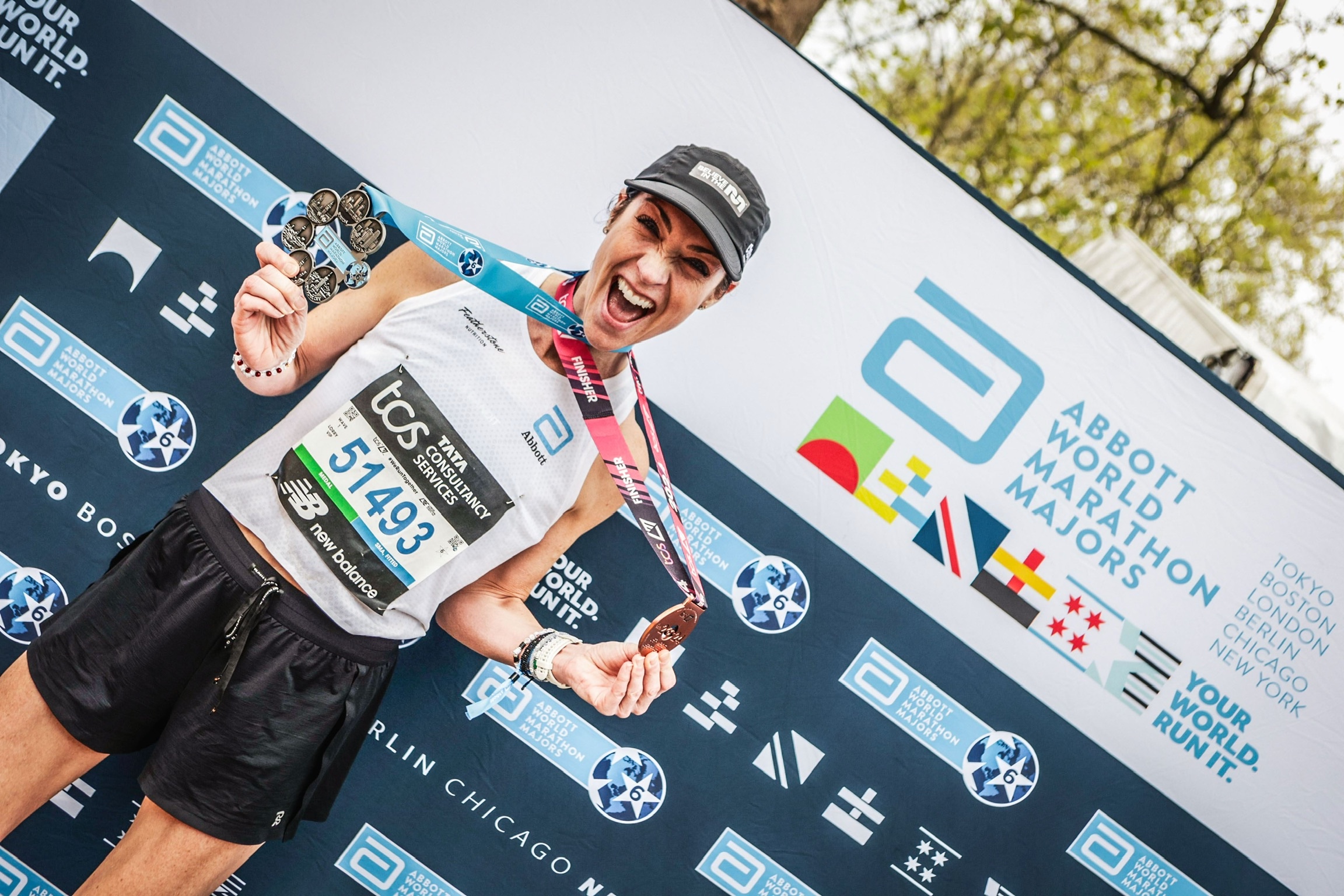
Meghann's London Marathon Race Recap
The London Marathon. The last star in my 6-star journey. The race that so many said is ‘the best’ of the Abbott World Marathon Majors. Would I think it was the best? How could any race hold up to the excitement of the Boston Marathon, the crowds of the NYC Marathon, or the ease of the Chicago Marathon start?
I wasn’t sure how my body would feel jumping back into continued marathon training after running the Tokyo Marathon in early March. So, I went into London training with an open mind just noticing how my body felt. Much to my surprise, my body felt great. After 5 days totally off running – focusing hardcore on recovery nutrition – and an easy 1 ½ weeks of short runs, we decided to hop back into a few tough weeks of training to get back after it at the London marathon.
I also found out my ferritin was in the toilet again after the Tokyo marathon. In the 7 weeks between Tokyo & London, I was diligent about my iron supplement to see how much we could improve my ferritin in this short time.
After an action packed weekend at the Boston Marathon, a quick trip back home to repack for London, and then a horrific travel experience getting to London – I finally landed in London <after a 40+ hour travel excursion> on Friday morning for a Sunday race.
Let’s take a look at how I carb loaded, and fueled before, during, and after the London Marathon.
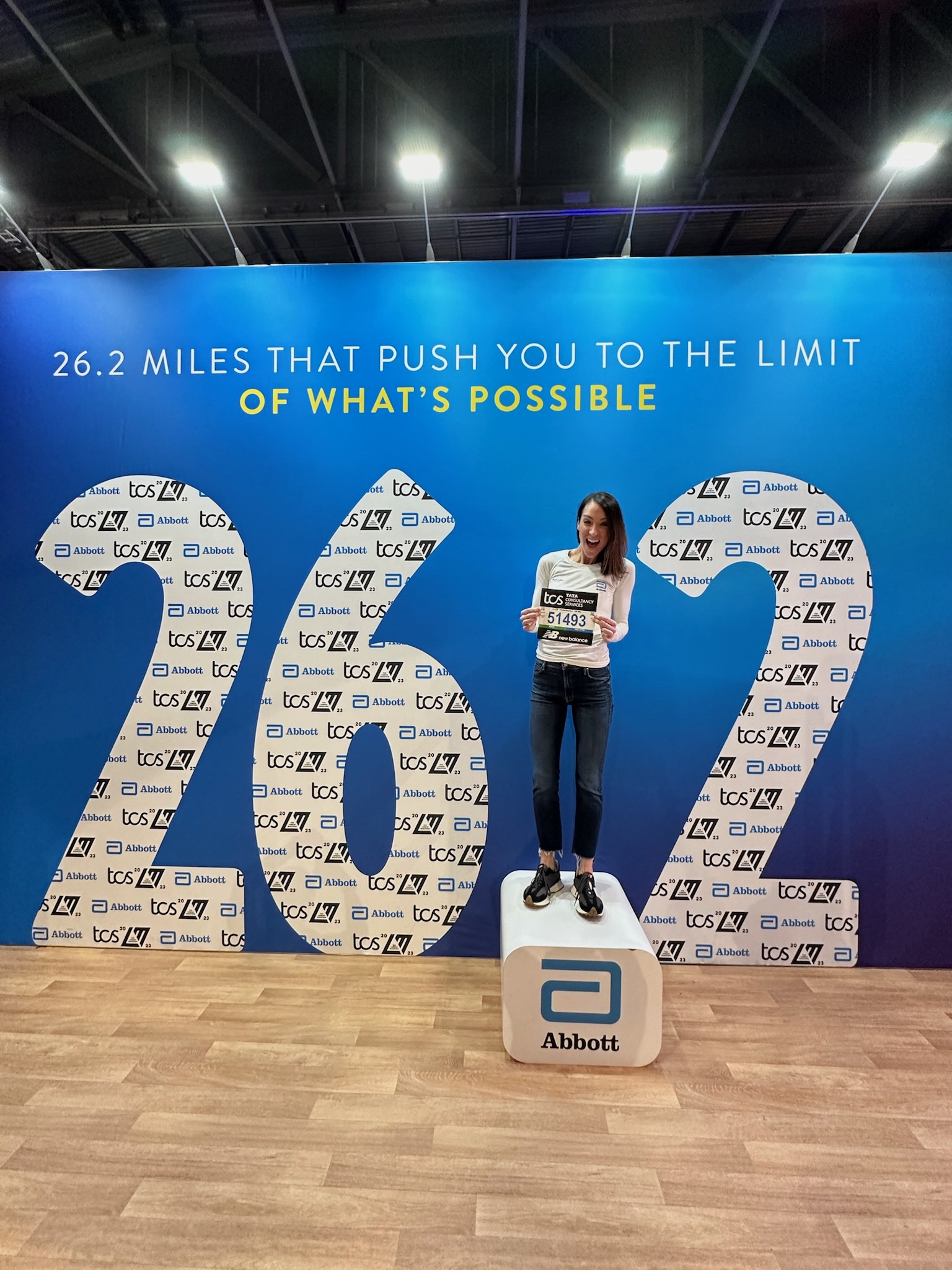
Carb Load
I recommend that runners carb load for 2 – 3 days before their marathon, and I stand by my commitment to doing the same. By fully loading our glycogen stores, we stock our muscles with carbohydrates & water – both necessary when we are looking to run at a higher effort for the entire marathon distance.
My personal carb load needs are 400 – 500 gm carbohydrates per day x 3 days. In the past, I have relied very heavily on bagels & graham crackers for the carb load. Travel issues + London not having great bagels, I changed this up a lot this time.
Day One
I woke up on day one in the sketchiest motel on the planet after my flight was delayed, and I missed my connecting flight in DC. I say ‘woke up’ lightly because I got to the motel at 1:15 am & slept with my shoes on and purse around my chest in case I needed to flee in the middle of the night. It was that bad. But, this is why I always say ‘pack all the carbs – prepare for anything’ because who knows if your day one carb load will also land you in unexpected situations. The original travel plan had me in London eating crumpets & jam for a carb load on day one, but instead, I was using my $20 travel credits to buy pretzels, chex mix, mentos, and electrolyte drinks. And, making carb load plates in the airport lounge.
What did I eat all day? 2 granola bars on the way back to the airport. Then, after weaseling my way into the airline’s club, I ate the same plate of bread, cheese, pretzels, and a small piece of cake, three different times from 10 am to 6 pm. I snacked on more pretzels and mentos throughout the day. Then, dinner when I finally boarded my flight to London. This consisted of bread, rice, noodles, and a bag of peanut butter M&M’s I bought at the airport. This was not my finest work – but it got the job done!
Total Carb Load Day One: 425 gm carbs
Day Two
I woke up on the airplane at 3 am my time, 8 am London time. I was a shell of a human at this point – two nights with minimal sleep doesn’t fair well for me these days <still not sure how I survived a colicky newborn>. I had a two-hour drive from the airport to my hotel where I struggled to keep my eyes open. I strolled into my hotel in a daze, said a pathetic hi to my Abbott friends and immediately took a 90-minute nap – waking up to a Facetime call from the kids before they went to school. I got up and attempted to run, which felt so awful, I ran 1 mile and walked home, took a shower, and headed to the expo with my Abbott crew. This reinvigorated me for sure! I am not usually hungry during a carb load but I was starving today. It was likely the sleep deprivation + stressful travel situation, but I leaned into it and ate more than my ‘goal’ but this felt like exactly what I needed. Also, if you haven’t eaten an entire pizza sitting in bed in your pajamas, I highly recommend.
What did I eat all day? A high-carb granola bar, airplane breakfast of pancakes + strawberry jam + syrup, another granola bar, chex mix, graham crackers, soft pretzel, bagel at the expo, 3 crumpets + jam, and the most epic wood-fired sourdough pizza from Franco Manca.
Total Carb Load Day Two: 550 gm carbs
Day Three
On Saturday, I woke up in a real bed for the first time in 3 days, and after 11+ hours of sleep, I was feeling much better – about 75% of my normal human self. Just in time for the Shakeout + Carb Load event with Charlie Watson and The Westin London City. Here I got to spend some quality time with 150 runners and give them carbs to help with their carb load including bagels, bananas, gummies, oatmeal, energy bite, rice krispie treats, jam, honey, and granola bars. It was quite the spread. From here, I joined the Abbott team for a course preview and meeting on the HMS Belfast, a ship built for the Royal Navy in WWII. After this, I got off my feet for the day and ate all the carbs. I attempted to head to bed early but didn’t fall asleep until around 10 pm for a 6 am race day wake-up.
What did I eat all day? Graham crackers, crumpets + jam, bagel, Percy Pig candy, granola bar, more crumpets + jam, more graham crackers, and another Franco Manca pizza. If it ain’t broke…
Total Carb Load Day Three: 450 gm carbs
Learn more about carb loading + check out our carb load calculator here.
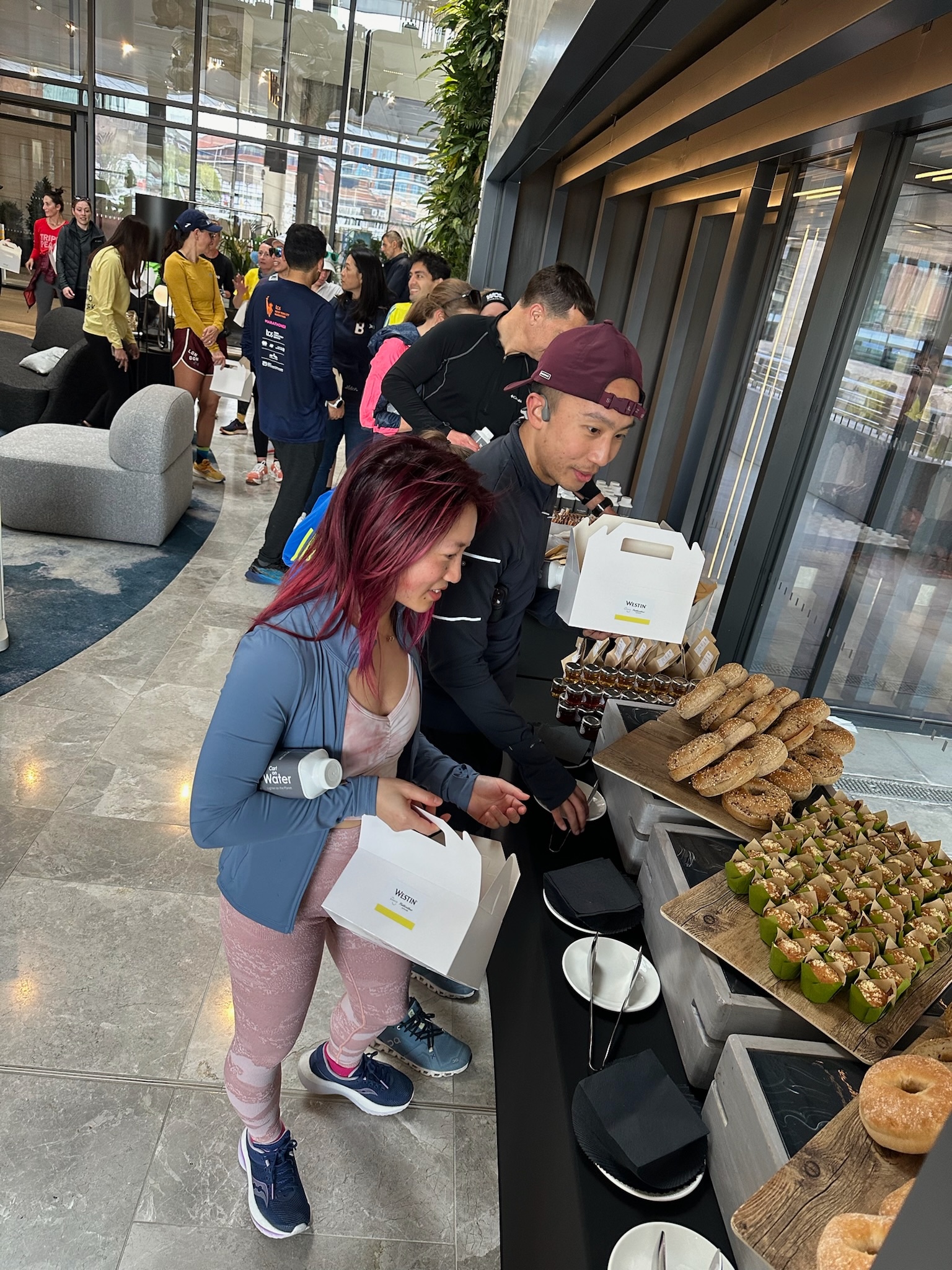
Race Morning
The London Marathon starts later at 10 am or slightly after depending on your wave. This actually works great for two reasons. One reason is this was 5 am my time at home, which is when I normally run. And, reason two is we have to take a train to the start so this allows runners to sleep in a little more on race day.
I set an alarm for 6 am, ordered coffee, and started eating my graham crackers in bed. I recommend eating ½ your body weight <in pounds> of carbs 2 and 4 hours before a later start marathon. For me, this is 6 sheets of graham crackers at 6 am and 8 am. I like to keep things simple.
We left for the train at 7:30 am so I took my second set of graham crackers and a bottle of water with electrolytes with me.
The train ride was very easy and the train was full of runners, which was reassuring that we were headed the right direction on the train!
We got to our start area, ate and drank, used the restrooms, and got lined up and ready to roll.
Total Pre-Race Nutrition: 140 gm carbs + 16 oz water with 400 mg sodium + 2 small cups of coffee
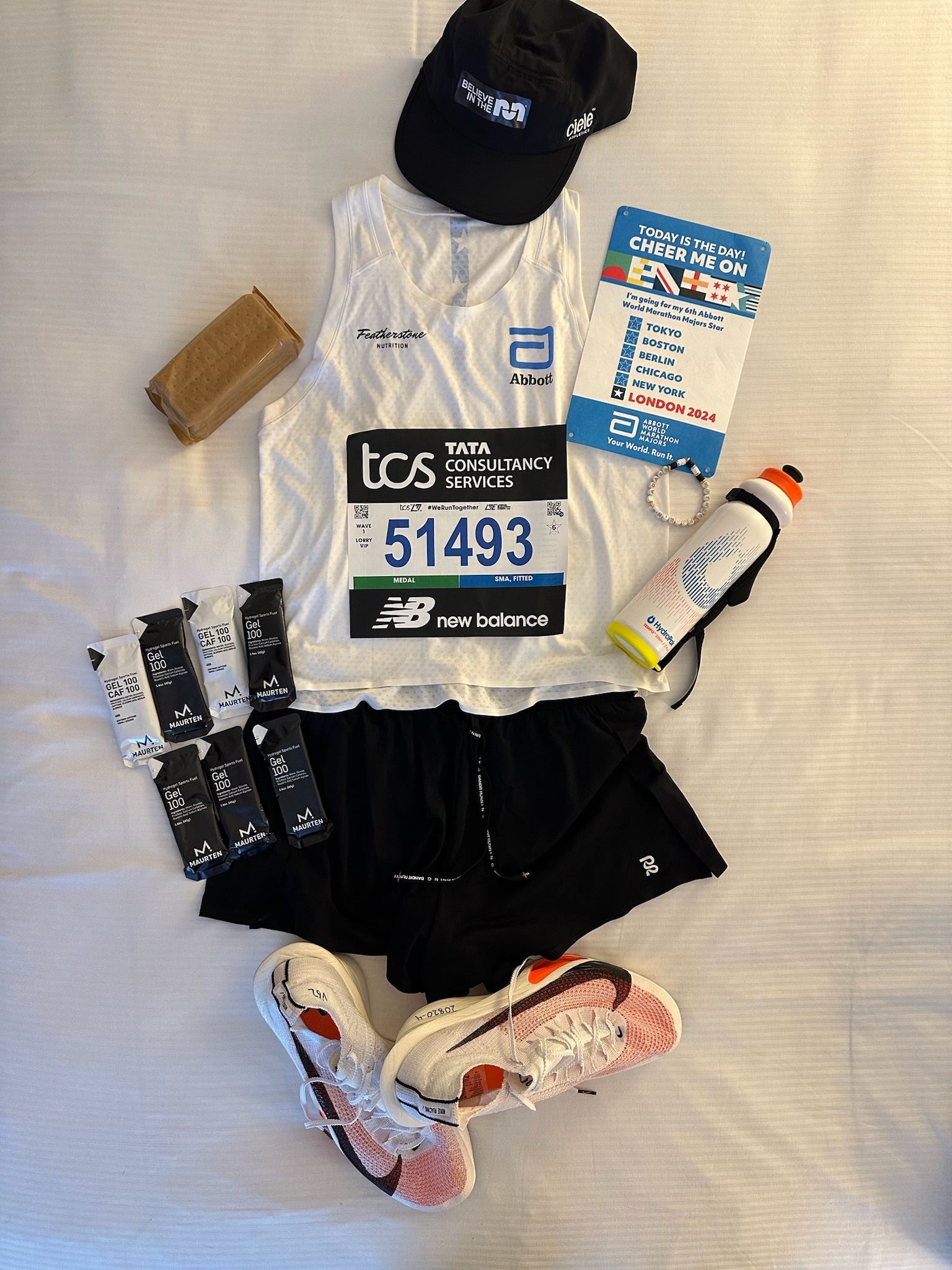
Race Nutrition During the London Marathon
The London Marathon offers small bottles of water at 12 water stops on course. These bottles have a drink spout, which makes water consumption much easier for all of us cup-challenged runners. They also offer their electrolyte drink, Lucozade, at 4 different stops on the course. And, Lucozade gels at two stops.
If you’ve been around here for long, you know my preference is to carry a bottle with my own hydration concoction. This time, I carried the HydraPak tempo bottle with a prototype removable strap. <note: this strap is not for sale yet, but hopefully will be soon> In this bottle, I put 1 serving of Skratch Hydration Sport Drink Mix + 1 scoop of Skratch Everyday Drink Mix. This gave me 18 oz water with 780 mg sodium.
I took 7 Maurten gels, two of which were caffeinated. One caffeine 10 minutes before the start, then a gel every 25 minutes, with the second caffeine gel at 50 minutes.
The weather was 47 at the start, mostly cloudy, and mid 50s at the finish. For me, this is ideal racing weather and I knew that 18 oz of my fluid concoction should minimize dehydration to a point that did not impact performance. My bottle lasted until mile 15 and I took a few sips of water on course after this. I pulled the reusable water bottle strap off to keep before tossing my handheld to the side of the road.
This nutrition plan was very similar to what I used at the Berlin Marathon, which still holds my marathon PR of 2:49:55. So, I was confident that this plan would work well for me in cooler weather at London, and it sure did. I loved the new Hydrapak Tempo bottle with the removable handstrap and will share more about this when it is commercially available for anyone who is interested.
Nutrition was perfect. In retrospect, I wouldn’t change anything with it.
Total Race Nutrition per hour: 70 gm carbs/hour + 325 mg sodium/hour + 10 oz fluid/hour
The Race
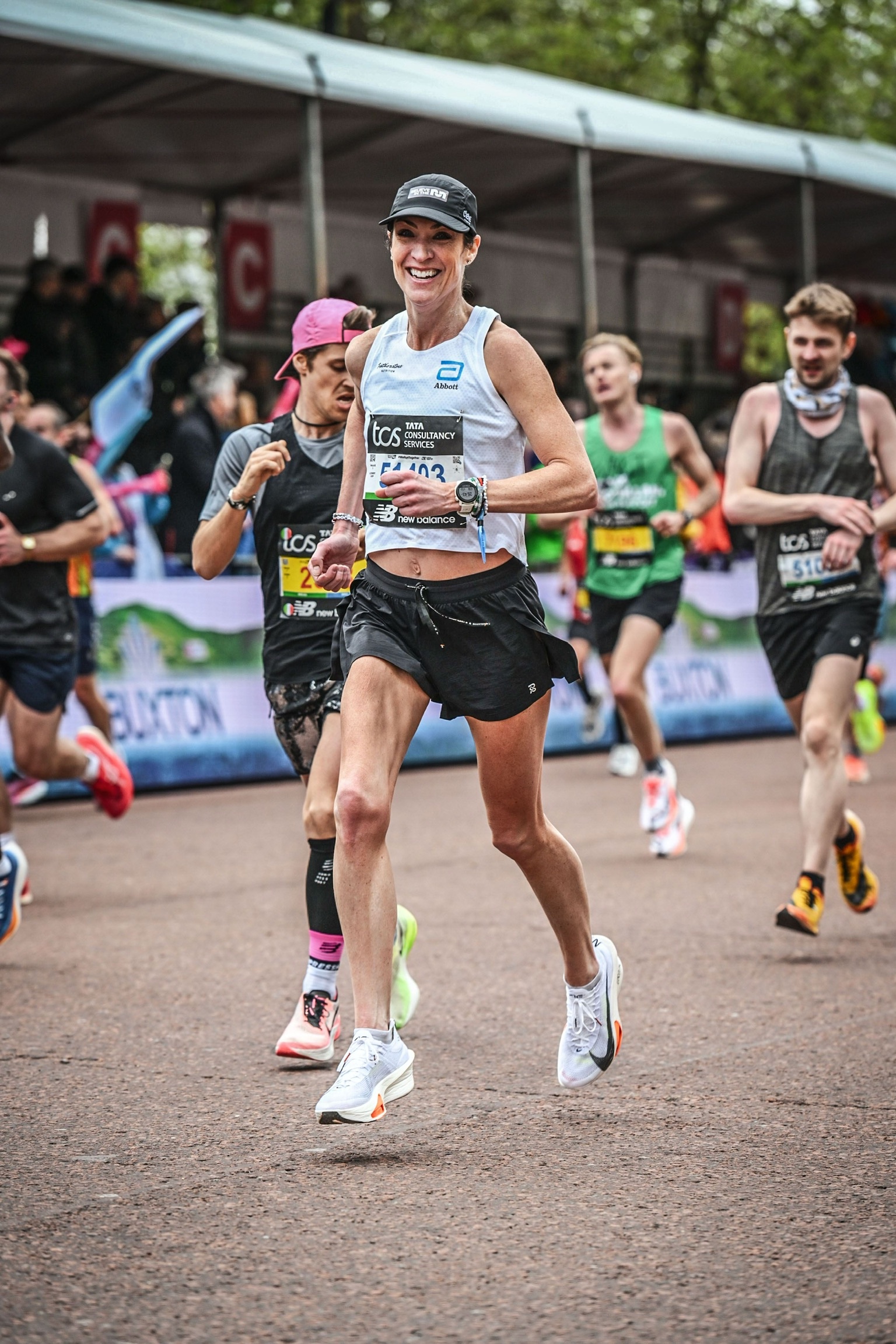
Rumor had it that the London Marathon was a fan favorite amongst the World Marathon Majors. I found it hard to believe that a race could hold up to the excitement, crowds, ease, and prestige of other majors. But, I have to say – the rumors are true. London is hands down a top, must run marathon on my list now.
The entire race had a laid back feel to it that reminded me of races pre-Boston 2013 and pre-COVID. The start was a rolling start and when we got up to the line, we all just started running surrounded by confetti cannons, live music, grandstand crowds, and all the fanfare. Slightly anticlimactic but also allowed for a less crowded start than the Tokyo Marathon where I saw two runners fall and get trampled at the start.
There are some highlights of the course that stand out to me. The crowds battle NYC crowds. The runners in costumes at all paces are massively entertaining. The sights on the Tower Bridge, at the mall, and Big Ben were breathtaking. The narrow streets meant aid was handed out from the sidewalk, leaning over a metal barrier were arms thrusting water bottles out with ease which meant the roads were ours for the entire course, no veering in around tables in the street. And the crowds at Canary Wharf rival First Ave. They say First Ave in NYC is looking for ‘their’ runner. The crowds throughout Canary Wharf were there for us all. It was chilling in the most beautiful way possible.
My goal for the London Marathon was to start running, see how I felt, and run the best race I had in me on that day. When I crossed the start line, I was freezing. My legs felt heavy and my feet were numb, so I ran and let me body warm up and by mile 5 I could tell that my marathon pace was going to feel just fine on the day. I found myself pushing the pace from here – to see how fast I could run. After a couple of miles, I realized I hadn’t looked into the crowd, I hadn’t looked up, or around. I immediately decided this is not how I wanted to run my final Marathon Majors race. So, I picked my head up, smiled at spectators, hyped the crowd, and couldn’t rip the smile off my face. From here, my goal was to enjoy every single moment, mile, smile, spectator, and sight on the course. And the icing on the cake, this pace was only 5 – 10 second slower than the pace I was pushing at the beginning of the race.
I finished my final 6th star race at the London Marathon in 2:53:43. My 4th fastest marathon. And, 1 hour and 5 minutes faster than my first marathon in 2009.
Takeaway
Nutrition, sleep, and a calm & grateful mind are my personal trifecta to running a successful marathon and this whirlwind of a trip to London solidified that for me. I encourage you to find your personal nonnegotiables for your own running goals.
In my experience working with so many of you, nutrition is often the missing link in our marathon success. I encourage you all to practice and perfect your carb load, pre-race nutrition, and during race nutrition & hydration in training – to find what works best for you. We have plenty of options to execute our nutrition well and support optimal performance. But, it’s up to you to put in the time, trials, and effort to find what that looks like for you.
It’s incredibly important to me to put out free resources so everyone has access to the information needed to find this personalized plan. You can find these resources on my website and Instagram. But, if you still feel like you need 1-on-1 help, we have plenty of options to support you in developing your best nutrition & hydration plan.
This passion to help everyone fuel better for their marathons was a part of my partnership with Abbott throughout my Marathon Majors journey. I am lucky & honored to be able to share this nutrition knowledge with Abbott runners through webinars and articles and continue to share these resources with you all, while chasing my own 6 star dream. Thank you, beyond words, to Abbott for this amazing partnership.
If you found this helpful, I give out different nutrition tips in each of my race recaps. Here are a few others, if you missed them: Berlin, Tokyo, and Boston.
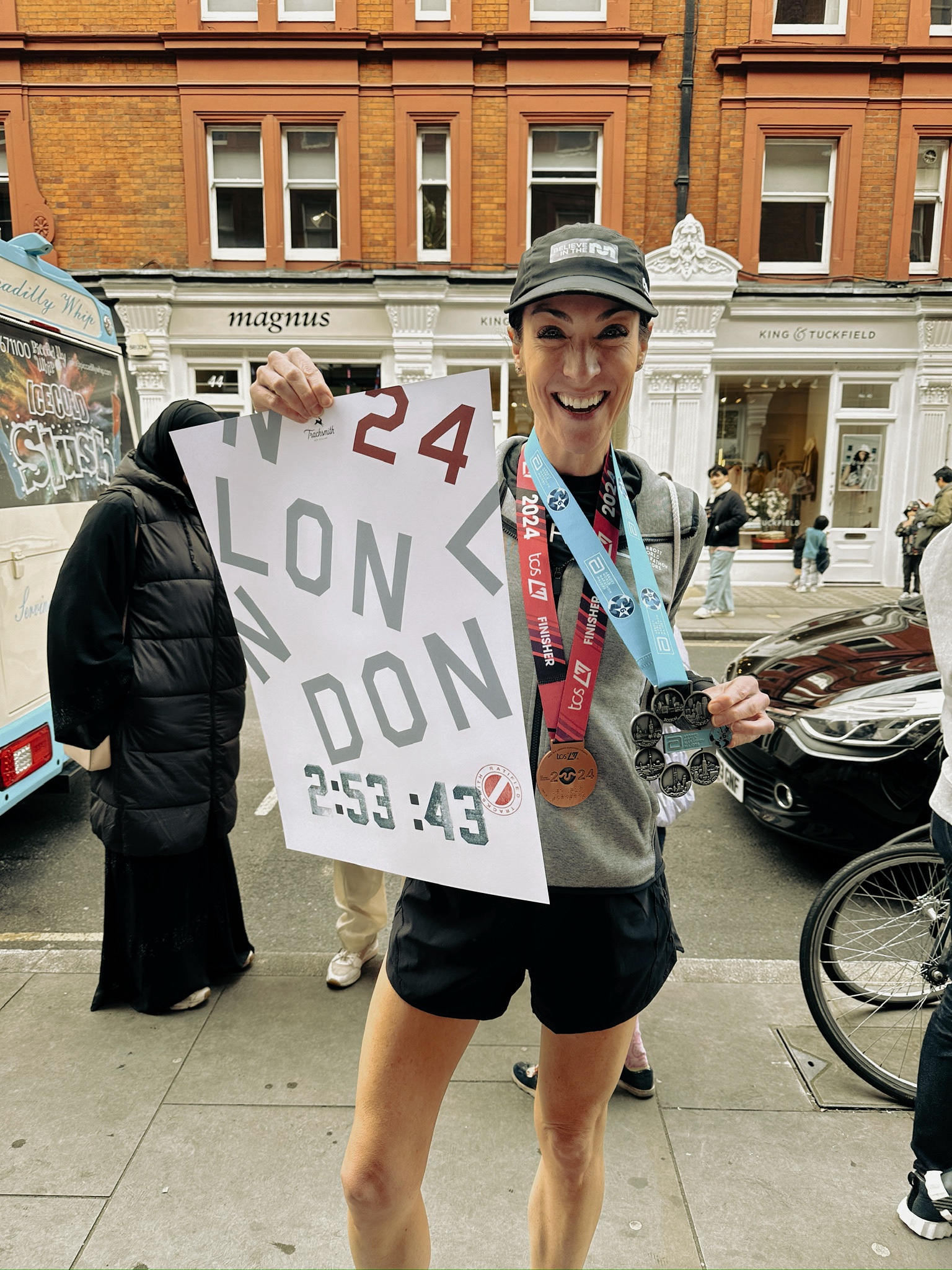
If you need help with your carb load or race day plan, I can create a Customized Carb Load Plan or Race Day Fuel & Hydration Plan for you!
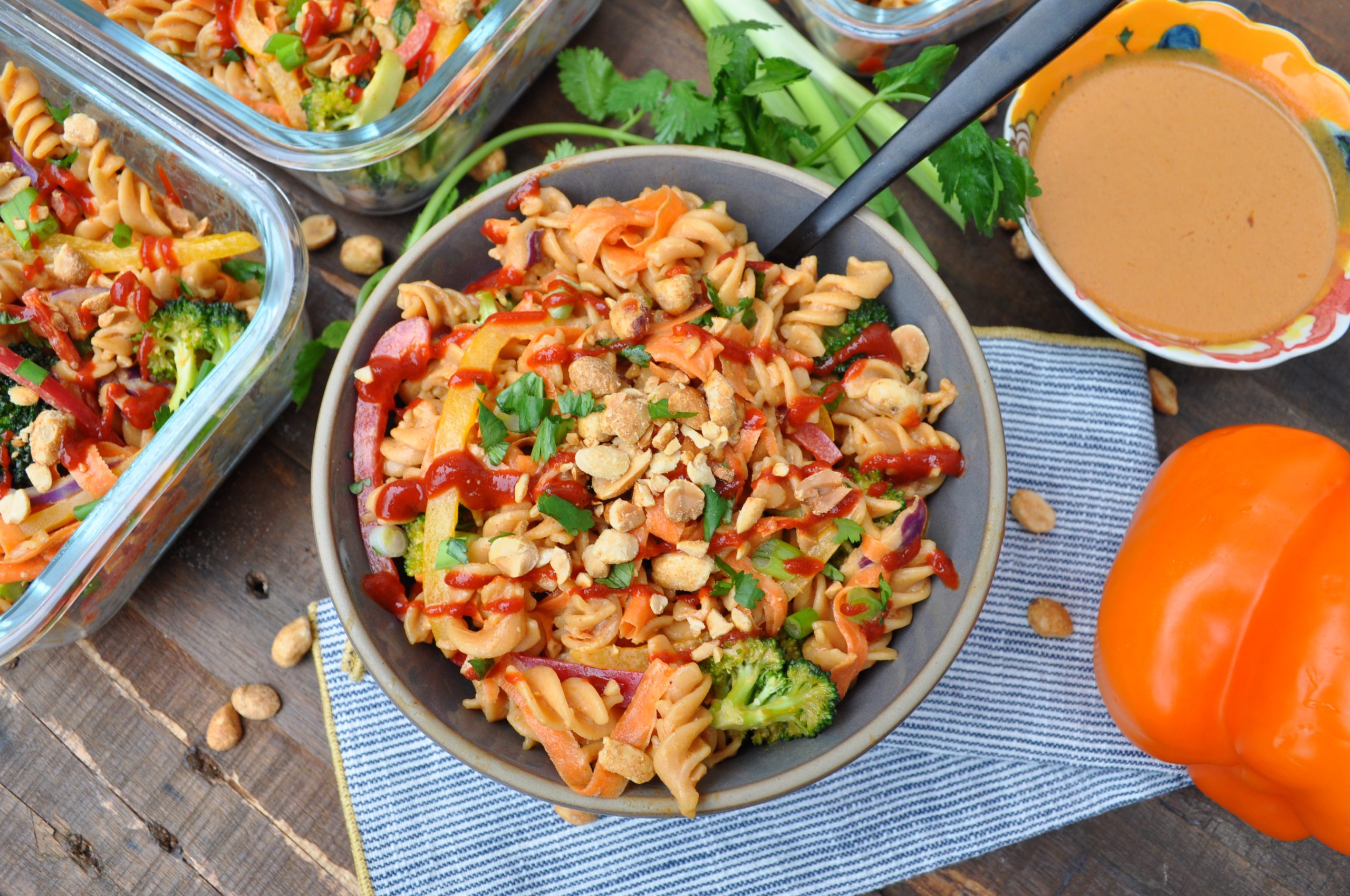
Nutrition Tips During the Taper
During a taper before your race, some training plans taper dramatically, and some don’t. Nutrition needs vary based on your relative change in mileage & intensity. Many runners will have increased hunger during this time – it’s important to remember that recovery takes energy too. Even though your mileage has decreased, remember that you have been working hard and the goal of taper is to fully recovery from this hard work by race day. It’s not uncommon for our appetite to increase as we roll into the taper. As our body rests, our true appetite signals can shine bright – and this is often when runners feel hunger the most. Also remember, you are still putting in miles during a taper. And, you are close to asking your body to run a big race and do the dang thang! Let’s make sure we aren’t under fueling during this time. We’ve put in the physical work. Don’t let misconceptions on nutrition during the taper derail this hard work come race day.
Balance your meals
During the taper, it’s important to give your body solid nutrition. Do not eliminate or restrict any foods right now. Keep your meals balanced and include carbohydrates, protein, healthy fat & color at each of your three meals per day. Aim for 20-40 grams protein, 50+ grams of carbohydrate & 1-2 servings of healthy fat per meal. Protein needs remain the same through the taper, carbohydrate needs may decrease slightly – or they may not, and you may find more fruits and vegetables feels great during the taper.
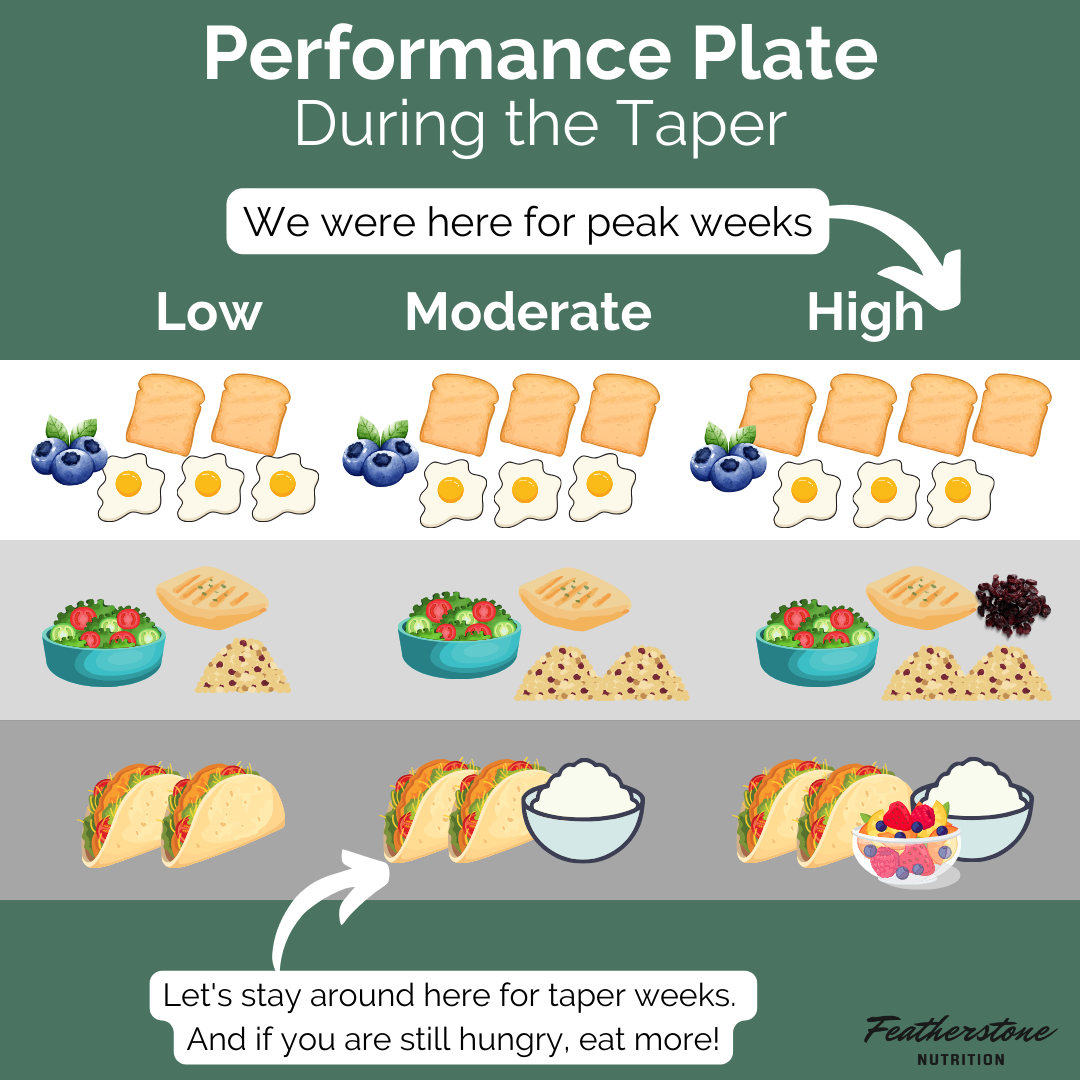
If you are hungry, eat.
While in Taper Town, runners may experience increased or decreased appetite. If you feel hungry (or very hungry!), honor your appetite and eat. Remember that we are recovering after peak week(s) and gearing up for a race. Ignoring hunger or intentionally restricting nutrition at this time will impair recovery for race day. Adjust snacks throughout the day to meet any changes in appetite. Hungry? Add a snack. Feeling less hungry? Keep meals steady but adjust snacks as needed.
Stick with solid meals but adjust snacks as needed
If you find that your appetite has decreased with your decrease in mileage, you can adjust your daily nutrition while still giving your body what it needs. Focus on eating three solid meals per day and adjust your snacks or cut out snacks if needed. This may look like: eliminating your morning and/or afternoon snack, eliminating a bedtime snack or adjusting the size of your snacks.
Takeaway
Adequate nutrition during the taper is imperative for full recovery by race day. Nutrition also prepares us for the work to come, aka the race that you have been training so hard for. Give your body the solid nutrition it needs and do not intentionally restrict nutrition during this time.
Disclaimer: The content in our blog articles provides generalized nutrition guidance. The information above may not apply to everyone. For personalized recommendations, please reach out to your sports dietitian. Individuals who may chose to implement nutrition changes agree that Featherstone Nutrition is not responsible for any injury, damage or loss related to those changes or participation.
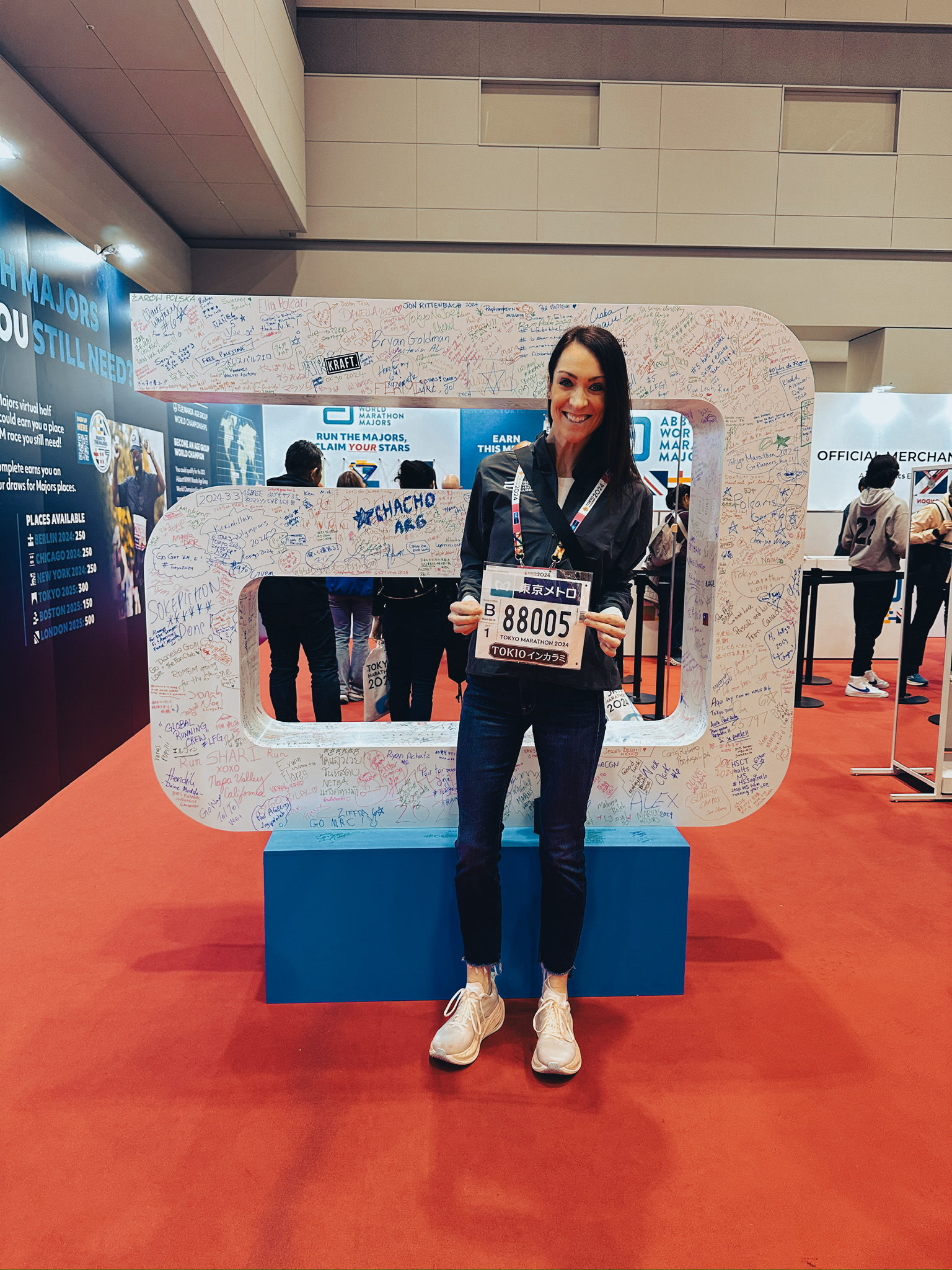
Meghann's Tokyo Marathon Recap
When I first started Featherstone Nutrition 6 years ago, one of my clients was training for the Tokyo Marathon. I distinctly remember thinking, I will never travel halfway across the world to run a marathon. The logistics, the food, the language barrier, being so far from home – all of this felt completely overwhelming and nothing I would ever be interested in tackling. Instead, running marathons close to home felt comfortable, known, controllable, and supportive.
Well, here we are – recapping my Tokyo Marathon experience with Abbott – so clearly a lot has changed over the last 6 years. And, I am so glad that my perception of how to run a successful marathon has also changed.
Never say never.

Carb Loading in Tokyo
I always encourage runners to pack anything we cannot live without, food-wise, when traveling to a marathon. You all can guess what I cannot live without: graham crackers and bagels. I packed 2 boxes of Honeymaid graham crackers and 1 bag of bagels. I did the math and these 3 items had almost enough carbs for a 3 day carb load if I really got in a bind in Tokyo. There was an odd comfort in knowing I had this backup. But, little did I know at the time, that there are plenty of solid carb-loading options in Tokyo! <and, I didn’t end up eating any of the bagels I packed – and brought a box of graham crackers home!>
I recommend a 3-day carb load for most runners before a marathon. This meant day one was on my flight to Tokyo. From Ohio to Tokyo, we lost 14 hours – so it was not time to carb load via Ohio standards but in Tokyo, it was go time. I packed 2 PB&J sandwiches, pretzels, electrolyte drinks, and granola bars for the flight. Plus, I knew we’d be served two meals + two snacks on the flight. I kept day one of the carb load a little casual but still hit my goals.
I shared carb load day 2 in this Instagram post. Highlight reel: it’s very easy to find enough carbs in Tokyo! I ate graham crackers before a shakeout run. Then, I joined the Abbott team for a buffet breakfast where I was able to score toast with jam, an orange bun, a slice of baguette, breakfast potatoes, and yogurt with fruit. Most hotels in Tokyo offer something similar, but I would recommend checking into this before you book a hotel, as this is a super helpful way to stay carbed up for your race. While I was visiting the expo, I ate a Maurten solid bar and drank a bottle of water. One thing to know about Tokyo is there are three options for quick, convenient foods: Lawson’s, Family Mart, and 7-eleven. Pop into any one of these and carb heaven awaits. I grabbed a sweet potato bun at Lawson’s, and it was delicious. My kids had very specific toy requests from Tokyo <thank you YouTube Kids> so I went out looking for said toys and found them all with ease. I found myself very late for lunch so just stopped at Starbucks. They had plenty of options and I went with a baguette sandwich and a red bean roll. On my trip back home, I stopped at Family Mart and found some rolls that were filled with chocolate pudding and snacked on those before dinner. I looked up a nutrition label for Japan to help me determine which foods were high in carbs and low in fat and fiber. For dinner, I went out for sushi – which was delicious – but not nearly enough carbs. So, I hopped into 7-eleven from some Hi-chew to finish out the day. Checked out all three convenience stores in one day – felt like a win.
On day 3 of carb loading, I prefer to stick with very bland, basic, familiar carbohydrates. I feel 100% of my race day nerves in my stomach so by marathon #16, I know what works best for my body. I ate graham crackers before my shakeout run with the ASICS crew and then had toast, more graham crackers, and a protein bar before heading to the teamLab Borderless museum. This was an unbelievable show of lights and artwork. Always pack snacks! I had another Maurten solid bar before heading to a bakery to stock up on carbs for the remainder of the day’s carb load. I was very surprised by the number of bakeries in Japan! They had some of the most amazing pastries. Now, remember that we need more carbs – not more carbs AND fat to carb load. <High-fat carbs include donuts, croissants, tarts, sweet breads, etc> So, I found a bakery called More Than that also had soft pretzels, buns, bagels, and homemade jam. I had them make me a hot bagel with a little avocado for lunch. Then, I took another bagel, bun, and soft pretzel home for dinner.
I nailed 450 – 500 gm carbohydrates per day x 3 days to stock my glycogen to support optimal performance in the Tokyo Marathon.
Meghann’s Carb Load Tips for Tokyo: Take your favorite carbs you cannot live without <graham crackers> but know you can find plenty of carbs in Tokyo. Great options are the bakeries, rice, sushi, ramen, and premade items at the local convenience stores. If you have allergies or food intolerances, you may want to pack more of your favorite food items as it can be hard to decipher the ingredients on labels if you do not speak or read Japanese.
Meghann’s Carb Loading Tips in General: Start in the morning – do not wait and try to cram all your carbs in during the afternoon & evening. Always have snacks on you – you never know how long a trip, group run, or transportation may take. Minimize fiber, protein and fat during your carb load. These items make us feel full. If you have trouble eating enough carbs, this may be why. If you are still hungry during your carb load, add these items back in. Drink an extra 30 oz of fluid per day while carb loading. Glycogen is created with carbs and water.
Learn more about carb loading + check out our carb load calculator here.

Race Morning
The time change from the United States to Japan is wild. I was 14 hours ahead of my normal time back home. I arrived Thursday night for a Sunday morning race, so I had 3 nights of sleep before the race to attempt to adjust to this time change. Luckily, I got great sleep Friday night, two nights before the race, which is what most coaches feel is the most important night’s sleep. I mention this because I was wide awake at 3:30 am on race morning and didn’t need to head out the door until 8:15 am for a 9:10 am race start.
Why do I mention this? Waking up 6 hours before your race vs the planned 3 hours before your race needs more nutrition. I typically eat 6 graham crackers 2 hours before my marathons, but being up this early – I ate an entire sleeve, aka 9 graham crackers. I had 2 grahams at 3:30 and 5:30, and 5 grahams at 7:30 am. This is 108 gm of carbohydrates to get ready to fuel that marathon. I also drank 2 small cups of coffee and about 10 oz of Liquid IV.
Everyone’s race morning nutrition looks different, and that’s okay. But please make sure that whatever you are eating before your race is what you have been doing in training week in and week out. Practice. Practice. Practice. And then, repeat on race morning.
Meghann’s Race Morning Nutrition Tips: If you are well carb loaded, I recommend eating ½ your body weight in grams of carbohydrates 2 hours before your marathon. If you are up 4 hours before your marathon, double this. If you are not carb loaded, you will need significantly more than this. If your race starts after 9:30 am, you will also need significantly more than this.
Confused on your race day nutrition? Customized Race Day Nutrition plans are available.
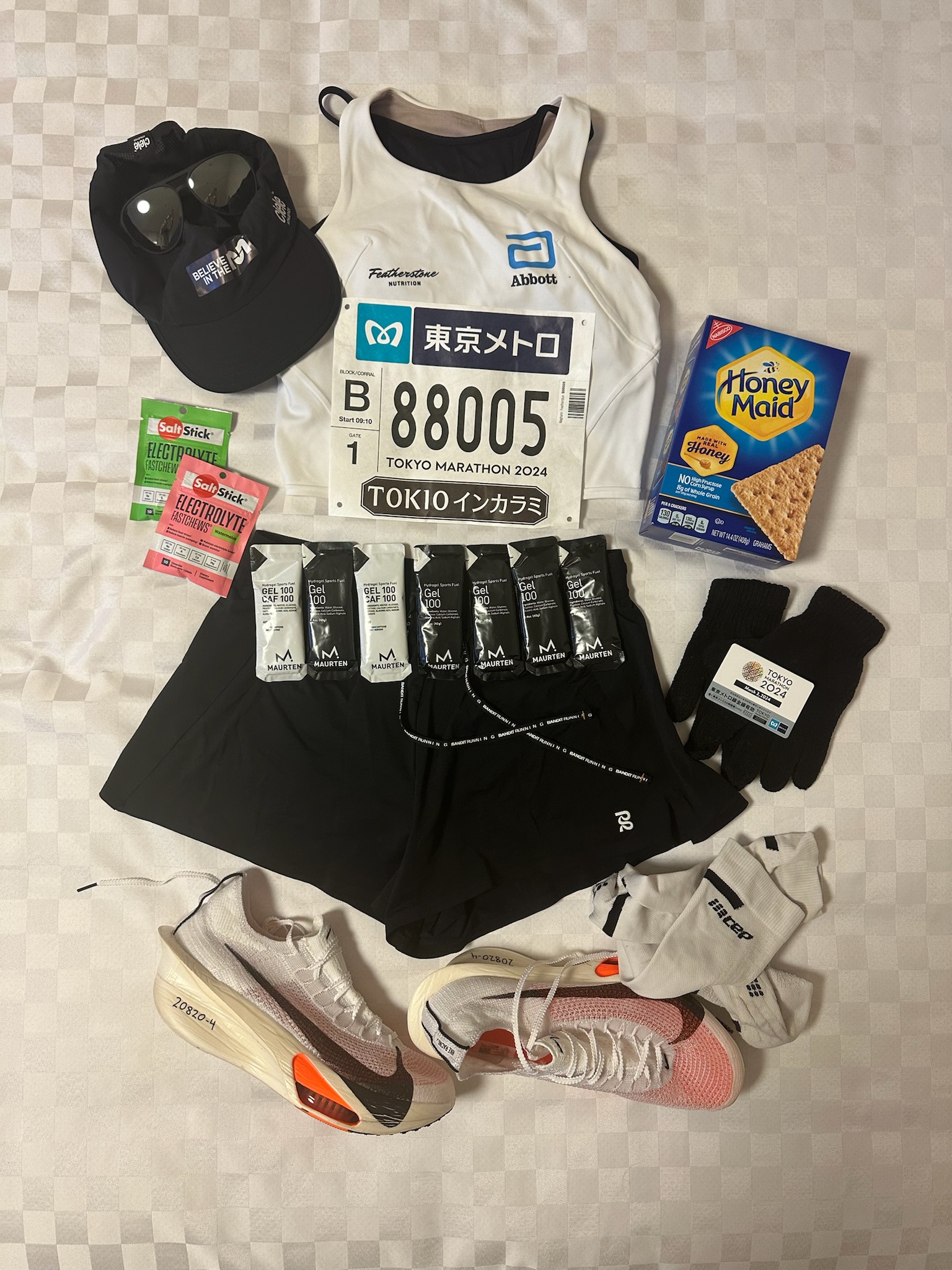
Race Nutrition During the Tokyo Marathon
Let’s chat about the unique environment that the rules and regulations of the Tokyo marathon create for runners. First, you cannot take any open containers of liquids into the corrals. This means no handhelds, waist belts, or hydration packs are allowed. And, I can attest that no one ‘snuck’ anything through – I saw absolutely no runners carrying their own fluids.
You also cannot throw any trash on the ground during the race. They encourage runners to retain any fuel wrappers and throw this away after the race. They ask that runners do not discard any fueling wrappers or clothing in the trash bins designated for race fluid cups. And, I did see one race volunteer sorting out runner’s personal trash from the cups, so perhaps this really is a thing for the cup disposal in Tokyo.
They offer water every 2 – 3 kilometers starting at 5k throughout the race. They also provide Pocari Sweat every 5k. Then, they offer an assortment of foods from 17 to 38 kilometers, including pickled plum, chocolate, azuki-bean paste, cream filled rolls, banana, calorie mate, glucose, salty candy, and doll shaped pancakes. I’m sorry to let you all down, but I did not try any of these options and cannot report back.
The weather on race morning was perfection. It was 42 degrees at the start and predicted to warm up to the low to mid 50s by the time most runners finished the race. Please note, race day nutrition & hydration may change dramatically when weather is not ideal.
Never have I ever run a successful marathon without carrying a handheld with a high sodium sports drink, so this was a new experience for me. I stuck with a Maurten gel every 25 minutes. Then, I grabbed water cups on course at every stop through the half, which was 8 stations. I am absolutely terrible at drinking from these cups and waterboarded myself at half of these attempts. But, keeping track of my actual swallows vs nose intake – I was pretty sure I had actually consumed about 12 – 15 oz of water through the half which was my goal. My plan to make up for the lack of sodium in plain water was using SaltStick Chews. Each chew has 50 mg sodium and in past marathons, I have been successful taking 400 mg sodium by the half – so I took 2 chews before 4 different water stations. This seemed to work well.
At mile 20, I got hit with diaphragm cramps on both sides which took a lot of my focus and attention to keep breathing through them. At this point, my hydration strategy fell by the wayside but gel intake stayed to plan.
In the end, I took 6 gels + 8 salt chews + approximately 20 oz water. <The plan was 7 gels but one slipped out of my hands as I tried to open it. Also, cue panic that I was going to be disqualified for leaving trash on the course.> This worked out to be 52 gm carbs, 225 mg sodium, and 7 oz water per hour. I have to be honest, I do not think this was quite ideal. In Berlin, I took 74 gm carbs per hour. You may wonder, what happened here Meghann? Two things. One, I dropped my first gel on course – so I missed a gel. This would have taken me to 60 gm carbs per hour – and not having a sports drink in my handheld hurt me here too. Proof that even your sports dietitian looks back and finds areas for improvement!
This race solidified that I am a handheld runner through and through. I really, really missed this out there. And, will be returning to team handheld for the London Marathon!
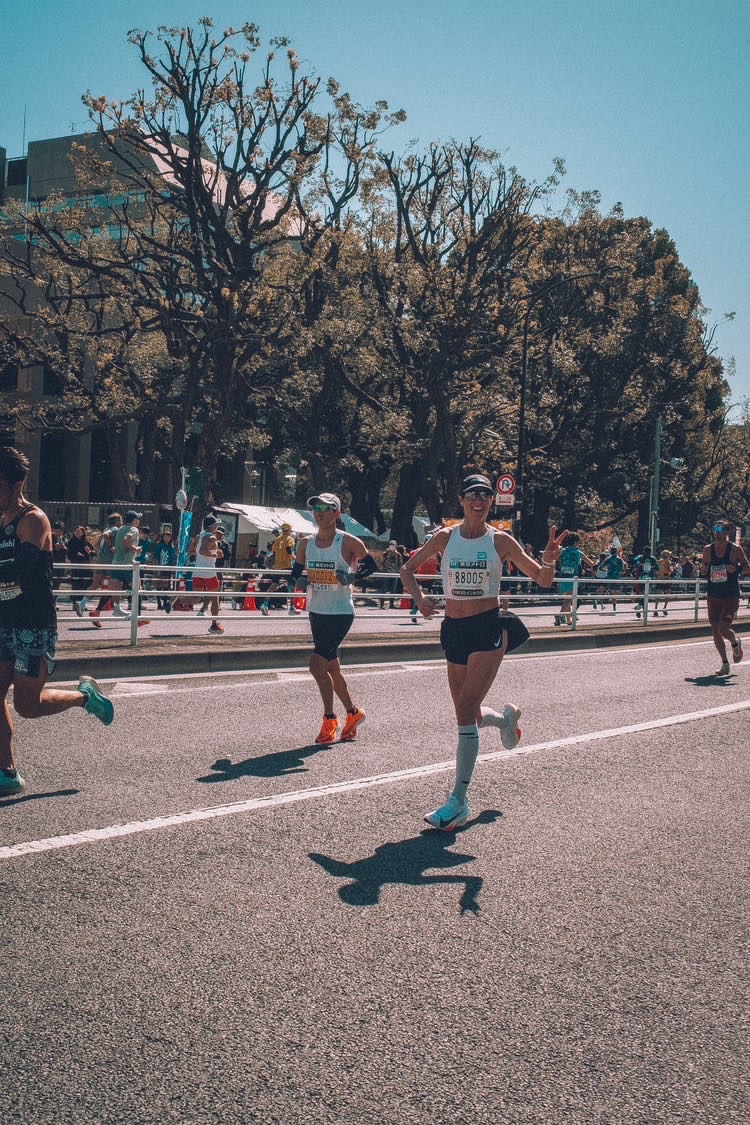
Common Questions:
- Where did you carry all your fuel? I wore the same crop top that I wore in Berlin, so my fuel storage was the same. All 7 gels lined up between my sports bra & crop top. Here’s a reel with the details.
- How did you survive without your trusty handheld? Barely. I missed it so very much. I think the SaltStick chews saved me though. I am terrible at drinking from the cups and much prefer the comfort of a handheld.
- Tell me about those post-race shirt towels! What’s up with those post-race Mumu’s? Instead of a mylar blanket or poncho, Tokyo Marathon gives out these terry cloth, hooded, shirt dresses that are next level. It feels worth it to go halfway across the world and run 26.2 miles just for this swag! Hands down the coolest item I’ve acquired post-race yet.
- Did you take salt tabs since you used water on the course instead of your handheld with Skratch? I sure did. I used the SaltStick chews. They come in a resealable packet with 10 chews that I stuck down my crop top with my gels. I ate 2 chews before the water stations so I could wash them down.
- Did you eat 8 bagels this carb load too? I did not! Believe it or not, I diversified my carb options this time. I only ate 2 bagels over the entire 3-day carb load. I’m apparently maturing. Kidding, back in the US, I’m certain I will still lean on bagels for a carb load.
Takeaway
Younger Meghann had nothing to be afraid of traveling halfway across the world to run a marathon. With proper planning and a little experience, running the Tokyo marathon honestly felt incredibly seamless and very entertaining. The culture of Tokyo was absolutely unbelievable. Everyone was so kind, considerate, and helpful. And, the cleanliness of the entire town was second to none. It actually left me wondering why we don’t enforce similar ‘throw your own trash away’ rules in the states’ marathons.
I feel unbelievably lucky to have the opportunity to partner with Abbott to experience all of the Abbott World Marathon Majors over an 18 month span. And, I want to give a huge thank you to Abbott for allowing us all to chase the amazing goal of the Abbott World Marathon Majors Six Star Journey. Seeing the joy on the faces of all the runners wearing their newly earned Six Star medal is nothing short of absolutely inspiring. And, a personal thanks to them as well for teaming up to allow me to chase this goal. Along this journey, I have had the opportunity to help educate all runners a little bit more on the importance of nutrition. Next up, I will run the London Marathon to earn my Six Star medal.

If you need help with your carb load or race day plan, I can create a Customized Carb Load Plan or Race Day Fuel & Hydration Plan for you!